









Electric cars still generate strong opinions in 2026, but many common EV myths no longer match how modern EV ownership actually works. Some concerns are outdated. Some still matter in the wrong conditions. Most sit in the middle, shaped by charging access, climate, driving habits, and the kind of EV someone actually buys. The reality is usually less dramatic than either EV hype or anti-EV fear suggests.
That is the real pattern behind modern EV ownership. It is neither effortless for everyone nor a rolling inconvenience for everyone. It is a different routine, with different strengths, different trade-offs, and different failure points. Once you stop judging EV ownership by gasoline-car habits, many of the loudest myths start to look less like insight and more like outdated assumptions.
Myth #1: EV Batteries Die After a Few Years
This myth survives because people still talk about EV batteries as if they behave like disposable electronics.
Modern EV batteries do degrade, but the process is usually gradual rather than catastrophic. The U.S. Department of Energy says today’s EV batteries may last roughly 12 to 15 years in moderate climates and 8 to 12 years in more extreme climates, which is a long way from the old assumption that an EV battery is effectively finished after a few years.
Thermal management matters heavily. So does chemistry. So do charging habits. A well-managed battery in a car that has covered a lot of miles can still be a better long-term bet than a lightly used EV that spent years in heat, sat fully charged for long stretches, or came from a platform with weaker battery management. Recurrent’s fast-charging and battery-health research is useful here because it keeps returning to the same point: degradation is influenced by heat, voltage, and overall usage pattern more than by one simplistic ownership myth.
Understanding how long EV batteries really last and how to evaluate used EV battery health can make battery degradation feel far less mysterious.
The useful distinction is simple. Battery aging is real. Battery failure is a different subject. Those two ideas still get mixed together far too often.
Modern EV batteries usually age more slowly than many buyers still assume, which is why DOE battery-life guidance and battery-aging research matter more than the old “dead after a few years” myth.
Myth #2: You Cannot Own an EV Without a Garage
You can. The harder question is not technical possibility, but whether the charging routine will feel convenient enough to live with week after week.
Apartment EV ownership is possible, and DOE/AFDC multifamily charging guidance exists for a reason: plenty of EV drivers live without private home charging. But the experience depends heavily on charger quality, parking access, backup options, and how well your weekly routine lines up with available infrastructure.
A driver with workplace charging, decent public infrastructure, and a short commute may find EV ownership easy enough. A driver in the wrong city with poor charger reliability may hate it. That is why this myth is wrong in absolute form, but not detached from reality.
Drivers considering apartment ownership should understand both the best EVs for apartment living and realistic apartment EV charging setup strategies.
The real issue is not whether charging without a garage is technically possible. It is whether the charging routine fits naturally enough into everyday life.
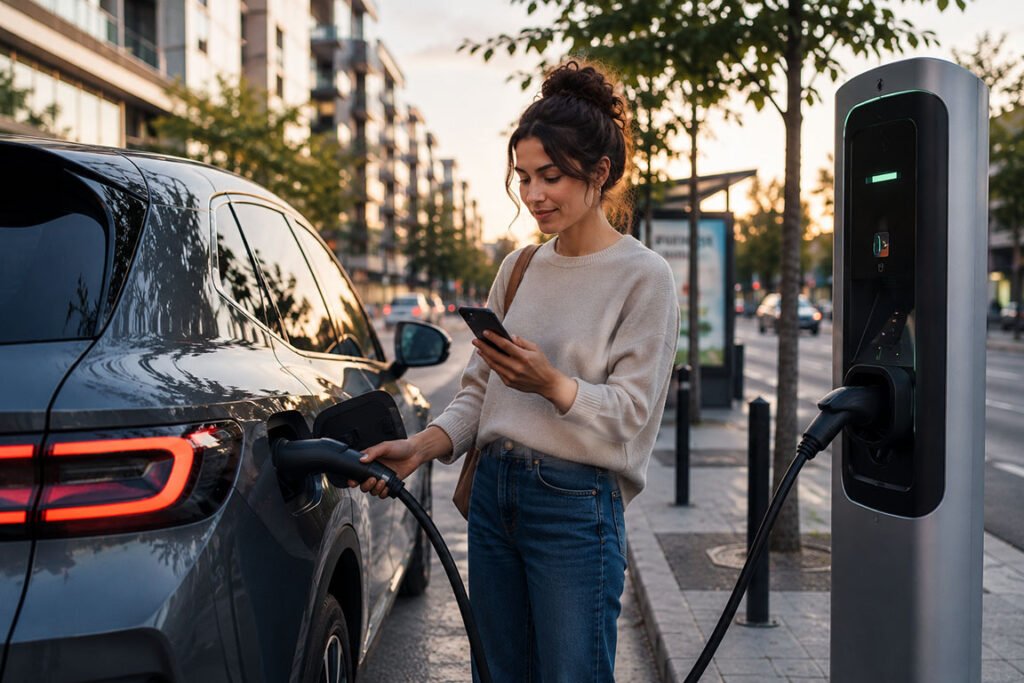
Concept image discussing how charging infrastructure shapes daily EV ownership.
Myth #3: Fast Charging Destroys EV Batteries
This one contains just enough truth to survive.
Frequent DC fast charging can add battery stress in some situations. Recurrent’s 2024 analysis says lab science has long shown that frequent high-voltage charging can speed up degradation and range loss. But translating that into real-world ownership is more nuanced, because thermal management, temperature, chemistry, and the broader charging pattern still matter more than one dramatic-sounding habit viewed in isolation.
That means occasional fast charging is not some ownership sin. It is normal EV use. For some owners, especially urban drivers or road trippers, it is part of the weekly routine. The better question is whether the car has strong battery management, whether it often sat at extreme states of charge, and whether it lived in harsh heat for long periods.
Fast charging deserves context, not panic.
Myth #4: EVs Are Always Cheaper to Own
Sometimes yes. Sometimes not. This is one of the most misleading simplifications in EV ownership.
Home charging can reduce running costs. EVs also tend to need less routine mechanical maintenance than comparable combustion cars. But insurance costs vary heavily, public charging can get expensive, tire wear can be higher on heavier EVs, and depreciation still depends a lot on brand, pricing strategy, and local used-market confidence. DOE-backed EV ownership guidance also emphasizes that battery warranties are strong, but lifetime economics still vary by how the car is used and charged.
Many buyers underestimate the hidden costs of EV ownership, especially when comparing long-term Tesla vs BYD ownership cost differences.
This myth survives because people reduce ownership cost to “fuel savings.” Real ownership is broader than that. Charging habits, insurance, resale, tire wear, and driving style all matter. EVs can be cheaper to own, but only when charging habits, insurance, depreciation, and day-to-day use line up in the buyer’s favor.
Myth #5: Used EVs Are Too Risky
Used EVs can be risky. They can also be excellent value.
The difference comes down to whether the buyer understands battery condition, charging history, software support, and warranty coverage. Used EV battery health is much easier to discuss intelligently now than it was a few years ago, and buyers have more ownership history and more battery-aging evidence to work with. DOE battery-life guidance and Recurrent’s battery research both help make used EV risk feel less like guesswork and more like normal inspection logic.
Buyers considering buying a used EV should focus more on battery condition and support history than fear-based assumptions.
A used EV with healthy battery management, meaningful warranty remaining, stable charging behavior, and good software support can be a sensible purchase. A low-mileage car with missing history, weak support, or unresolved charging issues can be the worse buy.
A balanced real-world video on EV ownership myths, with practical context on how internet fears compare with everyday EV use.
Myth #6: EVs Are Terrible for Road Trips
EVs are not inherently bad at road trips, but they are far more dependent on route quality, charging access, and software than gasoline cars.
Charging network quality matters. Software integration matters. Charging speed matters. A good road-trip EV in a well-covered region can feel surprisingly easy to live with. A mediocre car on a weak network can feel tiring much faster. The EV itself is only part of the equation. Multifamily and public-charging guidance from AFDC also reinforces how much infrastructure placement and access shape real usability.
Long-distance ownership often depends on the broader EV charging experience rather than battery size alone.
Charging still asks for more planning than gasoline refueling. But “more planning” is not the same thing as “terrible.” It depends on the vehicle, the route, and the infrastructure.
Myth #7: Cold Weather Makes EVs Unusable
Cold weather absolutely affects EVs. Unusable is the wrong word.
DOE winter EV guidance makes this clear: cold weather can reduce efficiency, slow charging, and make preconditioning much more important. Charging connectors can even freeze in some conditions, which is why winter ownership asks more of both the car and the driver. But that is a very different claim from saying EVs do not work in winter.
Winter range loss is real. Winter charging slowdowns are real. Cabin heating still affects efficiency. But modern thermal systems, heat pumps in some models, and preconditioning strategies help reduce those penalties. In other words, winter changes EV ownership. It does not automatically break it.
Realistic expectations matter more than mythology. If a buyer understands the climate, the route, and the car’s winter behavior, cold weather becomes a planning challenge rather than a reason to dismiss EV ownership altogether.
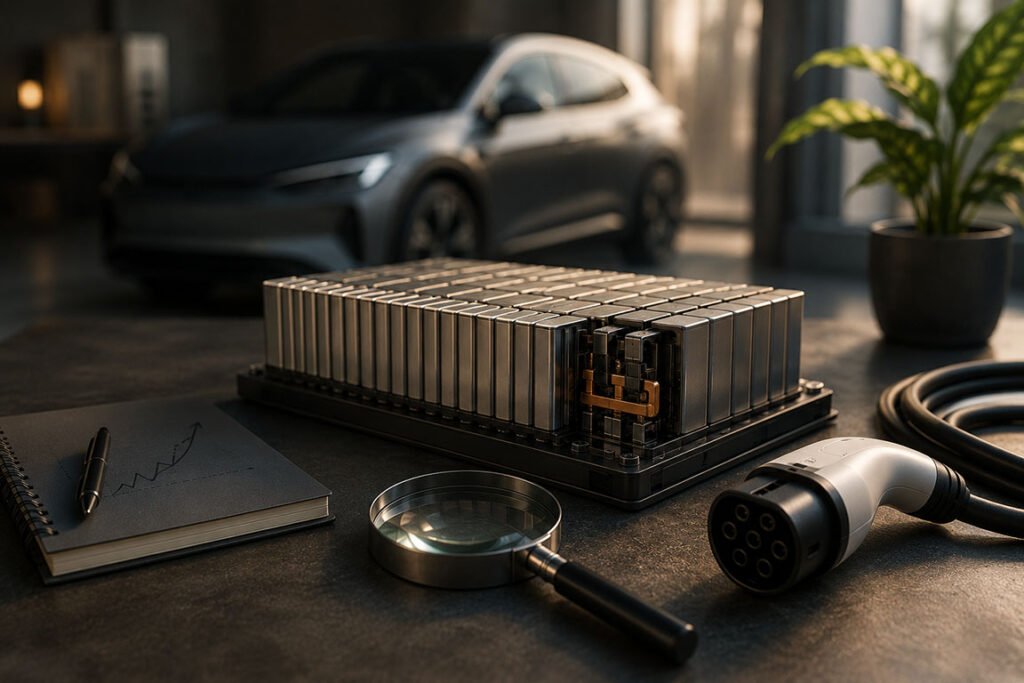
Editorial illustration discussing battery longevity and EV degradation reality.
Myth #8: Chinese EVs Cannot Last Long Term
This one is already aging badly.
Battery technology from Chinese manufacturers has improved rapidly, and the smarter long-term questions now have less to do with nationality and more to do with support ecosystem, service access, software maturity, and resale confidence in the buyer’s market. That is where the uncertainty usually lives. Not in a simplistic country-of-origin myth.
Questions about whether cheap Chinese EVs are reliable long term increasingly focus on support infrastructure and ownership confidence rather than battery technology alone.
That is the right framework. A strong brand in one market can still feel unproven in another if service access is weak. A car with good battery engineering can still be a frustrating ownership experience if parts support and software follow-through are inconsistent. Long-term trust depends on the whole system around the car.
Why EV Ownership Feels Different From Gasoline Ownership
Most EV myths survive because people still expect EV ownership to follow the same habits, timing, and convenience logic as gasoline ownership.
EV ownership changes the fueling habit. Charging happens at different times, in different places, and with different kinds of planning. Software matters more. Route planning matters more. Home charging, if you have it, can make ownership feel dramatically easier. Public charging, if you rely on it, creates different stress points than a quick fuel stop. DOE and AFDC charging guidance both reflect how much infrastructure and routine shape the experience.
That is why many EV myths survive. People still judge EVs through gasoline habits. They expect the same ownership psychology, the same fueling rhythm, and the same fallback assumptions. EV ownership rewards routine differently. It also punishes poor planning differently.
Common EV Myths vs Real Ownership Reality
| EV Myth | Reality in 2026 | What Buyers Should Actually Consider |
|---|---|---|
| EV batteries die quickly | Battery aging is usually gradual in modern EVs | Thermal management, chemistry, climate, and charging history |
| You need a garage | Garage charging helps, but is not mandatory | Public infrastructure, workplace charging, and daily routine |
| Fast charging ruins batteries | It can add stress, but context matters more | Heat, state of charge, chemistry, and long-term charging habits |
| EVs are always cheaper | Sometimes, but not universally | Charging habits, insurance, tire wear, and depreciation |
| Used EVs are risky | They can be strong value with proper checks | Battery condition, software support, and warranty remaining |
| EVs cannot road-trip | Some road-trip very well, others less so | Charging network quality, route planning, and charging speed |
| Cold weather makes EVs unusable | Winter hurts efficiency, not usability in itself | Preconditioning, route planning, and realistic winter expectations |
| Chinese EVs cannot last | Long-term confidence depends on support ecosystem | Service access, software maturity, and resale confidence |
Final Verdict: Which EV Myths Still Matter in 2026?
Some EV myths are outdated. Some are still partially true in the wrong situation. Most ownership realities depend on charging access, climate, driving habits, software quality, and expectations.
EV ownership is neither perfect nor impossible. Battery fears are often exaggerated. Charging convenience still matters heavily. Infrastructure and software increasingly shape the experience. The most useful EV advice in 2026 usually comes from understanding real ownership habits rather than repeating outdated myths or exaggerated promises.
Some EV myths are outdated. Some are still partially true in the wrong situation. Most ownership realities depend on charging access, climate, driving habits, software quality, and expectations. That is why the best EV advice in 2026 usually comes from understanding routine, not repeating slogans.
FAQ
1. Do EV batteries really fail quickly?
Usually no. Battery aging is real, but most modern EV batteries degrade gradually rather than failing quickly.
2. Can you own an EV without a garage?
Yes. It depends on charger access, daily routine, and local infrastructure quality.
3. Does fast charging damage EV batteries?
It can add stress in some situations, but battery aging depends more on the overall pattern of use, heat, and management.
4. Are EVs always cheaper to own?
No. They can be cheaper, but costs depend on charging habits, insurance, tires, and depreciation.
5. Are used EVs risky?
Not automatically. They can be very good value when buyers understand battery condition, warranty coverage, and support history.
6. Are EVs bad for road trips?
Not inherently. Road-trip convenience depends on charging infrastructure, route planning, and the specific EV.
7. Does winter weather hurt EVs badly?
Winter reduces efficiency and can slow charging, but modern EVs remain practical with realistic expectations and preconditioning.
8. Are Chinese EVs reliable long term?
Long-term confidence depends far more on service ecosystem, software follow-through, and local support than on country of origin alone.