

















Most modern EV batteries are built to last far longer than many buyers fear, often well beyond the standard warranty period. A reasonable real-world expectation for many current EVs is roughly 10 to 15 years of useful battery life in normal conditions, while U.S. Department of Energy guidance says today’s batteries may last around 12 to 15 years in moderate climates and closer to 8 to 12 years in more extreme climates. Those are broad expectations, not guarantees. Climate, mileage, charging habits, battery chemistry, thermal management, and software all shape the outcome.
The bigger issue is usually not sudden battery death. It is gradual capacity loss over time. An EV battery does not usually fail like an old phone battery suddenly becoming useless. In most cases, it slowly loses some usable range over time. It is a less dramatic story than the internet prefers, but it is the one that actually matters once the car becomes part of daily life.
In practical terms, an EV battery lasts as long as the car still provides enough usable range for the driver’s life.
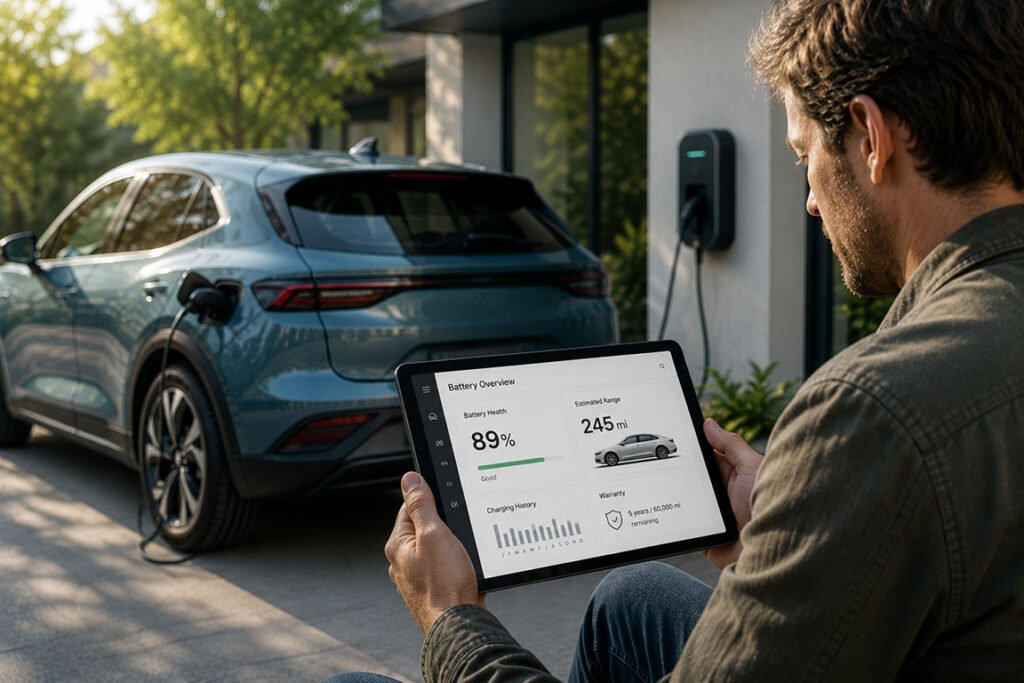
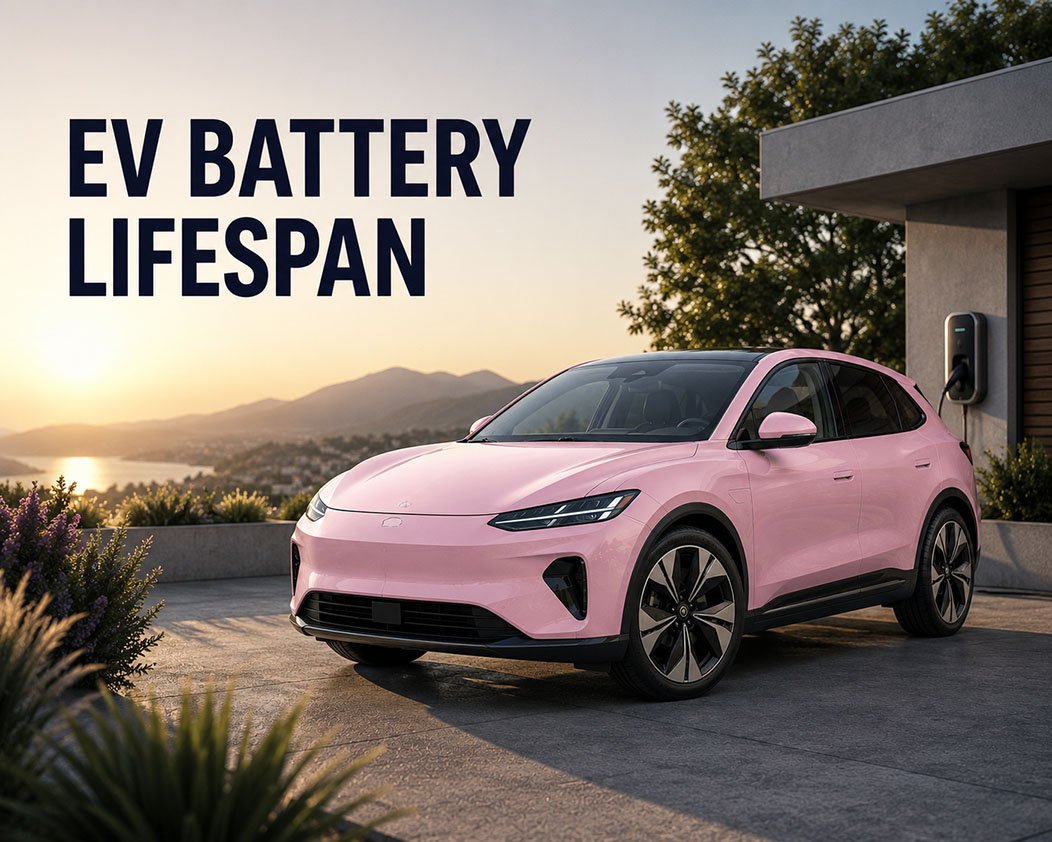
Editorial illustration of an electric vehicle battery pack representing EV battery lifespan
How Long Do EV Batteries Really Last?
A practical answer is this: many modern EV batteries can provide useful service for roughly 10 to 15 years in normal conditions. DOE guidance remains one of the clearest high-level references here, and it still frames battery life in broadly that range, with harsher climates shortening the outlook.
But the word “last” creates confusion. It makes people picture a battery that is either healthy or dead, when most EV packs age more gradually than that. For an owner, an EV battery “lasts” as long as the car still offers enough real-world range for commuting, errands, school runs, and the occasional longer trip. A battery can be older, outside warranty, and still be completely usable.
That is why battery lifespan is really a usability question disguised as a chemistry question.
EV Battery Life Is Not the Same as Battery Warranty
Battery lifespan and battery warranty are related, but they are not the same thing.
A battery warranty is the manufacturer’s promise. It usually covers the pack for a specific number of years, a mileage limit, and in many cases a minimum retained capacity threshold. DOE consumer guidance says many EV battery warranties are around 8 years or 100,000 miles, though exact terms vary by brand, model, and market.
Battery lifespan is the bigger real-world question. It is about how long the battery remains useful after years of driving, charging, weather exposure, and ordinary aging. A battery can be outside warranty and still be perfectly serviceable. It can also lose some range without being defective.
An 8-year battery warranty is not an 8-year expiration date.
Some warranties also specify a retained-capacity threshold, often around 70%, depending on the vehicle and market. That is common enough to be a useful reference point, but it still needs checking against the exact manufacturer warranty page for the specific region and model before publication or purchase.
What Battery Degradation Actually Means
Battery degradation simply means the battery has lost some of its original capacity.
Less capacity usually means less range. It does not mean the battery has “failed.” It means the car can store somewhat less usable energy than it did when new.
A car that delivered around 300 miles when new may deliver less after years of use, but that does not automatically mean the battery is unhealthy or the car is no longer practical. Real-world range can also move around because of weather, speed, tire choice, terrain, software, traffic, and driving style. So not every drop in displayed range is battery degradation, and not every older EV with reduced range is a problem car.
If you want the narrower capacity-loss angle, EV battery degradation fits naturally here. If you want the broader financial-risk angle, hidden costs of EV ownership belongs here too.
How Much Range Loss Is Normal?
The honest answer is that range loss varies more than people want.
Large real-world datasets increasingly suggest that many modern EVs degrade more slowly than early buyers feared. Recurrent says most EVs in its dataset see a small range dip in the first year, often around 2% to 3%, with the rate of loss typically slowing after that. Recent coverage of Recurrent data has reported average retention figures around 97% after three years and 95% after five years for the vehicles in that dataset, but those numbers should be treated as dataset-based signals rather than universal expectations for every EV. That is encouraging, but it should not be treated as a universal promise for every pack, every climate, or every model. Current figures should be verified before final publishing because these datasets evolve.
That is the useful middle ground. Battery aging is real. Panic is usually misplaced. Modern EVs often lose range gradually rather than dramatically, but model, climate, charging behavior, mileage, and thermal management still matter enough that generic reassurance can be just as unhelpful as fearmongering.
EV Battery Lifespan at a Glance
| Question | Practical Answer |
|---|---|
| Typical useful life | Often around 10–15 years in normal conditions, though climate and use can shift that range |
| Common warranty | Often around 8 years / 100,000 miles, depending on brand and market |
| Main issue | Gradual range loss, not sudden battery death |
| Biggest stress factors | Heat, aggressive charging habits, poor thermal management, mileage, and time |
| Used EV priority | Battery health and remaining warranty matter more than age alone |
What Affects EV Battery Lifespan?
This is where battery lifespan stops being an abstract worry and becomes a real ownership question.
Climate and Temperature
Heat is one of the biggest long-term stress factors for lithium-ion batteries. Cold weather can reduce range temporarily, but heat matters more to long-term aging. DOE guidance still frames hotter climates as a more serious battery-life challenge over time.
That does not mean every EV in a hot climate is in trouble. It means thermal management, parking habits, and charging routine matter more there. A well-managed battery in a hot region can still age gracefully. A poorly managed one may not.
Charging Habits
Charging habits matter, but not in the melodramatic way internet battery folklore likes to present it.
For many EVs, charging to 100% every day and leaving the car sitting full for long periods can add stress, especially with many nickel-based chemistries. Consumer-friendly guidance from Car and Driver notes that many manufacturers recommend lower daily limits for routine use, often around 80% to 90%, depending on the vehicle.
That said, owner-manual advice varies by battery chemistry and manufacturer. Some LFP-based vehicles may be designed around different everyday charging habits than NMC or NCA vehicles. The right answer is not “always stop at 80%.” The right answer is “follow the guidance for your actual EV.”
Fast Charging
Occasional DC fast charging is a normal part of EV ownership. Modern EVs are designed with that use case in mind, even if heavy reliance on it can add more stress in some conditions.
The more useful question is not whether fast charging is “bad,” but how often your life depends on it, how hot the battery is when you use it, and how good the thermal management system is. Consumer guidance generally treats frequent fast charging as a possible contributor to extra stress, especially when paired with heat or weaker battery cooling, but not as a battery death sentence.
So no, fast charging does not “destroy EV batteries.” But if you have better routine options, it usually makes sense not to build your whole weekly charging pattern around it. EV charging costs and EV charging experience both fit naturally here because charging behavior and battery care are not separate topics in real life.
Mileage and Age
Batteries age with use and with time.
High-mileage EVs go through more charge cycles. Low-mileage EVs can still age because calendar time and temperature exposure continue whether the car is driven or not. That is why odometer alone does not tell the whole story, and neither does age alone.
A younger car is not automatically the better battery bet. A well-used EV in a mild climate can be healthier than a lightly used one that spent years baking in extreme heat.
Battery Chemistry
Battery chemistry matters, but this section is most useful when kept practical.
LFP batteries are generally known for strong cycle life and durability. Nickel-based chemistries such as NMC and NCA can offer higher energy density, but often need more careful charge management in everyday use. Car and Driver’s consumer overview makes this distinction clearly enough without drowning the reader in battery jargon.
That does not make one chemistry universally “best.” It means different batteries may age differently depending on routine charging, temperature, and how the car is actually used.
Thermal Management and Software
Good thermal management is one of the quiet reasons some EVs age better than others.
Cooling and heating systems help keep the battery in a healthier operating window. Software matters too. Battery management systems control charging speed, temperature, usable buffers, and protection logic. Some of the difference between a battery that ages gracefully and one that ages less gracefully comes down to what the car is doing in the background every day.
That is one reason battery life is not just about chemistry on a spec sheet. It is also about how the vehicle manages that chemistry over time.
What Affects EV Battery Life?
| Factor | Why It Matters |
|---|---|
| Climate | Heat is one of the biggest long-term stress factors for lithium-ion batteries |
| Fast charging | Frequent DC fast charging may add more stress, especially with heat or weaker thermal control |
| Charging to 100% | Leaving many batteries full for long periods can add stress, depending on chemistry and manufacturer guidance |
| Battery chemistry | LFP, NMC, and NCA can differ in cycle life, energy density, and everyday charge-management needs |
| Thermal management | Cooling and heating systems help protect long-term battery health |
| Software | Battery management systems control charging speed, temperature, and protection buffers |
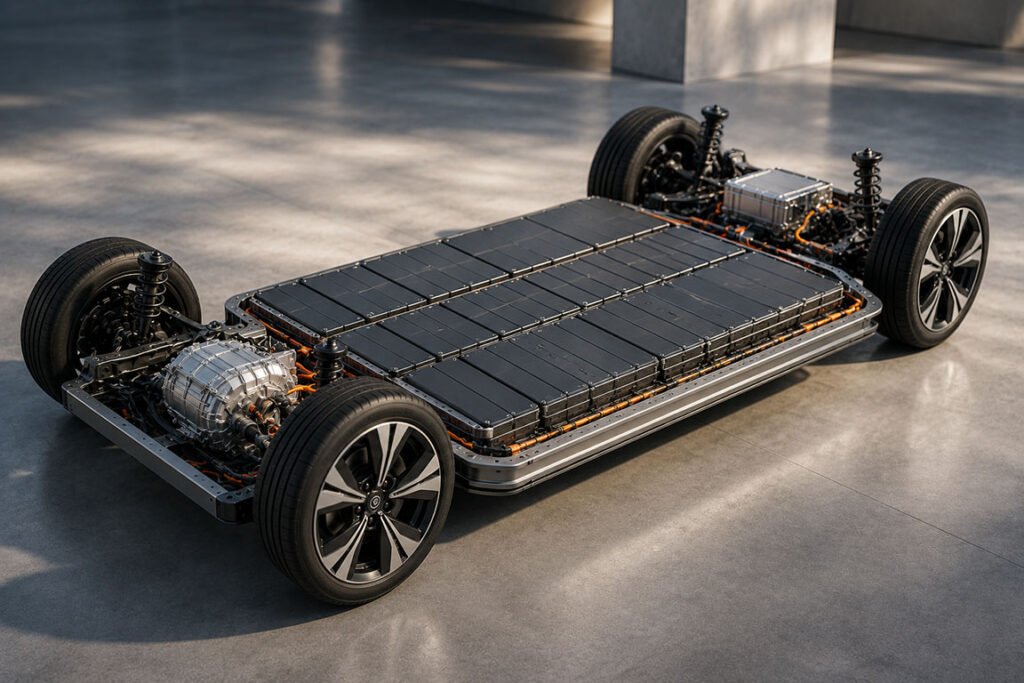
Editorial illustration of an electric vehicle battery pack representing EV battery lifespan
Do EV Batteries Need to Be Replaced?
Usually, no.
Usually, no. Most EV owners should not think of battery replacement as a routine maintenance event, because reduced range over time is far more common than sudden pack failure. Full battery replacement can be expensive, but it is not something most drivers should expect at a normal service interval. The more common long-term issue is reduced usable range, not sudden pack failure. DOE guidance still frames today’s EV batteries as designed for extended life rather than scheduled replacement.
Replacement cost varies enormously by brand, model, battery size, market, labor rate, and whether the repair involves a new pack, a refurbished pack, or module-level work. So any article that offers one universal battery replacement number is usually oversimplifying the subject into nonsense.
If you want the maintenance framing, EV maintenance costs belongs naturally here. Battery replacement is not routine maintenance, even though it is the phrase people love to use when trying to scare each other online.
How Long Do Tesla, BYD, Hyundai and Other EV Batteries Last?
This is where caution matters more than confidence.
No serious editor should tell you one brand’s battery “will last 20 years” as if battery life were a fixed promise rather than a mix of climate, mileage, charging habits, chemistry, and thermal management.
What you can say is what tends to matter most in ownership.
| Brand / Type | What Matters Most | Practical Ownership Note |
|---|---|---|
| Tesla | Strong thermal management, large real-world data pool, warranty terms vary by model | Mature software and battery management help, but real battery life still depends on climate, mileage, and use |
| BYD | LFP Blade Battery reputation, durability-focused chemistry, warranty varies by market | Durability reputation is a strength, but local warranty terms and real-world climate still matter |
| Hyundai / Kia | Strong battery management and fast-charging hardware, market-specific warranty terms | Well-managed packs can age well, but charging habits and heat still shape outcomes |
| Nissan | Older Leaf models had more degradation concerns in hot climates, newer models improved | Older short-range EVs deserve extra caution in used markets, especially in hotter regions |
| Mercedes / BMW / Volvo | Premium battery management and strong engineering, but warranty and repair costs vary | Premium badge does not remove the need to check battery health and warranty terms carefully |
| LFP-based EVs generally | Potentially strong cycle life and durability | Strong chemistry helps, but real-world life still depends on thermal control and use patterns |
This is also where Tesla vs BYD reliability can fit naturally, because battery reputation is one part of brand trust, not the whole thing.
Used EVs: How to Check Battery Health Before Buying
This is one of the most useful parts of the subject.
Ask for a battery health report if one is available. Check the remaining battery warranty and the car’s mileage. Review service records. Ask where the car was used, especially if it lived in a very hot climate. If possible, ask whether it relied heavily on DC fast charging. And do not rely only on the dashboard range estimate, which can reflect recent driving behavior as much as battery condition.
Consumer Reports’ used EV buying guidance is useful here because it treats battery condition as one of the few things that can materially change the financial risk of the purchase.
A test drive matters too. Look at the car’s indicated efficiency and whether the range estimate behaves sensibly. A healthy used EV is not defined by one perfect number. It is defined by whether the battery still supports a realistic daily routine.
For a used EV buyer, the battery is not the only thing that matters, but it is one of the few things that can materially change the financial risk of the purchase.
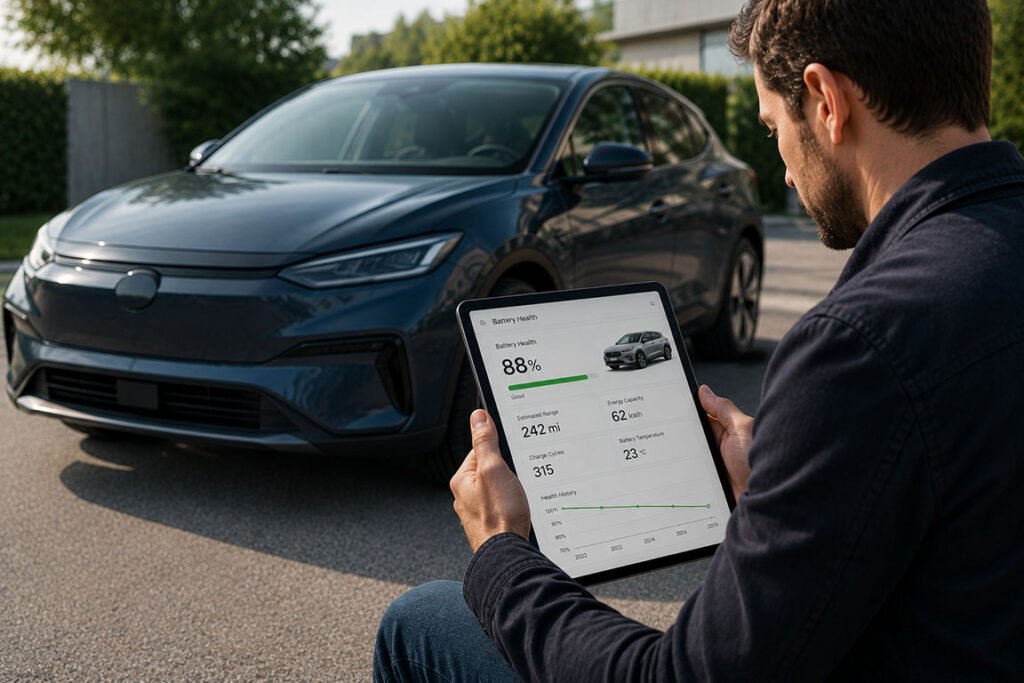
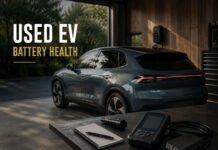
Editorial illustration of a used electric vehicle battery health check before purchase
New EV vs Used EV Battery Concerns
| Buyer Type | Main Battery Concern |
|---|---|
| New EV buyer | Long-term range loss and warranty confidence |
| Used EV buyer | Current battery health and remaining warranty |
| High-mileage driver | Charge cycles, DC fast-charging habits, and usable range after years of use |
| Apartment driver | Public-charging dependence and how reduced range may change the routine over time |
| Hot-climate driver | Long-term heat exposure and battery cooling effectiveness |
How to Make an EV Battery Last Longer
This part should be practical, not neurotic.
- Avoid leaving the battery at 100% for long periods unless the manufacturer recommends that for your battery chemistry.
- Use a daily charge limit when appropriate.
- Do not let the car sit at very low charge for long periods.
- Use DC fast charging when needed, but do not make it your only routine if you have better options.
- Keep software updated.
- Use battery preconditioning before fast charging when available.
- Follow the owner’s manual for your specific EV.
- Be more careful in very hot climates.
- Use home or Level 2 charging when convenient.
- Do not obsess over every percentage point. Normal use is expected.
That last point matters. Battery care should not feel like looking after a fragile heirloom. Reasonable habits help, but the goal is a usable long-term routine, not constant monitoring.
If you rely heavily on public charging, charging an EV without a garage and EV charging experience both fit naturally here because charging lifestyle and battery habits are connected.
Everything you need to know about the largest and most important part of a used electric car:
Final Verdict: Should You Worry About EV Battery Life?
Most modern EV buyers should not be terrified of battery life.
EV batteries are usually designed to last well beyond the warranty period, and the most common long-term issue is gradual range loss rather than sudden failure. DOE guidance still supports that broad framing.
That said, battery life is still shaped by climate, mileage, charging habits, chemistry, thermal management, and software. Used EV buyers should pay closer attention to battery health and warranty status than new-car buyers, because that is where battery condition can become part of the purchase risk.
For most buyers, the right question is not whether the battery will suddenly die. It is whether the car will still offer enough useful range for their life after years of ownership.
FAQ
1. How many years do EV batteries last?
Many modern EV batteries can offer useful service for roughly 10 to 15 years in normal conditions, though climate and use can move that range up or down.
2. Do EV batteries need to be replaced after 8 years?
Usually no. Eight years is often a warranty marker, not a routine replacement point.
3. How much range do EV batteries lose over time?
It varies widely, but many modern EVs appear to lose range gradually rather than dramatically. Recurrent says most EVs in its dataset see a small initial dip, often around 2% to 3% in year one, with slower loss after that. Verify current figures before publication.
4. Is fast charging bad for EV batteries?
Not inherently. Modern EVs are designed for it, but very frequent DC fast charging may add more stress in some conditions, especially with heat or weaker thermal management.
5. How can I check battery health on a used EV?
Ask for a battery health report, check warranty status, review service records, ask about climate history, and do not rely only on the dashboard range estimate.
6. Do LFP batteries last longer?
They are generally known for strong cycle life and durability, but real-world outcomes still depend on how the pack is managed and used.
7. What is the biggest factor in EV battery lifespan?
Heat is one of the biggest long-term stress factors, but battery life is really shaped by a combination of climate, charging habits, chemistry, thermal management, mileage, age, and software.