

















Introduction
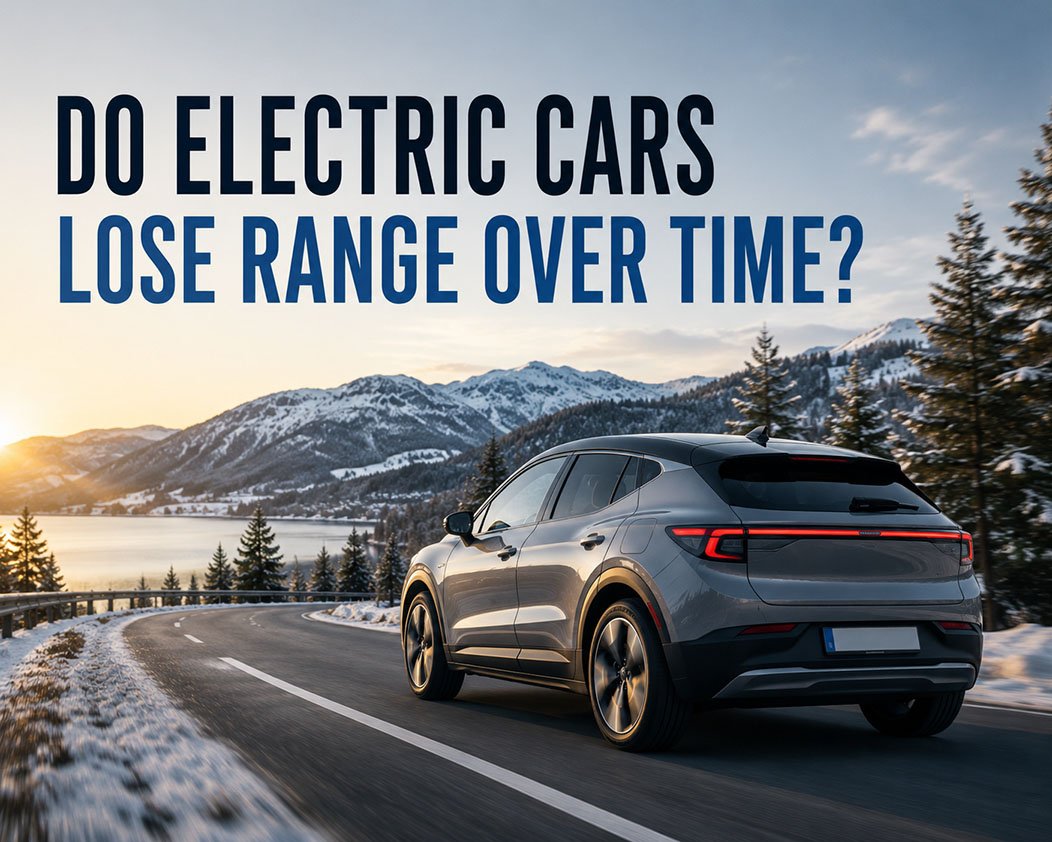
Do electric cars lose range over time? Yes, they do, but usually far less dramatically than buyers fear. Battery degradation is real, because every lithium-ion battery gradually loses usable capacity with age, charging cycles, and exposure to heat. The important part is scale. In most modern EVs, the loss tends to be gradual rather than catastrophic, which is why warranty terms and real-world fleet data matter far more than outdated battery myths.
That fear is understandable. Range is the number buyers remember most, so any suggestion of future range loss sounds expensive, inconvenient, and slightly ominous. It also gets mixed up with cold-weather range drops, which are usually temporary, and with isolated battery failures, which are much rarer than ordinary long-term capacity fade.
This guide is here to answer the question properly: do electric cars lose range over time, how much is normal, what actually speeds it up, and whether EV battery degradation should change the way you shop for a new or used electric car. If you are still working through the bigger picture first, our electric car buying guide is the right place to start.
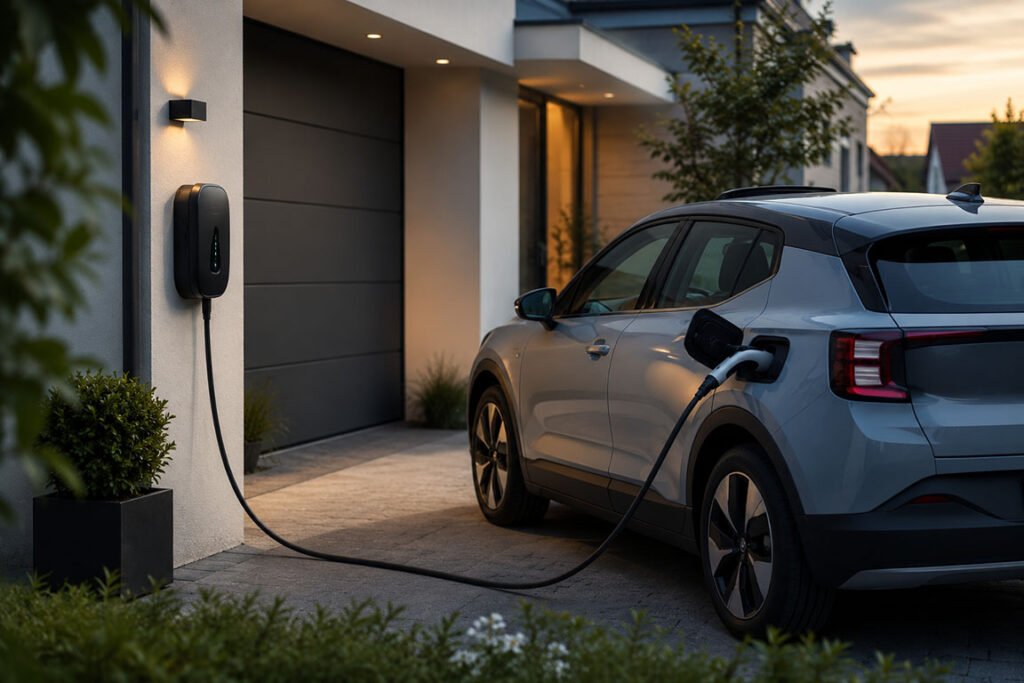
For most owners, home charging remains the simplest way to live with an EV and the easiest way to manage long-term battery care.
Do EV Batteries Actually Degrade Over Time?
They do. That much is straightforward. Lithium-ion batteries lose capacity over time through a combination of calendar aging and cycle aging. In plain English, batteries age both from being used and from simply existing, especially when they spend long periods hot or sitting at very high states of charge.
The more useful distinction is between normal degradation and unusually fast or problematic degradation. Normal degradation means a battery gradually holds a little less energy than it did when new. Problematic degradation means the loss is unusually fast, accompanied by faults, or serious enough to undermine everyday usability earlier than expected. Most owners experience the first, not the second. Geotab’s 2024 real-world analysis found an average EV battery degradation rate of 1.8% per year, while its updated 2026 analysis, using a larger dataset of more than 22,700 vehicles across 21 makes and models, put the average at 2.3% per year. That is not nothing, but it is also nowhere near the old myth that EV packs quickly become unusable.
That is the point many buyers miss. Batteries are consumable in the engineering sense, but most modern EV packs are lasting long enough to remain useful for many years, and in many cases for the usable life of the car itself. NREL notes that batteries usually last beyond warranty because manufacturers build in design margins, and Volvo says its batteries are designed to last beyond 15 years or roughly 300,000 km.
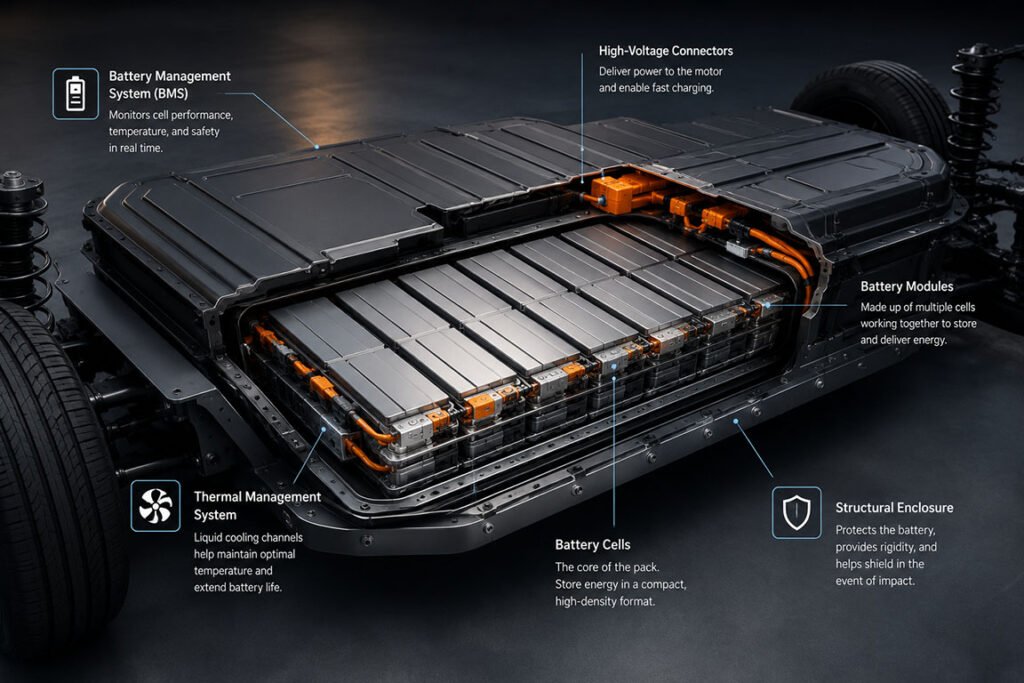
Battery degradation is real, but in most modern EVs it is gradual enough to be managed rather than feared.
How Much Range Loss Is Normal?
In the real world, the first few years usually bring a modest drop in range rather than a dramatic cliff edge. Tesla says its Model 3 and Model Y batteries lose about 15% of capacity on average after 200,000 miles, while Geotab’s broader fleet data points to a typical annual degradation rate closer to the low-single-digit range. Those two data points are not identical, but they tell the same story: moderate long-term fade is normal, while severe early collapse is not.
A sensible rule of thumb is this: a well-managed EV often loses only a few percent in its first few years, then continues to decline gradually. That means most owners will notice some reduction in displayed range over time, but not the kind of dramatic disappearance that makes the car suddenly unusable.
| Vehicle Age | Typical Battery Health | Estimated Range Loss |
|---|---|---|
| 1–2 years | ~96–98% | ~2–4% |
| 3–5 years | ~91–95% | ~5–9% |
| 6–8 years | ~85–91% | ~9–15% |
| 8+ years | Often still above warranty floor | ~15%+ depending on use |
This table is a practical guide, not a universal promise. Usage, chemistry, climate, charging habits, and thermal management all matter. But it is a much more realistic picture than the old idea that an EV battery becomes worthless after a few winters. Tesla’s own long-term data and Geotab’s fleet-level analysis both point toward gradual decline rather than sudden failure.
For a more practical look at how battery aging appears in real ownership, this long-term Tesla battery video is worth watching before the next section.
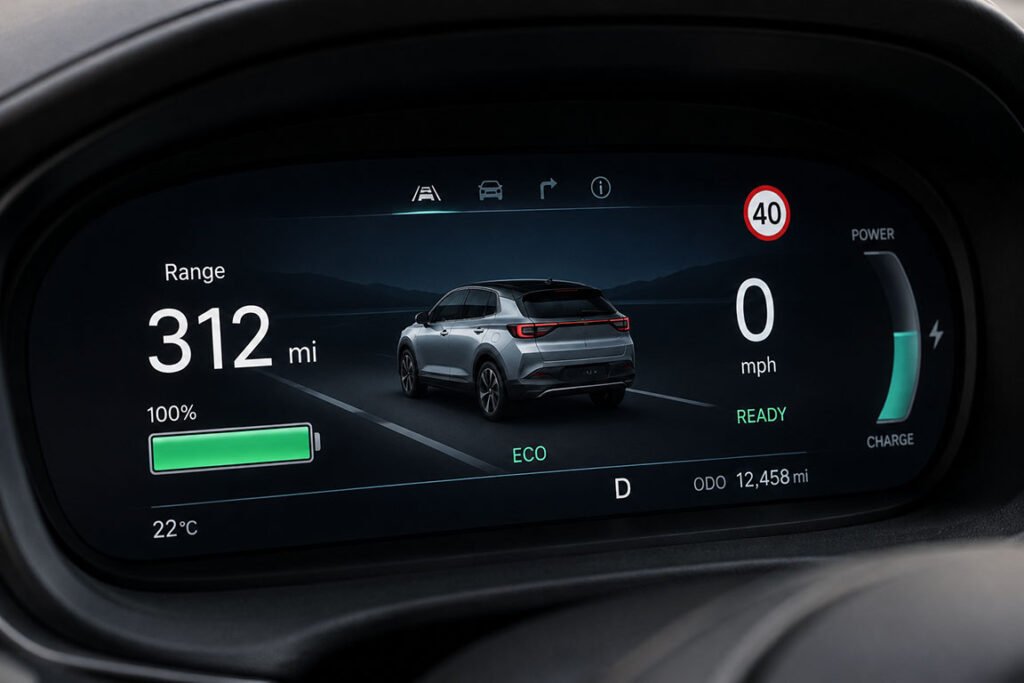
A lower displayed range figure after several years is normal. What matters is whether the loss remains modest and predictable.
What Causes EV Battery Degradation?
In real-world ownership, five factors matter most.
First, heat. Elevated temperatures accelerate battery aging, especially when the pack is also sitting at a high state of charge. That is one reason thermal management matters so much in modern EV design.
Second, frequent fast charging. DC fast charging is useful and often necessary, but repeated high-power charging does add stress, especially if thermal control is poor. NREL has long noted that aggressive fast charging can increase battery temperatures and degradation risk, and Geotab’s 2026 study linked increased fast-charging use with higher average degradation than in its earlier dataset.
Third, keeping the battery at 100% for long periods. Fully charging an EV is not inherently harmful when you need the range, but storing it full day after day is generally harder on the pack than living mostly in the middle of its charge window.
Fourth, hard use and repeated deep cycling. Regularly draining the battery very low and pushing the car hard in extreme conditions can increase wear over time. Again, modern packs are robust, but usage patterns still matter.
Fifth, time itself. Even lightly used batteries age. That is why a low-mileage EV is not automatically battery-perfect if it has spent years stored fully charged in a hot climate. Calendar aging is real.
Which EV Brands Handle Battery Aging Best?
Tesla still has the strongest public long-term narrative because it has a large fleet, lots of high-mileage cars, and published degradation data. Its 2023 Impact Report said Model 3 and Model Y batteries lose about 15% of capacity on average after 200,000 miles, which is a reassuring figure by normal car-lifespan standards.
Hyundai and Kia also deserve credit. Their EVs carry long high-voltage battery warranties, and Hyundai’s official terms in Europe and Turkey generally point to 8 years of high-voltage battery coverage, with mileage limits depending on market. That does not prove every car ages perfectly, but it does show confidence in long-term durability.
BYD is interesting because it combines a strong reputation for battery manufacturing with increasingly aggressive warranty coverage. In 2026, BYD announced an extension of Blade Battery coverage in some European markets to eight years or 250,000 km with a guaranteed minimum state of health of at least 70%. That is a serious warranty commitment.
Volvo is more conservative in tone, but still clear. Volvo says its batteries are designed to last beyond 15 years or roughly 300,000 km, and its UK warranty covers the high-voltage battery for eight years or 100,000 miles, including repair or replacement if state of health drops below 70% because of a manufacturing or material defect.
The fairest editorial conclusion is that no brand is immune to degradation, but the better modern EVs now manage it well enough that long-term durability is no longer a fringe concern. It is a normal ownership variable, not a built-in disaster.
Real-World EV Battery Lifespan
This is where the conversation becomes more grounded. NREL says some experts believe EV batteries can perform well for another 2 to 6 years beyond warranty, giving a total in-vehicle life of roughly 12 to 16 years. Volvo’s own battery page points in a similar direction, suggesting a lifespan beyond 15 years or around 300,000 km.
Battery warranties also help anchor expectations. Tesla covers its battery and drive unit for 8 years with a minimum 70% capacity retention threshold, with mileage limits depending on version. Hyundai’s high-voltage battery warranty is generally 8 years, with mileage caps that vary by region. Volvo’s UK battery warranty is eight years or 100,000 miles with a 70% state-of-health threshold.
That matters because it tells you what manufacturers are willing to stand behind. It also tells you that most EV buyers will spend many years with normal range fade rather than facing immediate pack replacement. For a broader breakdown, see our How long do EV batteries last? guide, and if you are comparing actual used-car value in the segment, our Tesla Model 3 review is still a useful benchmark.
How to Reduce Battery Degradation
You do not need to treat an EV like laboratory equipment, but a few habits do help:
- Keep daily charging around 80% when you do not need the full pack.
- Use DC fast charging as a tool, not the default for every charge.
- Avoid leaving the battery sitting at 100% for long periods.
- Park in the shade, indoors, or precondition when possible in extreme heat or cold.
- Let the car’s thermal management do its job rather than repeatedly overriding it for convenience.
- For long-term ownership, think in terms of habit balance, not perfection.
None of this means fast charging is bad or full charging is forbidden. It means moderation works.
Does Cold Weather Reduce EV Range?
Yes, often quite noticeably, but this is also where many drivers confuse temporary winter range loss with permanent battery degradation. They are not the same thing.
Cold weather reduces EV range because batteries are less efficient at low temperatures and because the car has to spend energy warming the cabin and often the battery itself. The U.S. Department of Energy says EV range can drop by up to 32% in freezing temperatures, and its fuel-economy guidance says that at 20°F, range is about 12% lower than at 75°F even without cabin heat, while mixed driving with heating can cut fuel economy roughly 39% and range about 41%.
That sounds dramatic, but the key word is temporary. When temperatures rise, the missing range usually comes back. Cold weather affects efficiency and available energy in the moment; it is not the same as the battery permanently aging by that amount.
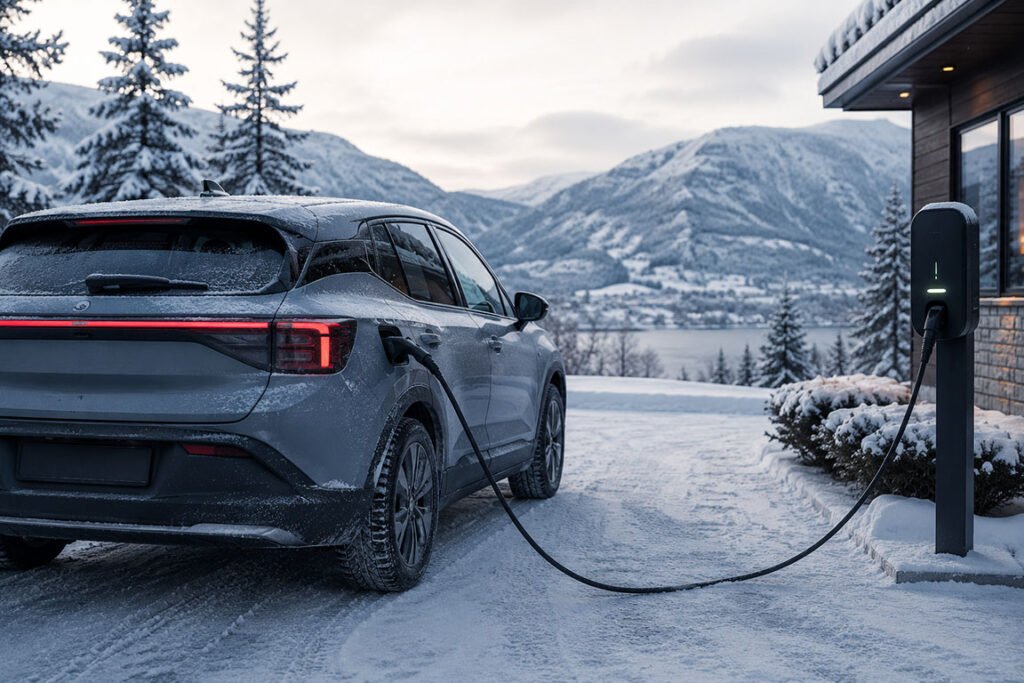
Winter range loss is real, but it is usually a temporary efficiency issue rather than permanent battery degradation.
Is EV Battery Replacement Really Expensive?
Yes, battery replacement can be expensive. But it is also one of those topics that gets discussed far more often than it is actually experienced.
The important reality is that most owners never replace the battery pack during normal ownership, and many battery issues that do arise happen inside warranty coverage rather than as an out-of-pocket catastrophe. Tesla, Hyundai, Volvo, and now BYD all offer substantial battery warranty terms, generally centered around 8 years of cover and around 70% capacity retention floors, though mileage limits vary by brand and market.
That does not mean battery replacement is mythical. Packs can fail, modules can need repair, and out-of-warranty work can be expensive. But the more realistic ownership story is not “every EV needs a battery.” It is “most EVs gradually lose some range, while a much smaller number need serious battery work.” That is a very different ownership risk from the one many buyers imagine.
Final Verdict: Should You Worry About EV Battery Degradation?
A little, yes. A lot, no.
Do electric cars lose range over time? Absolutely. EV battery degradation is real, and if you keep a car for long enough, you will almost certainly see some reduction in range. But the real-world evidence now points to gradual aging, not rapid collapse. Modern EV packs usually lose capacity in a manageable way, many remain comfortably above warranty thresholds after years of use, and cold-weather range loss should not be confused with permanent battery decline.
The sensible conclusion is this: EV batteries are not immortal, but they are also not the ticking time bomb many buyers still imagine. If you shop carefully, charge sensibly, and buy from a brand with a credible warranty and strong thermal management, battery aging should be something you understand, not something that scares you away.
If you are still comparing ownership costs, read our EV charging cost guide. If you are still deciding where the market is heading, our best affordable EVs roundup is a good next step.