














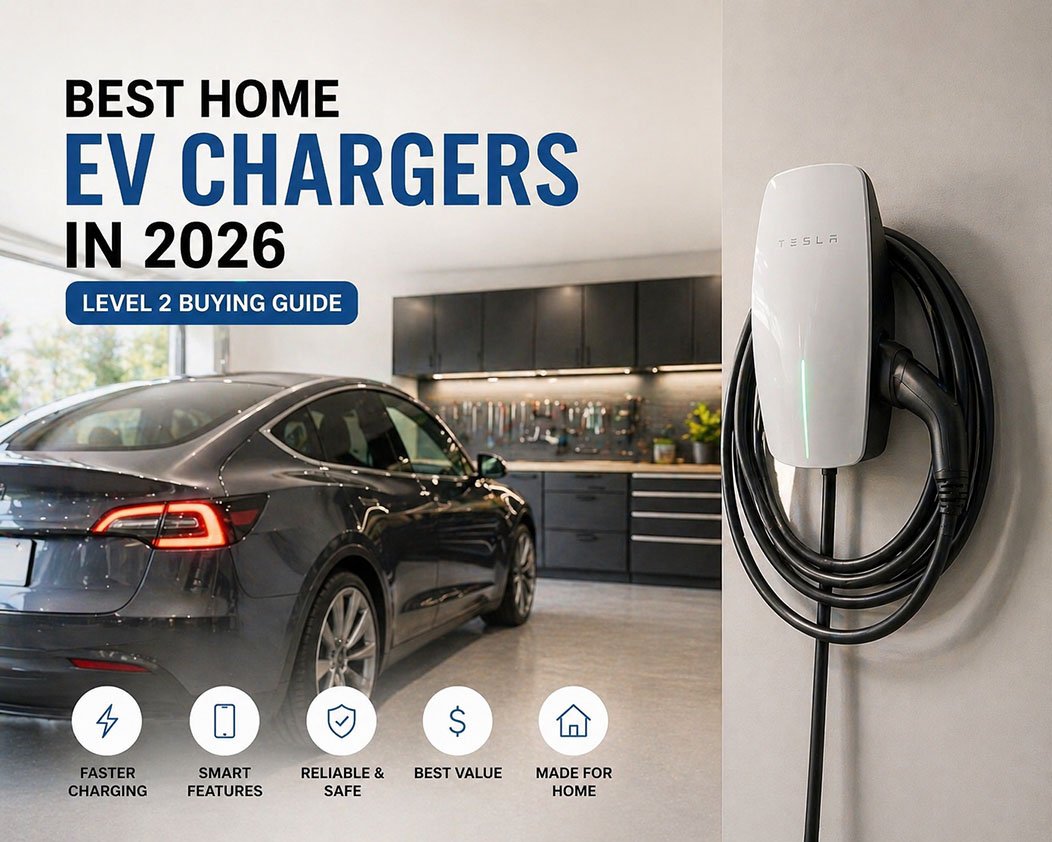
If you own an electric vehicle, the charging experience at home matters more than almost anything else. Buyers obsess over range, horsepower, touchscreen size, or whether the ambient lighting can simulate a nightclub. Then they discover the real truth: if home charging is annoying, EV ownership becomes annoying.
That is why the best home EV chargers in 2026 are one of the smartest EV purchases you can make. A proper Level 2 charger can reduce charging times dramatically, improve convenience, add scheduling tools, lower energy costs through off-peak charging, and future-proof your garage for years.
Many new EV owners assume the portable charger included with the car is enough. Sometimes it is. But Level 1 charging through a normal wall outlet is slow, often painfully slow. If you drive daily, commute regularly, or own more than one EV, upgrading to a Level 2 charger changes the ownership experience immediately.
In this guide, we compare the best home chargers based on:
- charging speed
- reliability
- app quality
- cable length
- weather resistance
- smart energy management
- installation flexibility
- long-term value
If you are still choosing a vehicle, read our best electric cars to buy in 2026 guide.
If you recently bought a Tesla, see our Tesla Model Y Juniper Review 2026 article.
Whether you drive Tesla, Hyundai, Kia, Ford, BMW, Rivian, or another EV, this Level 2 buying guide will help you choose the right charger without wasting money on shiny nonsense.
What Is a Level 2 EV Charger?
A Level 2 charger uses 240V power, similar to major household appliances like dryers or ovens. Compared with standard Level 1 outlets, Level 2 charging is much faster and more practical for daily use.
Typical gains:
- Level 1: 3 to 5 miles of range per hour
- Level 2: 20 to 45+ miles of range per hour (varies by car and amperage)
That difference means overnight charging becomes realistic rather than theoretical.
Who Needs a Home EV Charger?
Buy One If:
- You drive more than 30 miles daily
- You own two EVs
- Public charging is inconvenient
- You want scheduled off-peak charging
- You plan long-term EV ownership
You Can Wait If:
- You drive rarely
- Free workplace charging covers most needs
- You lease short-term
- You rent and cannot install one yet
Quick Comparison Table
Video: Best Home EV Chargers Compared in 2026
1. Tesla Universal Wall Connector
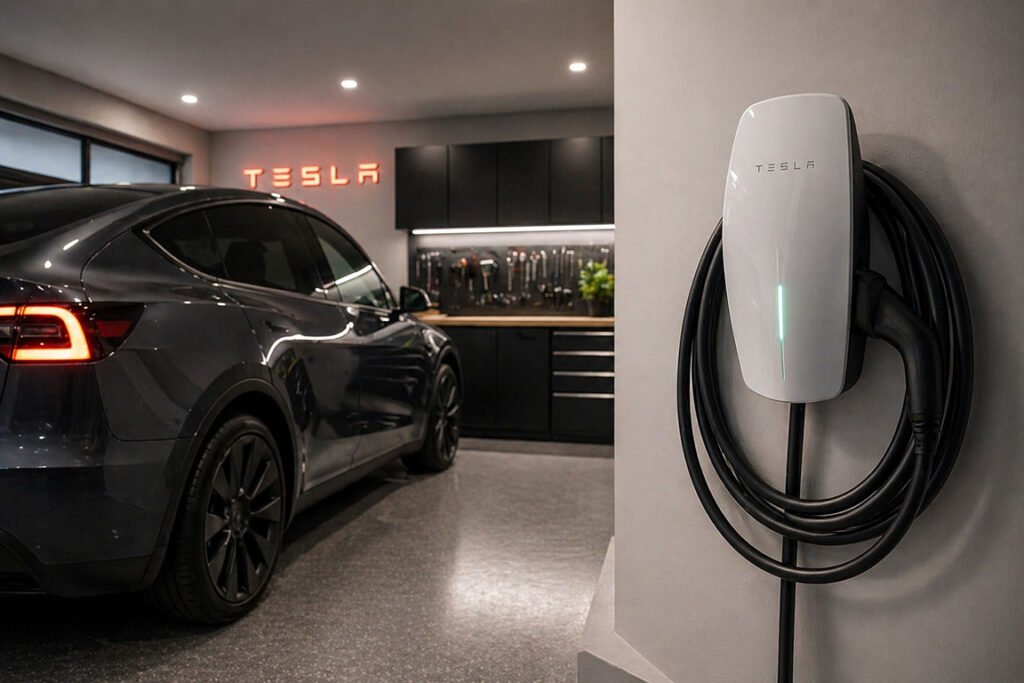
The Tesla Universal Wall Connector is arguably the most complete home charger in 2026. It combines Tesla reliability, clean design, strong charging speeds, and compatibility with both Tesla/NACS and J1772 vehicles depending on configuration.
That makes it ideal for mixed-household garages or future-proof buyers who may switch brands later. Setup is clean, hardware quality is excellent, and Tesla generally understands the ownership journey better than accessory companies.
Best for buyers who want one charger to handle multiple EV futures.
2. ChargePoint Home Flex
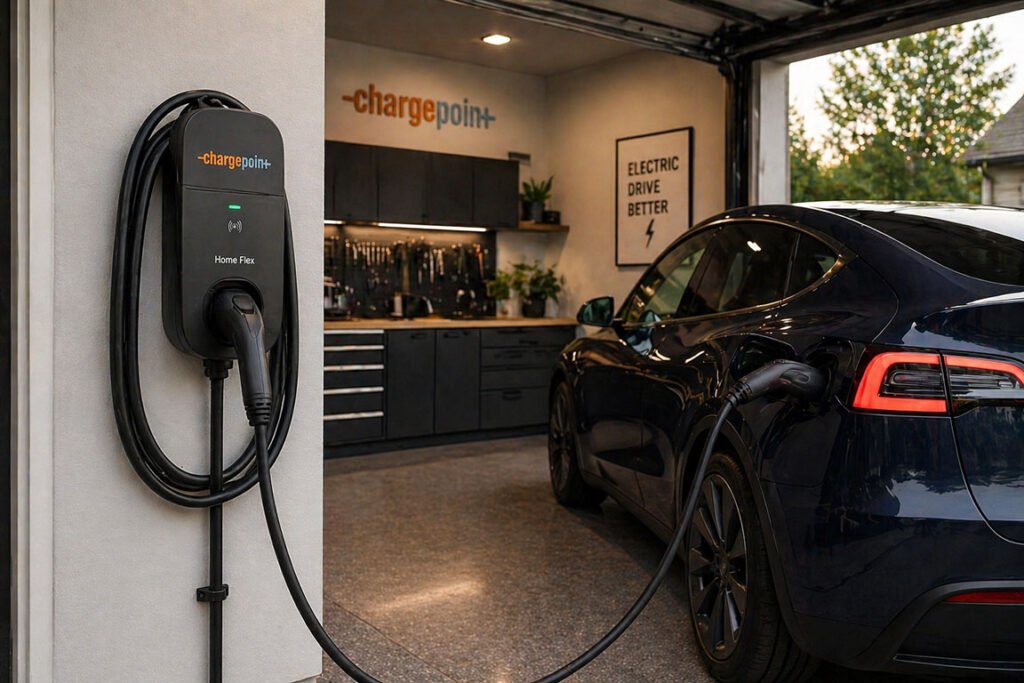
ChargePoint Home Flex remains a favorite because its app ecosystem is mature and polished. Scheduling, usage tracking, and integration options are excellent.
For users who care about electricity data, energy reports, and remote control, it remains one of the smartest choices.
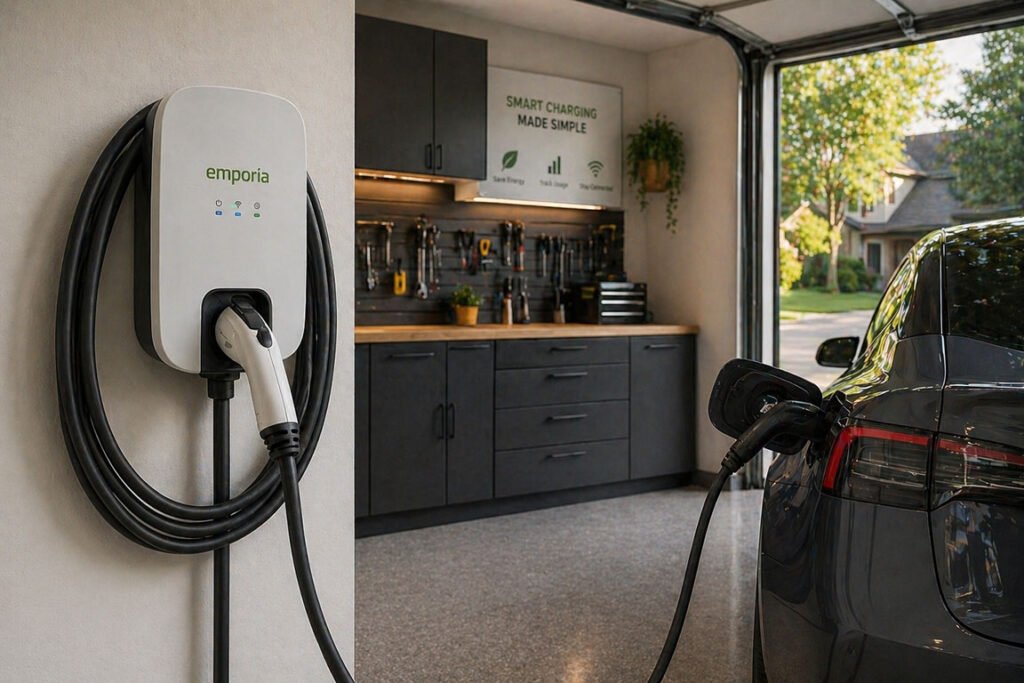
3. Emporia EV Charger
Emporia wins value shoppers over because it delivers serious performance without premium pricing. If budget matters but you still want smart charging features, this is one of the easiest recommendations.
A rare case where cheaper does not automatically mean regrettable.
4. Wallbox Pulsar Plus
Compact, modern, attractive, and loaded with smart features. Great for tighter garages or design-conscious homeowners who dislike bulky industrial charger boxes.
Because yes, some people care how their wall charger looks. Strange, but real.
5. Grizzl-E Classic
Built like workshop equipment. Rugged, weather resistant, straightforward, and dependable. Less elegant, more tank-like.
Best for cold climates, outdoor installs, or owners who prioritize durability over app glamour.
Installation Costs and Reality Check
Buying the charger is only part of the cost.
Typical install variables:
- panel capacity
- breaker availability
- cable run distance
- permit rules
- indoor vs outdoor mount
Some installs are simple. Others become expensive electrical archaeology.
Budget estimate:
- Easy install: $300 to $700
- Moderate: $700 to $1,500
- Complex panel work: $1,500+
Always use a licensed electrician.
Video: EV Charger Installation Cost Explained
Smart Features Worth Paying For
Useful:
- scheduling
- load balancing
- app control
- usage tracking
- solar integration
- access control
Less useful:
- meaningless animations
- gimmick LEDs
- features you never open after week one
Humans adore paying extra for menus they never touch.
Tesla vs Non-Tesla Owners
Tesla Owners
Tesla Universal Wall Connector is the cleanest path.
Non-Tesla Owners
ChargePoint, Emporia, Wallbox, Autel all strong options.
Mixed Household
Universal connectors matter most.
Final Verdict
For most buyers, the best home EV charger in 2026 is the one that charges reliably every night, works with your current car, fits your electrical setup, and does not become obsolete next year.
If you own Tesla or may switch brands, Tesla Universal Wall Connector is excellent. If smart features matter most, ChargePoint wins. If value matters, Emporia is hard to ignore.
A great charger is boring, dependable, and invisible. That is exactly what you want.
FAQ
What is the best home EV charger in 2026?
For most buyers, Tesla Universal Wall Connector, ChargePoint Home Flex, and Emporia are top choices.
Is a Level 2 charger worth it?
Yes, especially for daily drivers or multi-EV households.
Can I use one charger for different EV brands?
Yes, depending on connector type or universal hardware.
How much does installation cost?
Usually $300 to $1,500+, depending on electrical work.