




















Introduction
The Volvo EX30 2026 review matters because this is one of the few compact EVs that promises something more than efficiency and neat packaging. Volvo is asking buyers to see the EX30 as a genuine premium product, not just a small electric crossover with Scandinavian branding.
That is exactly why the EX30 matters in 2026. The market for compact electric SUVs is getting stronger, but genuinely premium options are still limited. Some rivals offer more range for the money. Others offer better practicality. Very few manage to feel compact, genuinely upscale, and convincingly modern at the same time.
That is what makes this Volvo EX30 2026 review worth asking in the first place: does the EX30 actually feel premium from behind the wheel and in everyday use, or does it simply look premium in photos and spec sheets?
The short answer is that the EX30 gets surprisingly close. It is not the most spacious EV in the class, and it does not always hide its price point in the details, but it does feel more polished and more carefully judged than many small electric rivals.
If you are still comparing the wider market before narrowing things down, our electric car buying guide is the best place to start.
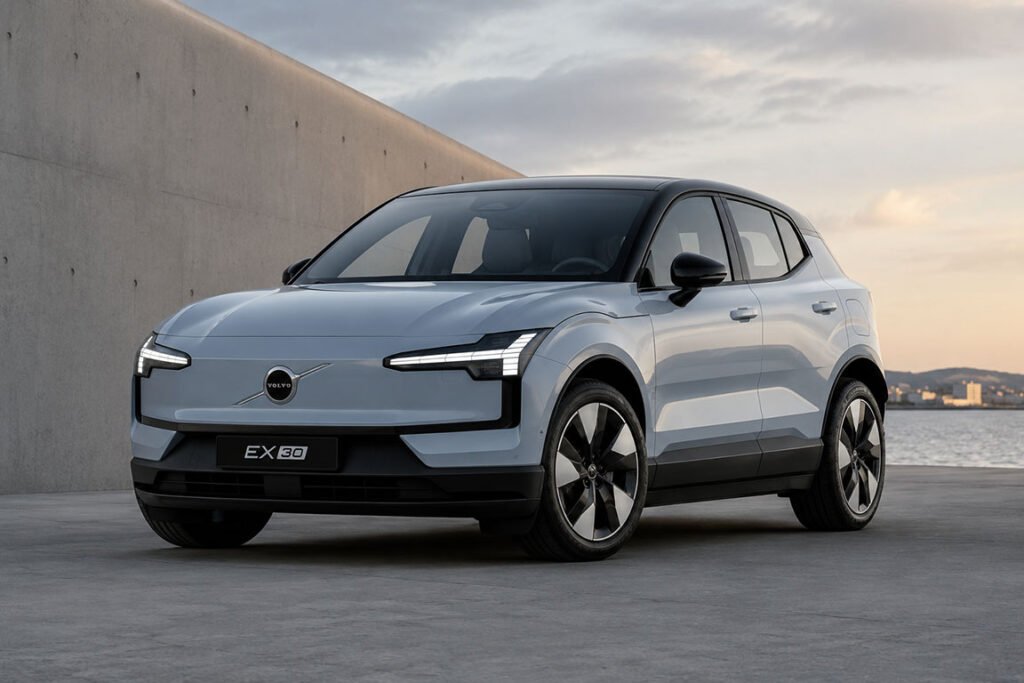
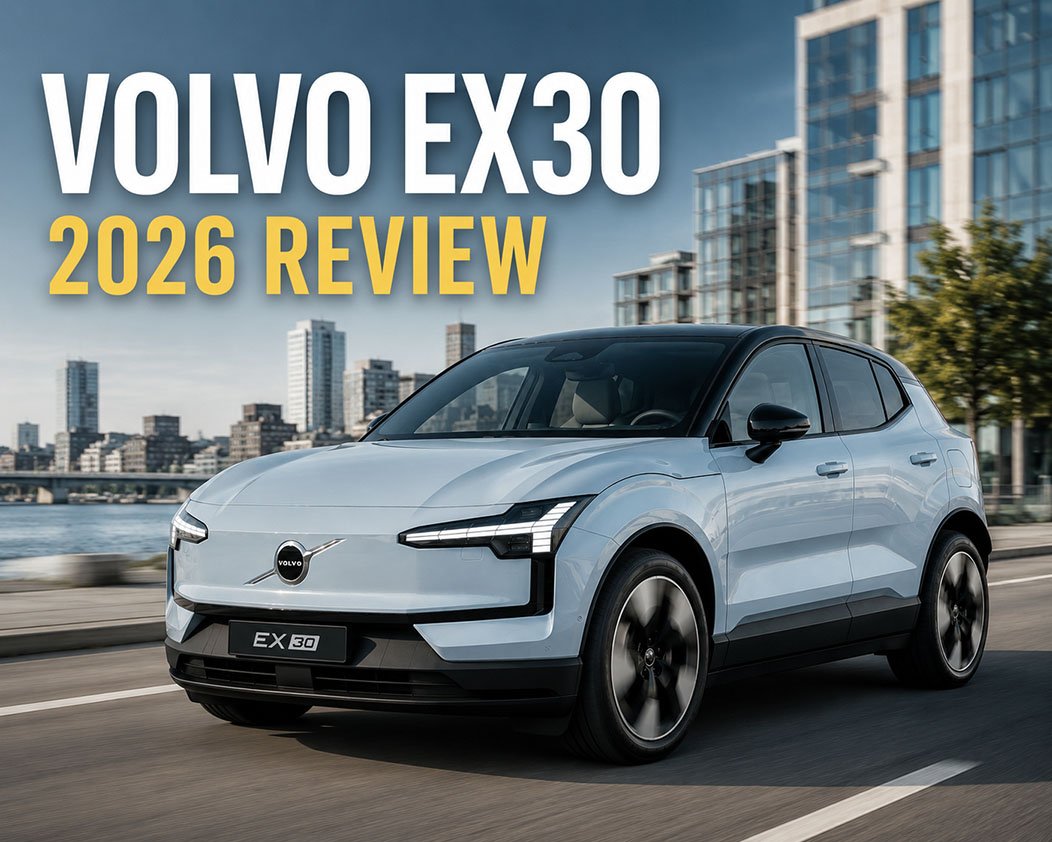
The Volvo EX30 brings clean Scandinavian design into the small premium EV class without looking overstyled or oversized.
Exterior Design & Scandinavian Styling
The EX30 looks exactly like a modern Volvo should. It is clean, restrained, and instantly recognizable without relying on oversized grilles, fake aggression, or unnecessary visual noise. In a segment where many small EVs still look overworked, the EX30 feels unusually calm.
That calmness is part of its premium appeal. The proportions are tidy, the surfacing is smooth, and the details are kept under control. It has enough presence to feel expensive, but it never tries too hard. That balance matters in a compact premium EV.. A car at this size does not need drama. It needs confidence.
The city-friendly shape also suits the car’s character. The EX30 looks made for dense streets, short commutes, narrow parking spaces, and everyday use in places where a full-size SUV simply feels unnecessary. It is not rugged in the traditional crossover sense, and that works in its favor. Volvo has avoided turning it into a lifestyle costume.
Editor’s take: the EX30 is one of those designs that grows on you because it is so well resolved. It does not shout for attention, but it looks premium in the way good Scandinavian products often do: by being coherent, modern, and hard to fault.
Interior Quality & Technology
This is where the EX30 makes its strongest case. The cabin is minimalist, but not empty. The design has intention. That distinction is central to the EX30’s appeal.
Volvo has built the interior around a single 12.3-inch central display, with most major functions routed through that screen. Officially, the EX30 uses a streamlined layout with Google built-in infotainment and a simplified user interface designed to reduce clutter. In visual terms, it works. The cabin feels modern, airy, and unmistakably branded.
Material quality is good rather than lavish, but that is not a criticism. The EX30 does not try to imitate a larger luxury SUV in miniature. Instead, it leans on clever textures, cleaner surfaces, smarter storage ideas, and a stronger sense of atmosphere. The result is a cabin that feels premium because it has been designed with discipline, not because every surface is padded.
From the driver’s seat, the atmosphere is one of the car’s biggest strengths. The seating position is natural, visibility is good, and the whole cabin gives off the kind of calm, modern vibe buyers expect from a Volvo EV. It feels like a product that has been curated rather than merely assembled.
The weak point is usability. The single-screen approach looks elegant, but it can ask too much of the driver in daily use. The software is sharp and visually clean, yet basic functions still require more screen dependence than many drivers will love. The EX30’s cabin is easy to admire. It is easy to admire, even if it is not always effortless to use on the move..
Still, this section matters because it answers the main question clearly. Yes, the Volvo EX30 interior does feel premium. Not in an old-school luxury sense, but in a modern, design-led, high-quality compact EV sense. That is a real achievement.
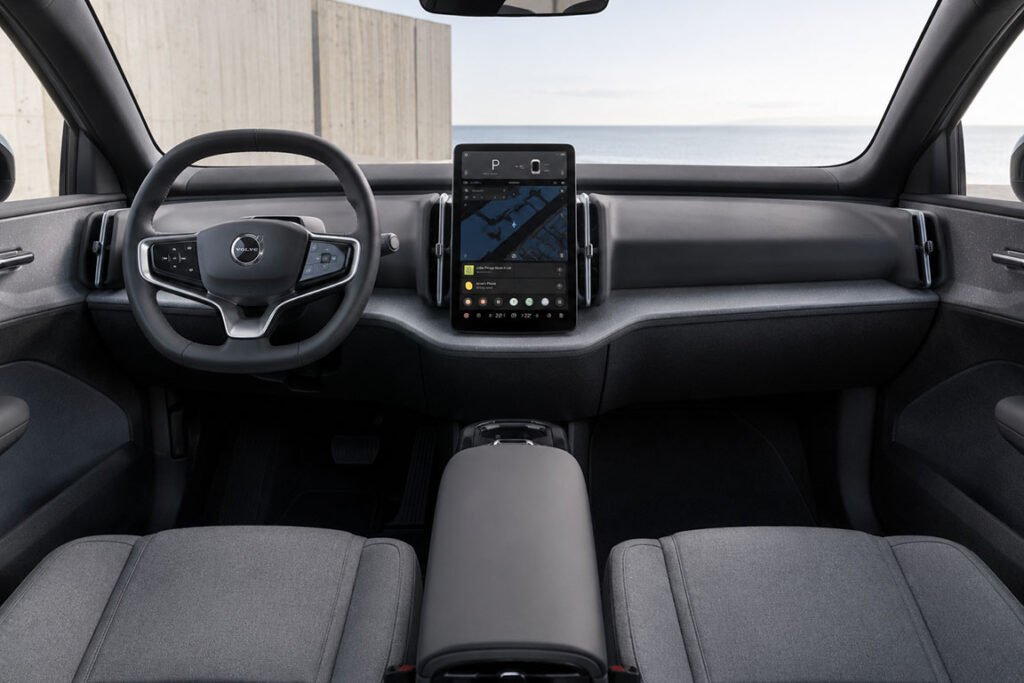
The EX30’s minimalist cabin feels modern and carefully judged, even if the screen-first layout is not always ideal on the move.
Driving Experience
For a closer look at the EX30’s on-road character, this driving review is worth watching before reading the section below.
In town, the EX30 feels exactly as a premium small EV should.. It is compact, quick to respond, easy to place, and immediately comfortable in urban traffic. That matters more than outright pace for most buyers, although the EX30 certainly has enough of that as well.
Official Volvo figures list up to 272 hp for the Single Motor Extended Range and up to 422 hp for the Twin Motor Performance in U.S. specification. Volvo also quotes 0-60 mph in as little as 3.4 seconds for the top version. Even the less dramatic versions feel brisk enough to make the car feel expensive rather than merely efficient.
Where the EX30 is most convincing is in how cohesive it feels. It does not drive like a budget EV trying to pass as something richer. It feels compact, solid, and direct. The steering is quick, the body feels neatly controlled, and the car changes direction with the kind of agility that makes sense in a vehicle this size.
Ride quality is good, though not especially soft. On smoother roads, the EX30 feels planted and polished. On rougher surfaces, especially at lower urban speeds over broken tarmac, it can feel firmer than the badge might lead some buyers to expect. That does not ruin the experience, but it does stop the car short of feeling fully plush.
Refinement is mostly strong. The EX30 is quiet enough to support its premium identity, and the car’s compact footprint makes it feel much easier to live with in urban areas than a larger premium EV. That ease is part of the appeal.
If you want a roomier and more conventional alternative, see our Hyundai Kona Electric review. If you want a more value-focused small EV benchmark, read our BYD Dolphin review.
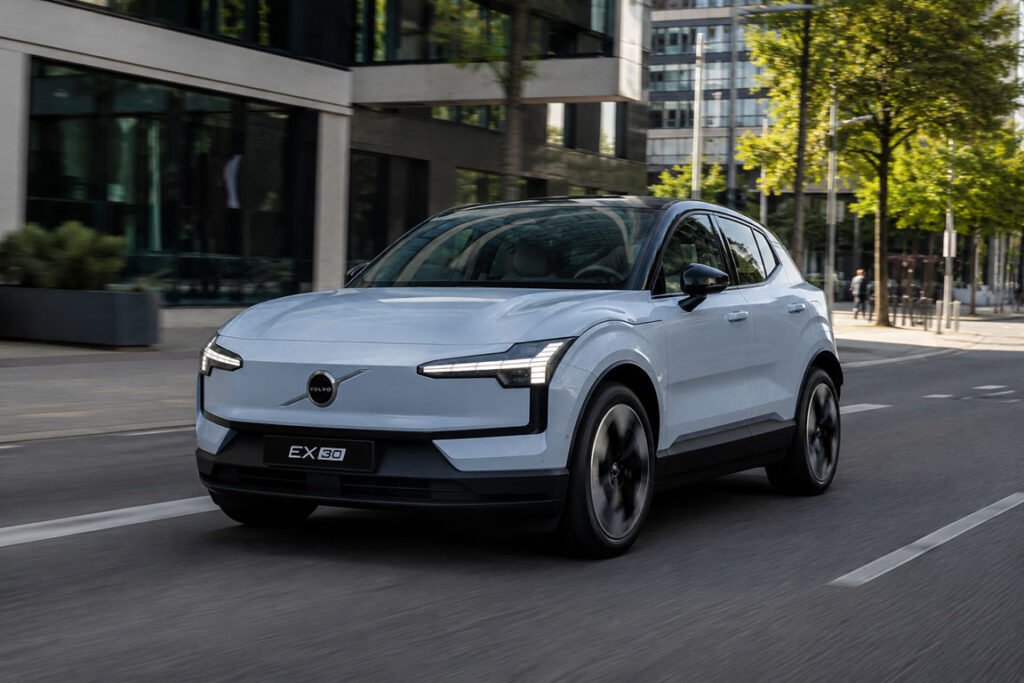
Compact dimensions, quick responses, and strong urban usability make the EX30 especially convincing in city driving.
Range & Efficiency
Range is one of the EX30’s strongest practical arguments. Volvo’s current official figures show up to 261 miles EPA-estimated range for the Single Motor version, up to 253 miles for the Twin Motor Performance, and DC fast charging from 10 to 80 percent in as little as 26.5 to 28 minutes depending on market presentation.
European real-world data gives useful context. EV Database lists the EX30 Single Motor Extended Range with a 69 kWh nominal battery, 65 kWh usable capacity, an estimated real-world range of 365 km, 11 kW AC charging, and up to 158 kW DC charging. That places it in a competitive middle ground: not class-leading in every metric, but strong enough to feel credible as a premium compact EV.
In real use, the EX30 should be at its best in city and suburban driving, where its size, efficiency, and easy performance make the most sense. Highway use will naturally bring the range down, as it does in most compact EVs, but the extended-range version gives enough breathing room to make longer drives realistic rather than stressful.
Official figures published in the official Volvo EX30 specifications show up to 261 miles of EPA-estimated range for the Single Motor version.
| Version | Battery | Range | Power |
|---|---|---|---|
| EX30 Single Motor | 51 kWh | Around 170 miles real-world estimate | 272 hp |
| EX30 Single Motor Extended Range | 69 kWh nominal / 65 kWh usable | Up to 261 miles EPA / about 365 km real-world estimate | 272 hp |
| EX30 Twin Motor Performance | 69 kWh nominal / 65 kWh usable | Up to 253 miles EPA | 422 hp |
Independent real-world estimates from EV Database EX30 data suggest the Extended Range version is competitive enough to feel usable beyond city driving.
Charging & Battery Performance
Charging performance is strong enough to suit the car’s premium positioning. Volvo quotes 10 to 80 percent DC charging in around 26.5 to 28 minutes, depending on version and market presentation, while EV Database lists the Single Motor Extended Range with 11 kW AC charging and peak DC charging of 158 kW.
That is not headline-dominating performance, but it is more than adequate for the real world. More importantly, it fits the car’s character. The EX30 is a small premium EV that should be easy to charge, easy to live with, and easy to fit into daily routines. On that front, it gets the job done.
For drivers who charge at home, overnight use should be simple enough. For public charging, the extended-range version makes the strongest case because it combines more real-world flexibility with competitive fast-charging performance. EV Database also lists V2L support up to 3.6 kW AC on the extended-range car, which adds a little extra practicality.
For most owners, the bigger point is convenience. The EX30 does not make charging feel like a workaround. It makes it feel normal.
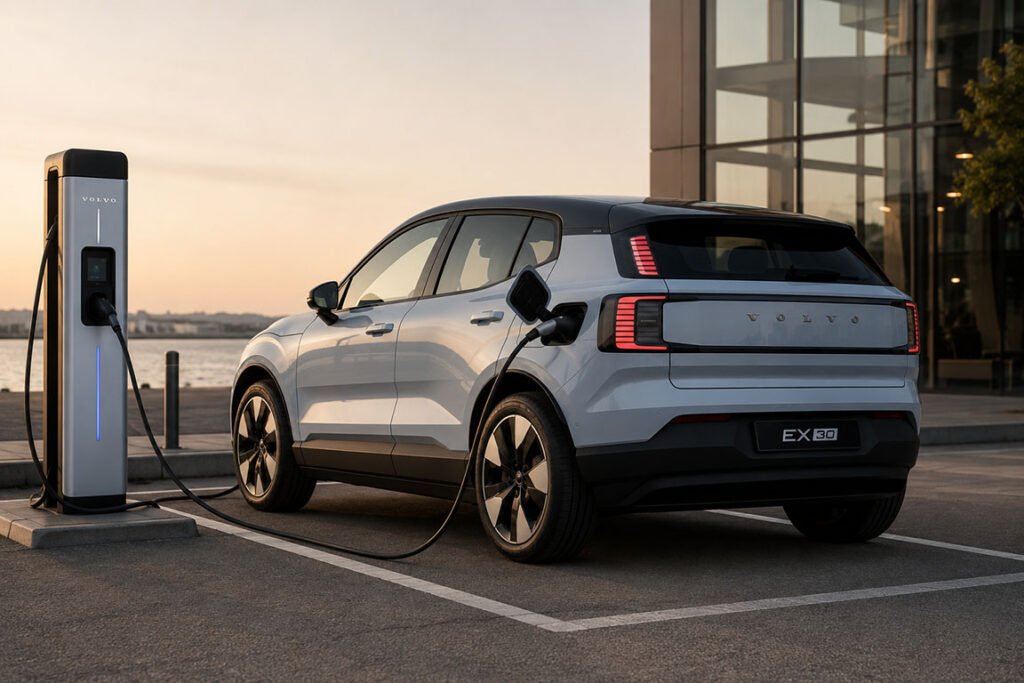
Official charging times listed in the official Volvo charging details support the EX30’s premium compact EV positioning.
Real-World Ownership Costs
The EX30 is not a bargain EV, and judging it like one misses the point. This is a premium small EV, which means the real ownership question is not whether it is cheap, but whether it feels worth the money over time.
Charging costs will depend mostly on where you live and whether you can charge at home. The good news is that the EX30’s battery sizes and efficiency are sensible enough to stop it feeling wasteful. That matters in a compact premium EV. Running costs do not have to be ultra-low, but they do need to feel rational.
Maintenance should also be relatively straightforward by EV standards. You are still paying for a premium badge and the expectations that come with it, but the EX30 at least makes a coherent ownership argument. It feels like a compact premium product with manageable running costs, rather than a style-led compromise.
Value for money depends heavily on what you expect. If you want maximum space and lowest cost, there are stronger options. If you want a compact EV that feels more polished, more tasteful, and more mature than most of its small-rival alternatives, the EX30 makes a convincing case.
Pros and Cons
Volvo EX30 Pro
- Strong Scandinavian design inside and out
- Cabin feels genuinely premium for the size
- Excellent city-friendly dimensions
- Quick, refined, and easy to drive
- Competitive charging and usable range in extended-range form
Volvo EX30 Cons
- Too much reliance on the center screen
- Ride can feel firm on rough roads
- Rear-seat and cargo space are only adequate
- Premium pricing limits value appeal
- Minimalist interface will not suit every buyer
Volvo EX30 vs Competitors
Against the Hyundai Kona Electric, the EX30 feels more premium, more design-led, and more distinctive inside. The Hyundai remains the more conventional and easier-to-rationalize choice for buyers who put practicality first.
Against the Tesla Model 3, the EX30 feels more intimate and more design-conscious, but the Tesla still has the edge as a longer-distance, more efficiency-led tool. They are aimed at very different kinds of buyers.
Against the BYD Dolphin, the Volvo is the clearly more upscale car. The Dolphin wins on value. The EX30 wins on brand feel, cabin atmosphere, and premium polish.
Who Should Buy the Volvo EX30?
The EX30 makes the most sense for city users who want a premium-feeling EV without stepping up into a much larger vehicle. It also suits buyers who care about design, atmosphere, and brand identity as much as raw practicality.
It is a strong fit for first-time EV buyers who want something approachable, modern, and clearly more upscale than an entry-level alternative. The car’s small size helps, but so does the way it feels carefully resolved rather than aggressively marketed.
If your priorities are maximum rear space, softer ride comfort, or pure value per euro, pound, or dollar, other options make more sense. But if your priorities are premium feel, compact usability, and strong design, the EX30 is very easy to understand.
Final Verdict: Is the EX30 Worth It in 2026?
Yes. The EX30 is worth serious consideration in 2026, and it does feel genuinely premium enough to justify the badge.
It is not without flaws.. The ride is firmer than some buyers will expect, and the screen-first interface is not always as elegant in use as it is in appearance. But the overall package is coherent, desirable, and much more convincing than many small EVs that try to pass as premium.
The best version is the extended-range rear-wheel-drive model. That is the sweet spot. It has the range, charging performance, and everyday usability to make the car feel complete. It is the version that most convincingly answers the question at the heart of this Volvo EX30 2026 review.
If you are still comparing the class before deciding, read our best affordable EVs roundup and our EV charging cost guide before making the final call.