







Introduction
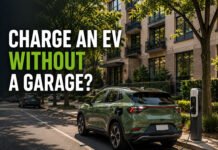
Yes, you can charge an EV without a garage. But whether it feels practical or exhausting depends less on the car itself than on whether charging fits naturally into your weekly routine.
That is the part many first-time buyers miss. An EV does not need a garage to work. It needs a charging pattern that fits naturally into your week. If you live in an apartment, park on the street, or rely on public infrastructure, the real question is not simply “Can I do it?” but whether it will still feel reasonable once the novelty of EV ownership wears off.
For some drivers, the answer is clearly yes. If you have dependable workplace charging, curbside charging, or public Level 2 stations near places you already go, EV ownership can work well without private home charging. For others, especially high-mileage drivers or people with weak local infrastructure, the same setup can turn into a recurring chore.
If you want the cost side of that reality first, read our hidden costs of EV ownership guide.
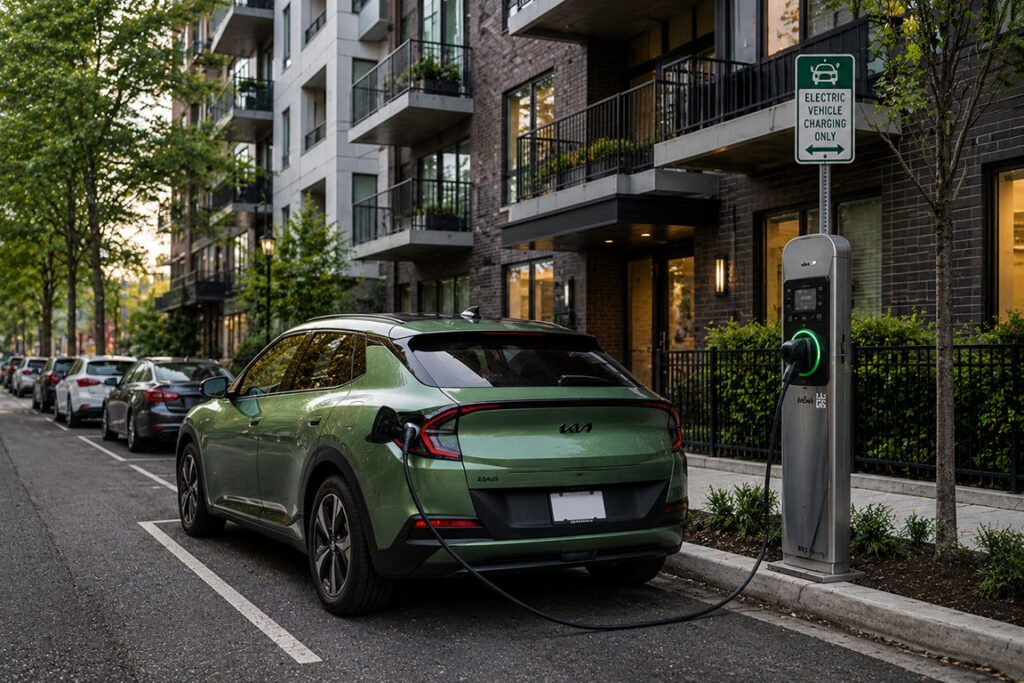
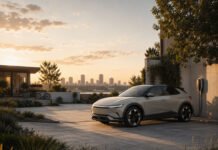
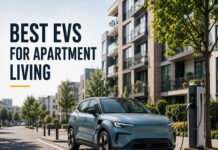
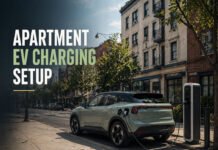
Electric car parked outside an apartment building without a garage
Can You Charge an EV Without a Garage?
A garage is useful. It is not essential.
Many EV owners already rely on apartment chargers, workplace charging, public Level 2 chargers, DC fast chargers, or curbside charging. The difference between a good experience and a frustrating one is usually not whether charging exists at all. It is whether charging fits into places and habits you already have.
A practical way to think about it:
- Easy if you drive modest miles and have reliable nearby charging
- Manageable if you can charge at work or at dependable public Level 2 stations
- Difficult if you drive a lot and mostly depend on expensive or unreliable DC fast chargers nearby
That is the honest version. You absolutely can charge an EV without a garage, but the ownership experience will only feel good if charging fits into your life rather than interrupting it.
The Main Ways to Charge an EV Without a Garage
Apartment or Condo Charging
When apartment charging is available, it can be one of the best versions of EV ownership. You park where you live, plug in overnight, and stop thinking about it.
The problem is access, not theory.
Some buildings already have shared chargers or a handful of reserved EV spaces. Others allow residents to install charging at assigned spaces. Many do neither. Approval from a landlord, HOA, or building manager can be slow. Electrical capacity may be limited. Billing can be unclear. Even when everyone is supportive in principle, installation can stall on cost, parking layout, or metering.
This is why apartment EV charging can be excellent when it already exists and annoyingly slow to arrange when it does not. The U.S. Department of Energy’s multifamily charging guidance is worth citing here because it reflects the real bottlenecks: parking access, electrical capacity, billing, legal issues, and incentives all matter.
External source opportunity: U.S. Department of Energy Alternative Fuels Data Center multifamily charging guidance.
Apartment charging is not unrealistic, but it is far more dependent on building politics, electrical capacity, and parking control than many buyers expect.
Workplace Charging
For many drivers without home charging, workplace charging is the best answer.
It works for a simple reason: the car is already parked there for hours. That means charging can happen in the background instead of becoming a separate task. If you commute predictably and your employer offers reliable access, workplace charging can remove most of the inconvenience of not having a garage.
But it is only as good as the rules around it. Some employers provide free charging. Some charge for it. Some limit session length. Some do not have enough chargers once more employees switch to EVs. So workplace charging can be one of the strongest alternatives to home charging, but only when access is dependable rather than theoretical.
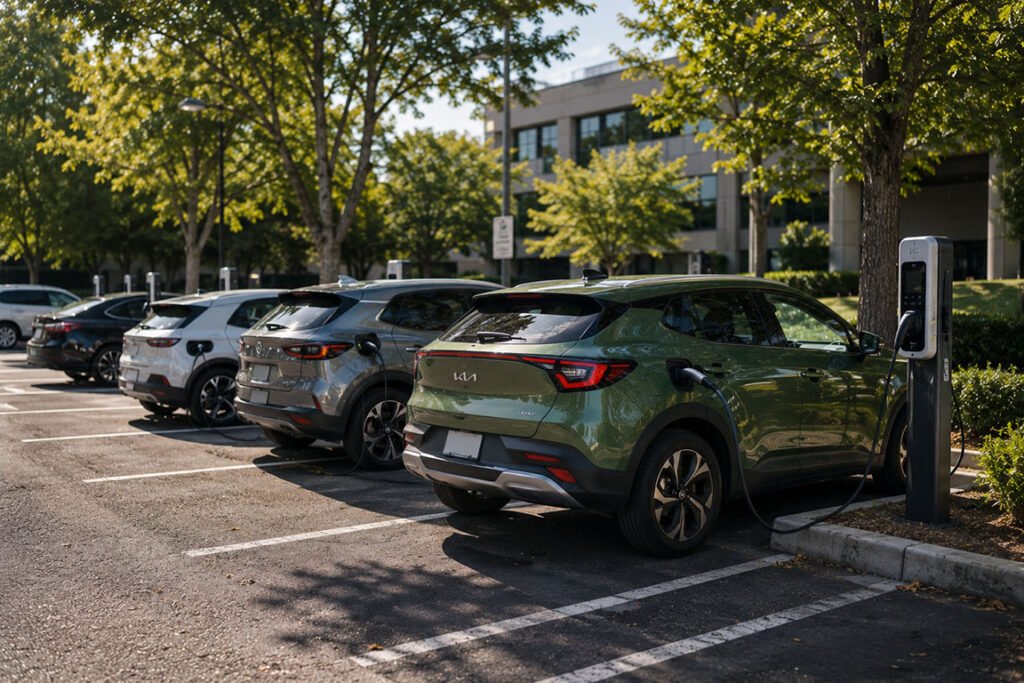
Electric vehicles charging at workplace charging stations
Public Level 2 Charging
Public Level 2 charging is often the most realistic answer for garage-free owners who do not want to build their week around fast chargers.
It is slower, but that is often the point. Public Level 2 works best when it sits where your life already happens: offices, gyms, shopping centers, libraries, municipal lots, hotels, or overnight parking areas. If the car can gain useful range while you do something else, the whole experience feels more normal.
This is where charging an electric car at an apartment can still work indirectly. Not because the apartment provides charging, but because your surrounding routine does. If you can add range during errands, dinner, work, or overnight parking nearby, you do not need every charging session to be dramatic.
PlugShare is especially useful in this part of the buying process because it shows what is actually available, how often stations are working, and whether people are really using them.
DC Fast Charging
DC fast charging is useful and sometimes necessary. It is just not the most comfortable foundation for everyday ownership.
Modern EVs are built to use fast charging, and buyers should not be scared off from using it. But building your entire ownership pattern around it is often less ideal for cost, convenience, and long-term comfort. Fast charging is usually more expensive than home charging or public Level 2 charging. It can involve waiting. It can mean detours. And if it becomes your default rather than your backup, the car can start feeling more demanding than it should.
That does not mean DC fast charging is bad. It means public charging vs home charging is not just a technical difference, but a lifestyle difference. A weekly fast-charge stop may be perfectly manageable. An ownership routine built around repeated fast charging is where garage-free EV life usually starts to feel demanding rather than convenient.
If you want the cost side of repeated public charging broken out in more detail, our EV charging costs guide is the right next read.
Curbside or Street Charging
Curbside charging is one of the most promising solutions for street-parked EVs, but buyers should not assume it is widely available just because it exists in headlines.
In the right city, curbside charging can be a genuinely strong answer for EV charging for street parking. You park near home, plug in nearby, and avoid special charging trips. Where the infrastructure exists and works reliably, it can make an EV feel completely realistic without a driveway or garage.
The problem is inconsistency. Some cities are building it out seriously. Others barely have it. Some installations look good on a map but are too limited, too busy, or too unreliable to support daily use. So curbside charging is a real solution, but only where the local rollout has actually caught up with demand.
Is Public Charging Enough for Daily EV Use?
Sometimes, yes.
Public charging can work well if charging fits naturally into places you already go. That is the real dividing line. Daily mileage still matters, but garage-free EV ownership becomes much easier when chargers are close to home or work and do not demand special trips. That is the practical dividing line. If charging slips into your week without demanding special effort, ownership can feel perfectly reasonable. If charging becomes a separate task you have to plan around every few days, the car starts to feel like admin.
That is why two people can buy the same EV and have completely different opinions about it. The car is not always the problem. The routine is.
If charging fits into places you already go, garage-free EV ownership can work well. If charging becomes a separate chore every week, the car may become annoying.
How Much Range Do You Really Need?
Most buyers focus too much on official range and not enough on how range behaves inside their actual routine.
Daily mileage matters more than the headline number. So do speed, temperature, terrain, weather, and how much reserve you prefer to keep. Highway driving eats range faster. Cold weather reduces flexibility. Drivers who like to keep a generous safety buffer will use less of the official range than the brochure suggests.
That is why a longer-range EV often matters more for drivers without home charging than for drivers with a charger in their garage. The car does not just need enough range for the trip. It needs enough flexibility to let you skip a charge when the nearest option is busy, expensive, or inconvenient.
In broad practical terms, an EV with roughly 250 to 300 miles of rated range usually gives more breathing room in this kind of ownership pattern. Shorter-range EVs can still work very well for urban drivers with reliable nearby charging. But if your charging access is less consistent, extra range often buys flexibility and peace of mind rather than simple headline appeal.
Best Types of EVs for Drivers Without a Garage
The best EVs for garage-free ownership are not simply the ones with the biggest battery. They are the ones that reduce friction.
Look for:
- good real-world range
- strong efficiency
- dependable route planning
- strong charging network access
- reasonable charging speed
- practical cabin and cargo space
- manageable operating costs
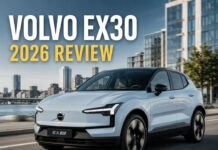
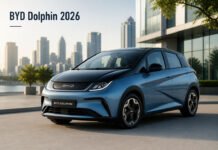
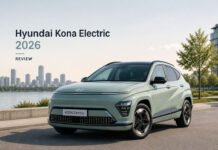
That is why examples like the Tesla Model 3 and Model Y still make sense here, especially where route planning and charging access are strong. Hyundai Kona Electric, Ioniq 5, Ioniq 6, Kia EV3, EV6, BYD Dolphin, BYD Seal, and Volvo EX30 can also fit this lifestyle depending on market and infrastructure. The common thread is not brand prestige. It is whether the car gives you enough efficiency, range, charging confidence, and daily usability to compensate for the lack of private charging.
This is not a ranking and it should not read like one. The best EV for this lifestyle is the one that asks the least of your routine.
What to Check Before Buying an EV Without a Garage
This is where buyers should stop imagining and start verifying.
Check:
- reliable chargers within 5 to 10 minutes of home
- chargers near work
- chargers near regular errands
- local public charging prices
- whether nearby stations are Level 2 or DC fast chargers
- whether stations are usually occupied
- whether your apartment building allows charger installation
- whether your weekly driving is predictable
- whether you have backup charging options
This section matters because can you own an EV without a driveway is not really a philosophical question. It is a local infrastructure question, and one that should be answered before you buy the car, not after. DOE resources, local utility pages, and PlugShare can help you check that reality before you buy.
External source opportunity: DOE public charging locator and local utility EV charging pages.
Apartment EV Charging: What Owners Should Ask Their Building
Before buying the car, ask your building or management company:
- Are EV chargers already installed or planned?
- Can residents install a charger at an assigned space?
- Who pays for installation?
- Is there enough electrical capacity?
- Are chargers shared or assigned?
- How is billing handled?
- Are there waiting lists?
- Are local incentives, rebates, or utility programs available?
These questions sound simple, but they tell you whether the building is merely EV-friendly in language or actually prepared for EV ownership in practice.
If your building does allow private installation, our home EV charger options guide is a useful place to start.
Pros and Cons of Owning an EV Without a Garage
| Pros | Cons |
|---|---|
| No gasoline stops | Less convenient than home charging |
| Lower routine maintenance | Public charging can be expensive |
| Workplace or public charging may fit daily life | Charger reliability varies |
| Can work well for city drivers | Fast charging may become a habit |
| Better when charging fits existing routines | Poor fit for high-mileage drivers without reliable nearby charging |
Who Should Buy an EV Without a Garage?
It is a good fit for:
- apartment drivers with workplace charging
- urban drivers with reliable public Level 2 access
- people with predictable commutes
- drivers who do not need to charge every day
- buyers choosing an efficient EV with good real-world range
Be more careful if you are:
- a high-mileage driver
- a rural driver with limited chargers
- someone with an irregular schedule
- someone who dislikes planning stops
- anyone relying on only one nearby fast charger
One nearby charger is not a real charging strategy. It is only a workable plan if you also have reliable backup options.
For a more practical look at how apartment and curbside EV charging work in everyday life, this video is worth watching before the final verdict.
Final Verdict: Can You Own an EV Without a Garage?
Yes, you can.
But it works well only when charging fits naturally into your life. If you have reliable workplace charging, apartment charging, curbside access, or nearby public Level 2 options, owning an EV without a garage can work surprisingly well. If every charge means a special trip, a long wait, or frequent expensive fast charging, the experience gets old quickly.
That does not automatically mean you should buy a hybrid instead. It means you need to buy with a clearer view of your charging routine, your backup options, and your tolerance for inconvenience. The car has to suit the life you actually live, not the idealized ownership pattern that assumes private home charging is always there.
FAQ
1. Can I own an EV if I live in an apartment?
Yes, especially if your building has chargers or you have dependable workplace or nearby public charging.
2. Do I need a garage to charge an electric car?
No. A garage helps, but it is not required if your charging options are reliable enough.
3. Is public charging enough for an EV?
It can be, if chargers are close, dependable, and fit your normal routine.
4. Is fast charging bad for an EV battery?
Not inherently. Modern EVs are built to use it, but relying on it constantly is usually less ideal for cost, convenience, and long-term ownership comfort. For more on that, see EV battery degradation guide.
5. What is the best EV charging option without a driveway?
Usually workplace charging or dependable public Level 2 charging near home. Those options tend to feel more natural than relying mainly on DC fast charging.