














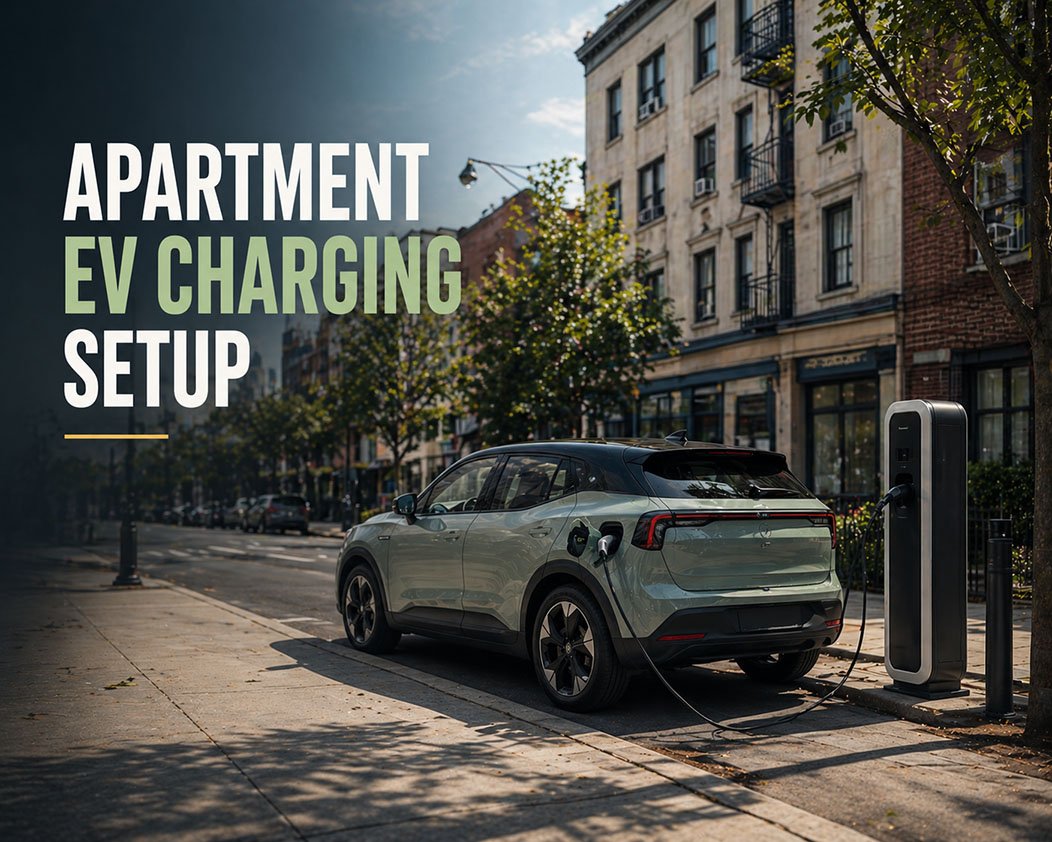
Owning an EV without a private garage is possible. The real question is whether the charging routine will feel natural enough to live with every week. For apartment residents, the difference usually comes down to charging routine, local infrastructure, parking access, and how much friction the car creates once home charging is off the table. In that sense, a good apartment EV charging setup is not the most impressive one. It is the one that fits naturally into everyday life.
That is why apartment charging demands more planning than garage charging. Public DC charging, workplace charging, shared building chargers, and nearby overnight AC charging can all work, but they do not work equally well in every city or for every driver. Commute length matters. Parking habits matter. Charger reliability matters. Software quality matters. The real problem is rarely technical feasibility. It is whether the charging routine fits naturally enough into everyday life to stay painless.
Can You Really Own an EV Without a Garage?
Yes, in many cities you can.
Many EV owners already live without private charging, and U.S. Department of Energy guidance on multifamily charging makes clear that apartment and condo residents are a real part of the EV ownership landscape, not an edge case. But urban EV ownership works by different rules than suburban ownership with a driveway charger. It is more dependent on charger quality, backup options, local parking habits, and how well the car fits public-charging life.
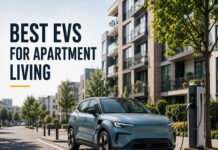
If your commute is modest, your city has usable charging coverage, and you can charge while working, shopping, or parking overnight nearby, EV ownership can be very manageable. If local chargers are unreliable, badly placed, or expensive, the same car can start to feel inconvenient very quickly. Some EVs are much easier to live with in this situation, which we explored in our guide to the best EVs for apartment living.
The Different Types of Apartment EV Charging Setups
There is no universal apartment charging setup, because the right answer depends less on charger theory than on how your city, your parking access, and your weekly routine work in real life.
Public DC Fast Charging
This is the most obvious solution because it is the fastest. It can work well for apartment residents who prefer one or two scheduled charging stops each week instead of slow opportunistic charging. But it is also the setup most likely to create frustration if the network is expensive, crowded, or inconsistent. Fast charging only feels convenient when the charger is where you need it, works when you arrive, and does not turn into a queue. Tesla’s charging support pages emphasize charging speed, trip planning, and battery preconditioning for exactly this reason: speed matters, but usable speed matters more.
Workplace Charging
For many apartment drivers, this is the best setup of all. Charging while the car is already parked for hours removes a huge amount of ownership friction. DOE workplace charging guidance treats this as one of the most practical ways to expand EV usability, and that still feels true in real life. It is not glamorous, but it turns charging into background maintenance instead of a separate errand.
Shared Apartment Chargers
These are becoming more common, especially in newer multifamily developments. DOE multifamily charging resources point to multi-unit housing as a growing focus area, but the ownership experience depends heavily on how access is managed. When shared charging works well, it can be one of the cleanest apartment solutions. When it does not, charger etiquette, booking conflicts, billing confusion, and simple availability all become part of the experience.
Nearby Overnight AC Charging
This is slower, but often more useful than it sounds. In dense urban areas, a charger you can leave the car on for several hours can be more valuable than a faster charger that is always busy or always slightly out of your way. Apartment charging often works best when it blends into existing parking time rather than demanding a dedicated trip.
Portable or Temporary Charging Solutions
These can help in specific cases, especially for renters with access to an ordinary outlet or a semi-formal parking arrangement, but they are not always practical, safe, or allowed. Local law, landlord permission, and building wiring limits matter. DOE and AFDC renter-policy resources make clear that tenancy rules and parking rights can shape what is actually possible. These are situational tools, not a universal apartment answer.
A practical real-world video on charging an EV without home parking, useful for apartment residents weighing public charging against everyday convenience.
Why Charging Speed Matters for Apartment Owners
Apartment owners often rely more heavily on public charging, which makes charging speed part of the ownership routine rather than an occasional bonus.
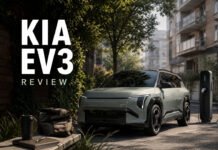
But the useful metric is not peak speed alone. It is how the car behaves through the charging curve you are likely to use. A car with a strong real-world curve and good efficiency can feel easier to own than one with a larger battery and flashier marketing numbers. Kia’s official EV3 materials, for example, emphasize both battery choices and 10 to 80 percent DC charging times, which is exactly the kind of information apartment buyers should care about.
Efficient EVs also reduce charging frequency, and that matters more than many apartment buyers expect. Fewer stops can matter just as much as faster stops. Waiting time becomes part of ownership quality. Reliable charging matters more than brochure claims. Charging speed affects both the overall EV charging experience and long-term EV charging costs, especially for drivers who depend heavily on public infrastructure.
The Biggest Apartment EV Charging Mistakes
The first mistake is buying battery capacity for reassurance instead of building the charging routine that actually makes apartment EV ownership work.
A large battery looks reassuring, but if the car is less efficient, larger to park, and slower to recover useful time at public chargers, the ownership setup can still be worse. Another common mistake is trusting one charging location too much. Apartment EV ownership needs backup options. Chargers break. Sites get busy. Payment systems fail. Apps misbehave. Anyone depending on public infrastructure should know the second-best charger before they need it.
Winter is another place where expectations often drift away from reality. Cold weather can tighten range and make charging feel slower or more irritating. The problem is not that EVs stop working. It is that apartment residents feel seasonal charging friction more directly because they depend more on public infrastructure. Another mistake is assuming all public chargers are equal. They are not. Reliability, speed, location, pricing, and payment experience vary far more than first-time EV buyers often expect.
The other major error is underestimating software. A car with weak route planning, weak charger integration, or flaky app support can make apartment EV life feel much worse than the battery size suggests.
Charging Apps, Route Planning and Software Matter More Than Many Buyers Expect
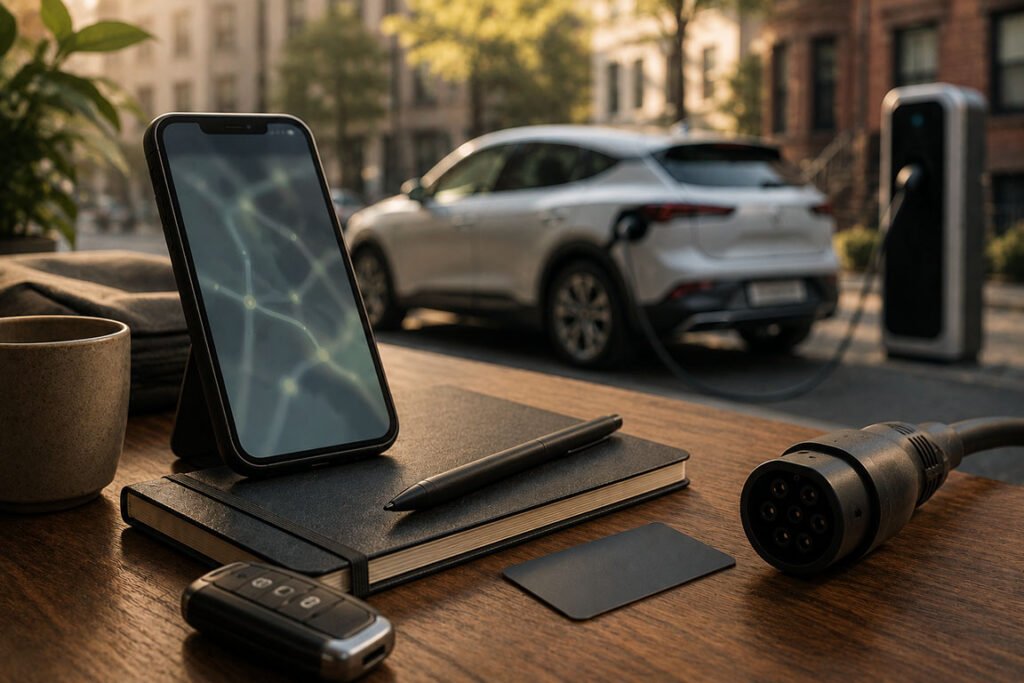
Editorial illustration of the planning tools that can make apartment EV charging feel more predictable and less stressful.
Charging apps are not side details anymore. They are part of the setup.
Availability changes in real time, prices vary by network, and payment systems are rarely as simple as first-time buyers expect. Strong software can remove a surprising amount of urban ownership stress, especially when the car handles route planning, battery preconditioning, charger discovery, and trip logic well. Tesla’s official charging support still makes the clearest integrated case here, because the company ties charging stops, battery preparation, and route planning into the car itself.
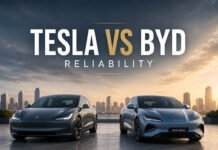
That does not mean non-Tesla ownership cannot work. It means software quality is now part of the ownership value equation. Charging convenience can also affect long-term ownership value, which we discussed in our Tesla vs BYD ownership cost comparison.
Is Apartment EV Charging More Expensive?
Usually, yes, especially if public fast charging becomes the backbone of your routine rather than the occasional top-up.
Public charging is often more expensive than charging at home. Apartment residents can lose that cost advantage unless they have access to workplace charging, fairly priced building chargers, or low-cost overnight AC options nearby. But convenience still matters. Sometimes paying more for a charger that fits your real routine is smarter than wasting time chasing the cheapest option in the wrong place.
The exact cost picture varies heavily by region, utility pricing, public-network policy, and local incentives. DOE and AFDC resources are useful here because they frame charging economics as location-dependent, not universal.
Which EVs Work Best for Apartment Charging?
The best apartment-charging EVs usually share the same strengths: good efficiency, usable charging curves, compact dimensions, strong route planning, and a charging ecosystem that cuts down guesswork.
That is why cars like the Tesla Model 3, Hyundai Kona Electric, Kia EV3, BYD Dolphin, and MG4 keep coming up in this conversation. Tesla still stands out for integrated charging convenience. Hyundai Kona Electric makes its case through efficiency and compact urban usability. Kia EV3 combines practical crossover packaging with competitive charging and sensible dimensions. BYD Dolphin and MG4 both make sense when value, size, and local support line up. Kia, MG, and BYD’s official model materials all reinforce those broad positioning differences, even if the exact ownership experience still depends on market conditions.
The point is not to rank them like a lazy listicle. It is to choose the EV that asks the least effort from the charging routine you will actually live with. Apartment charging convenience also matters when buying a used EV, especially in older models with slower charging performance or weaker software support.
Apartment EV Charging Setup Checklist
This is the practical part. Before buying an EV without a private garage, check the setup before you fall in love with the car.
Apartment EV Charging Setup Checklist
| What to Check | Why It Matters | Potential Problem if Ignored |
|---|---|---|
| Nearby public chargers | They shape your weekly routine more than brochure range | Charging becomes a constant detour |
| Workplace charging | Can remove most routine charging stress | You rely too heavily on public fast charging |
| Charging apps | They manage availability, payment, and access | Confusing, fragmented charging routine |
| Charging speed | Determines how much public charging takes out of your week | The car becomes tedious to recharge |
| Winter charging access | Cold weather can tighten range and slow the routine | Seasonal charging stress is underestimated |
| Backup chargers | Primary charging plans do fail | One broken site ruins the routine |
| Parking access | Determines how practical any charger really is | You have “nearby chargers” that are not realistic to use |
| Payment systems | Different networks often mean different app and payment flows | Public charging becomes awkward and inconsistent |
| Route planning | Good software reduces detours and anxiety | Trips become more stressful than they need to be |
| Charging reliability | Not every charger works equally well, even when listed as available | You trust infrastructure that fails at the wrong time |
Final Verdict: Is Apartment EV Charging Practical in 2026?
Yes, in many urban areas it is practical, but only when the charging setup is built around real routine rather than ideal conditions.
Charging convenience matters more than maximum range. Planning reduces ownership stress dramatically. Public charging quality still varies heavily by region, and some EVs are simply easier to live with in apartment settings because they make charging decisions faster, charging stops shorter, and weekly ownership less disruptive.
The best apartment EV setup is usually not the most complicated one. It is the one that fits naturally into everyday life with the least charging friction.
FAQ
1. Can you own an EV without a private garage?
Yes. Many drivers already do, but the experience depends heavily on local infrastructure, charging habits, and daily routine.
2. Is public charging enough for apartment EV owners?
Sometimes, yes. It can be enough when charger access is good and the routine is realistic, but it works best with backup options like workplace charging or nearby overnight AC charging.
3. Is apartment EV charging expensive?
It can be more expensive than home charging because public fast charging usually costs more, though exact pricing varies by region and network.
4. What is the best charging setup for renters?
Usually the least stressful one: workplace charging if available, plus reliable nearby public or overnight charging and a solid backup plan.
5. Does charging speed matter for apartment EV owners?
Yes. It often matters more than buyers expect because public-charging time becomes part of weekly life.
6. Are workplace chargers important?
Very. They can be one of the easiest ways to make apartment EV ownership feel normal rather than inconvenient.
7. Which EVs work best without home charging?
Usually efficient EVs with strong route planning, usable charging curves, and compact urban manners. Tesla Model 3, Hyundai Kona Electric, Kia EV3, BYD Dolphin, and MG4 are all relevant examples.
8. Is apartment EV ownership stressful?
It can be, but usually because the charging routine is weak or the local infrastructure is poor, not because apartment EV ownership is unworkable by itself.