










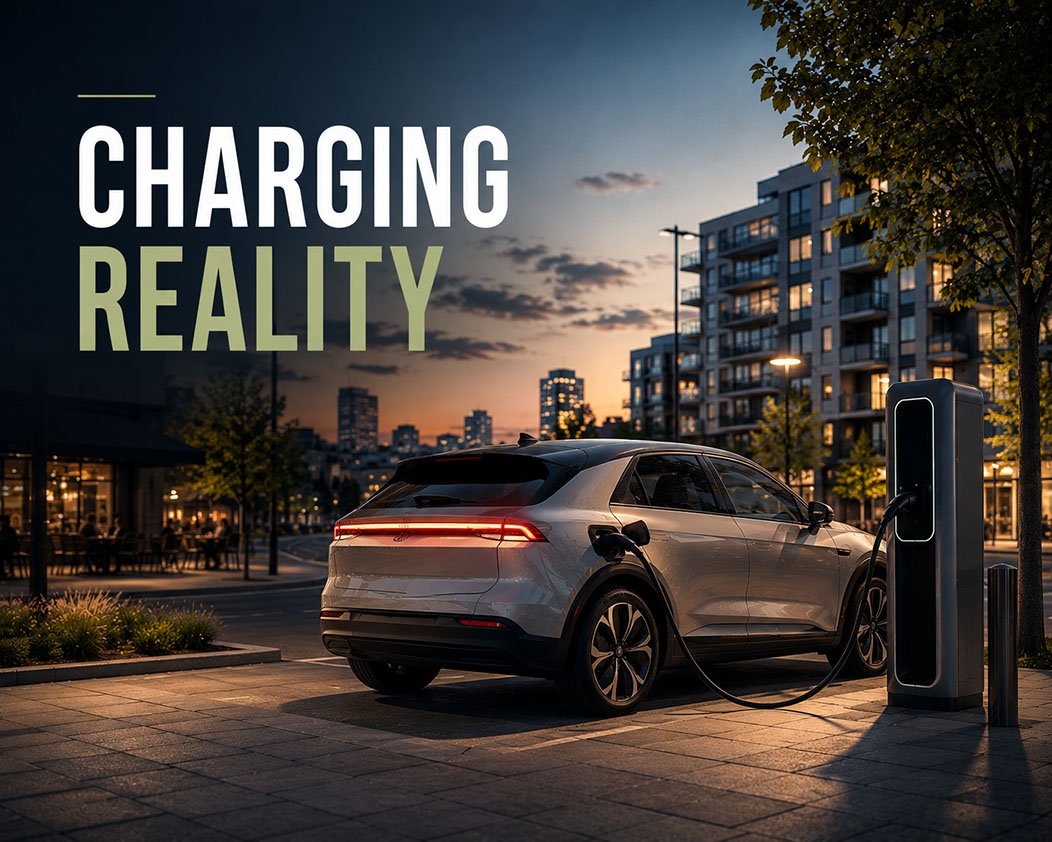
Public charging can be enough for daily EV use, but only when charging fits naturally into the driver’s life before the EV becomes the only realistic option. Public Level 2 and DC fast charging are now established parts of the EV ecosystem, and government guidance treats them as practical charging options for consumers, not fringe infrastructure. But home charging remains the easiest model because it removes many of the time, cost, and reliability variables that public charging introduces.
That is the real distinction. The question is not only whether public chargers exist. It is whether they are close enough, reliable enough, affordable enough, and fast enough to become part of ordinary life rather than a recurring interruption. For some owners, especially in strong urban charging environments, public charging can work well. For others, especially those with long commutes, weak local infrastructure, or unpredictable schedules, it can feel tiring very quickly.
For buyers considering public charging daily EV use, the real question is not only where chargers are located, but whether they fit naturally into normal life.
Is Public Charging Enough for Daily EV Use?
Yes, for some drivers.
Public charging daily EV use is realistic when the routine is predictable and the infrastructure is good enough to support it. Public charging works best for apartment residents with reliable nearby chargers, workplace-charging users, low-to-moderate mileage urban drivers, and owners whose cars can recover useful range quickly without constant charger hunting. AFDC’s public-charging guidance makes the structure clear: public charging includes both Level 2 charging where vehicles stay parked longer and DC fast charging for quicker energy recovery.
It is harder for high-mileage commuters, rural drivers, cold-climate drivers, and people whose schedules change too often for charging to become routine. Public charging is more lifestyle-dependent than home charging because it adds queue risk, payment friction, charger reliability concerns, and travel time around the charging session itself. That is why public charging can work very well for one owner and feel needlessly fragile for another.
The balanced answer is simple: public charging can work, but only when it fits your real routine better than it flatters your expectations.
Public Charging Works Best When It Becomes a Routine
This is where daily EV ownership either settles down or starts to feel annoying.
Public charging is easiest when it happens while the car would already be parked. Grocery-store top-ups, chargers near the gym, dependable workplace charging, a nearby Level 2 post during a regular evening stop, or a weekly fast-charging session built into the same part of the week all reduce friction. AFDC specifically frames public Level 2 charging around places where cars already stay parked for meaningful periods, while workplace charging resources highlight how much easier charging becomes when it happens during normal parking time.
Backup options matter almost as much as the primary charger. One reliable charger nearby is good. Two realistic options are much better. Public charging becomes stressful when every session feels improvised, when the owner is always low on charge before planning the next stop, or when one broken charger ruins the week. If every charging session feels like a rescue mission, public charging will get old quickly.
The best public-charging routine is almost forgettable, because once charging stops feeling like an event, ownership usually gets much easier.
Public Charging vs Home Charging: The Real Difference
Home charging is usually the most convenient EV ownership model.
AFDC’s home-charging guidance explains why so many owners prefer it: the vehicle charges where it already sits, often overnight, which removes detours and cuts daily friction. Public charging can still support ownership, but it introduces more variables, including payment systems, charger uptime, site quality, queue times, and the simple fact that the driver has to go somewhere and wait, even if only briefly.
The cost difference can matter too. Public charging is not priced like home electricity, and frequent DC fast charging can change the economics of ownership more than first-time EV buyers expect. The cost difference between home and public charging can be significant, which is why understanding EV charging costs matters before relying on public chargers every day.
Home charging remains the easiest model because it removes a great deal of daily friction, which is exactly why U.S Department of Energy and AFDC charging guidance is worth reading before committing to public-charging-only EV ownership.
The Biggest Public Charging Problems
The biggest public charging problem is not always charger count. It is reliability and convenience.
Broken chargers are the obvious issue, but they are only part of the problem. Occupied chargers, long queue times, awkward locations, payment failures, confusing app flows, disappointing charging speeds, and poor lighting or access can all turn an available charger into a bad ownership experience. AFDC’s public-charging and station resources emphasize that charging stations must be deployed and integrated based on local needs, which is another way of saying that location quality matters as much as presence on a map.
J.D. Power’s 2025 U.S. Electric Vehicle Experience Public Charging Study adds useful context here. The study said reliability and charging success improved, even while overall satisfaction slipped slightly. It also said the charging experience still depends on convenience, speed, safety, payment processing, and ease of use. That is exactly how public charging feels in real life: progress is real, but inconvenience still counts.
Winter can magnify all of this. Slower cold-weather charging, reduced efficiency, and the need for more careful timing can make a charger that feels acceptable in mild weather suddenly feel irritating in January. Public charging does not have to be perfect to work, but it does need to be dependable enough to feel normal.
Public charging frustration is often less about whether chargers exist than whether they work reliably, charge at expected speeds, and feel easy to use, which is why the J.D. Power EVX Public Charging Study is useful context before relying on public charging every day.
A balanced real-world public charging video exploring how daily EV life changes when home charging is no longer part of the routine.
Who Can Rely on Public Charging?
Public charging becomes far more realistic when it supports an existing routine instead of constantly interrupting one. The drivers who handle it best are usually not the most enthusiastic EV owners, but the ones whose daily mileage, parking habits, charger access, and backup options already line up with how public charging actually works. That is why public charging can feel perfectly manageable for one owner and quietly exhausting for another within a matter of weeks.
Apartment Residents With Reliable Nearby Chargers
Apartment EV ownership can work if the nearby chargers are genuinely usable. The key question is not whether a charger appears on a map, but whether it is close, dependable, easy to access, and not constantly occupied when you actually need it. In the right neighborhood, public charging can disappear into ordinary life; in the wrong one, it quickly becomes a recurring scheduling problem rather than a simple ownership habit.
Public charging daily EV use becomes much easier when charging is part of a repeatable routine rather than an emergency habit.
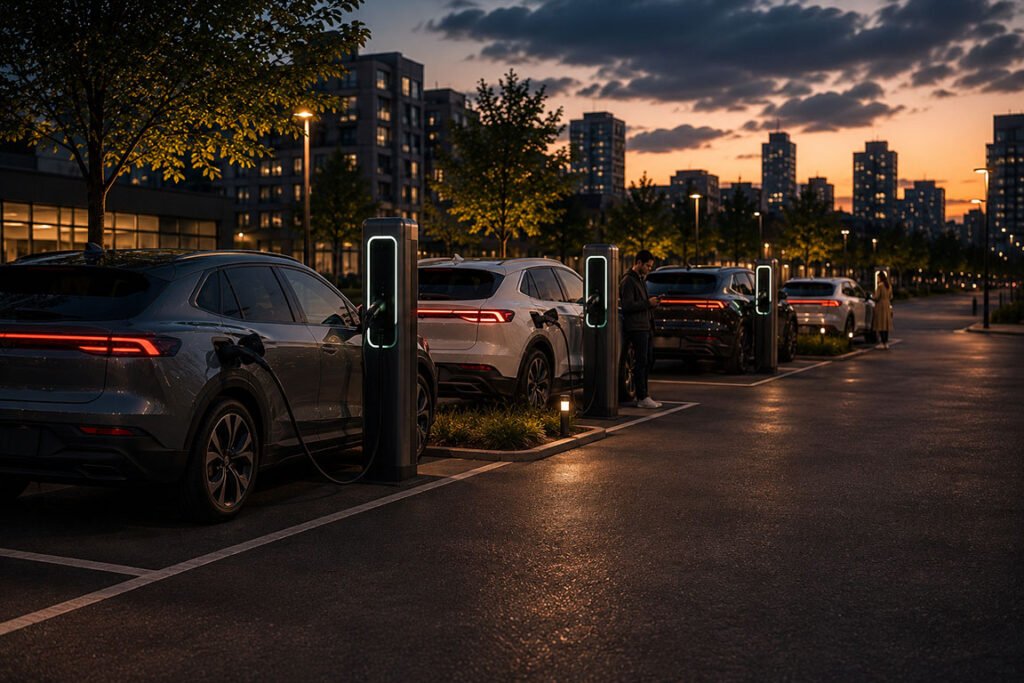
Editorial illustration showing how charger availability, occupied bays, and everyday timing can determine whether public charging feels routine or inconvenient.
Drivers With Workplace Charging
This is one of the strongest ownership setups without home charging. Workplace charging can remove much of the weekly pressure by turning charging into background time while the car is already parked. AFDC’s workplace resources are built around exactly that practical benefit.
Low-Mileage Urban Drivers
Shorter daily driving reduces charging frequency. That means public charging can feel more manageable because the owner is not constantly top-up dependent. Urban drivers with modest mileage and several charging choices nearby often find public charging far more tolerable than high-mileage owners do.
Drivers With Strong Fast-Charging Access
Reliable DC fast charging can make public-charging-only ownership much more practical, especially when a quick weekly stop replaces multiple slower sessions. It is not the perfect ownership model, but it can be realistic when the network is good and the vehicle charges well.
Drivers Who Plan Their Charging Routine
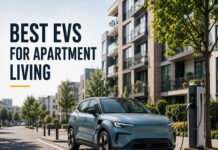
This is the least glamorous but most important group. Public charging works best for people willing to think slightly ahead instead of waiting for the battery to become a problem. Apartment residents should also compare the best EVs for apartment living and build a realistic apartment EV charging setup before depending fully on public chargers.
Who Should Be More Careful?
High-mileage commuters should be more careful because charging becomes more frequent and less forgiving when daily use is heavy. Rural drivers should be more careful because sparse infrastructure reduces backup options. Cold-climate drivers should be more careful because winter can make both charging speed and usable range less forgiving. Frequent road-trippers should be more careful because public charging starts shaping trip quality, not just daily errands.
Drivers without backup chargers should be careful too. So should anyone with highly irregular schedules or little patience for planning. Public charging is not impossible for these drivers, but the margin for inconvenience is much smaller. The issue is not whether public charging can work at all. It is whether it stays calm and repeatable when life becomes messy.
How Often Would You Need to Public Charge?
There is no universal answer, which is exactly why public-charging-only ownership is less about averages and more about the shape of your own weekly routine.
A low-mileage city driver in an efficient EV may need public charging only once or twice a week. A high-mileage commuter in cold weather may need a more disciplined routine. Frequency depends on daily mileage, efficiency, battery size, weather, average speed, preferred battery buffer, charger speed, and how easy nearby chargers are to reach. Public Level 2 and DC fast charging serve different roles, and how often you need each one depends on how your car is used, not on some universal EV rule.
The more useful framing is practical rather than numerical. You are not asking, “How often do EVs charge?” You are asking, “How often would my car need public charging in my weather, with my route, and are my local chargers good enough to support that rhythm?” That is a much better ownership question.
Is Public Charging More Expensive?
Usually, yes, especially if DC fast charging becomes your normal solution.
Public Level 2 can be cheaper than fast charging, but it is slower and not always convenient enough to carry the whole ownership model by itself. Workplace charging can lower costs meaningfully. Pricing also varies by network, membership plan, charger speed, and region, which is why public charging is harder to budget neatly than home charging. Government charging guidance supports the broad point even without giving one universal number: public charging cost depends on the context because the public-charging experience itself depends on context.
For drivers without home charging, public charging prices can become one of the hidden costs of EV ownership. Convenience can still make sense. But pretending public charging costs do not matter would be ridiculous.
Public charging can work well, but price variation by network, speed, and membership plan is one reason daily public-charging-only ownership deserves a closer look at public charging cost structure and EV charging guidance.
Best EV Features for Public-Charging-Only Ownership
The best EV for public-charging-only ownership is not automatically the one with the largest battery. It is the one that minimizes charging friction.
Strong route planning helps. Efficient drivetrains help. Reliable DC fast-charging behavior helps. Battery preconditioning helps. Good thermal management helps. Clear charging-app integration helps. Sensible real-world range helps. Even charging-port placement can matter more than buyers expect if certain chargers are awkward to access. Public charging is not just a network problem. It is a routine problem, which means the vehicle’s everyday usability matters just as much as the charger itself.
The right vehicle can make the overall EV charging experience much smoother, especially when public charging becomes part of daily life.
Public Charging Daily Use Checklist
If home charging is off the table, this is the part of the decision that deserves the least optimism and the most honesty before you buy the car.
Public Charging Daily Use Checklist
In the right city and with the right routine, public charging daily EV use can feel manageable, but weak charger reliability still changes the ownership equation quickly.
| What to Check | Why It Matters | Good Sign | Warning Sign |
|---|---|---|---|
| Nearby chargers | Distance shapes routine and convenience | Multiple realistic options near home or work | Only one inconvenient or distant option |
| Charger reliability | Availability matters more than charger count | Stations are known to work consistently | Frequent faults or unreliable sessions |
| Charging speed | Time cost shapes ownership stress | Charger speed matches your routine | Slow charging where quick recovery is needed |
| Charging cost | Pricing changes real ownership economics | Transparent pricing and manageable routine cost | High DC pricing with no cheaper fallback |
| Backup charging location | One failed charger should not ruin the week | At least one solid backup option | No practical alternative nearby |
| Workplace charging | Can remove much of the routine stress | Regular access while parked at work | No access and no equivalent alternative |
| Payment/app simplicity | Friction adds up over time | Simple access and payment flow | Multiple confusing apps and payment failures |
| Winter access | Cold weather changes speed and efficiency | Usable chargers with winter-ready routine | No margin for slower cold-weather sessions |
| Safety/location | Charging should feel normal, not sketchy | Well-lit, convenient, frequently used site | Poor location that discourages regular use |
| Queue times | Availability is about time, not just hardware | Predictable usage and manageable waiting | Regular queues at the times you need it |
Final Verdict: Is Public Charging Enough for Daily EV Use?
Public charging can be enough for daily EV use, but it only feels convincing when the routine around it is nearly as dependable as the car itself.
It works best for drivers with reliable nearby chargers, reasonable mileage, predictable routines, and backup options. It works worst when charger quality is weak, costs are high, routines are irregular, or every charging session feels improvised. Charger reliability matters more than charger count alone, and testing your real local options matters more than trusting a map full of pins. Public charging can support daily EV ownership, but it works best when it fits your routine before you buy the car, not after you are forced to improvise.
FAQ
1. Is public charging enough for daily EV use?
For some drivers, yes. It works best when charger reliability, cost, and routine all line up well.
2. Can you own an EV without home charging?
Yes, but the ownership experience becomes much more dependent on public or workplace charging quality.
3. Is public charging more expensive than home charging?
Usually, especially if you rely heavily on DC fast charging.
4. How often do you need to public charge an EV?
It depends on mileage, efficiency, battery size, weather, and charger access. There is no one-size-fits-all interval.
5. Is fast charging every week bad for the battery?
Not automatically, but it is better viewed as one factor in overall battery use rather than the whole story.
6. What type of EV is best for public-charging-only ownership?
One with good efficiency, strong route planning, reliable DC fast charging behavior, and battery preconditioning.
7. Is public charging reliable enough in 2026?
It is improving, but reliability and user satisfaction still vary enough that local charger testing still matters before you depend on it every week.
8. Should apartment residents buy an EV without home charging?
They can, but only after checking whether nearby public or workplace charging actually fits daily life.