






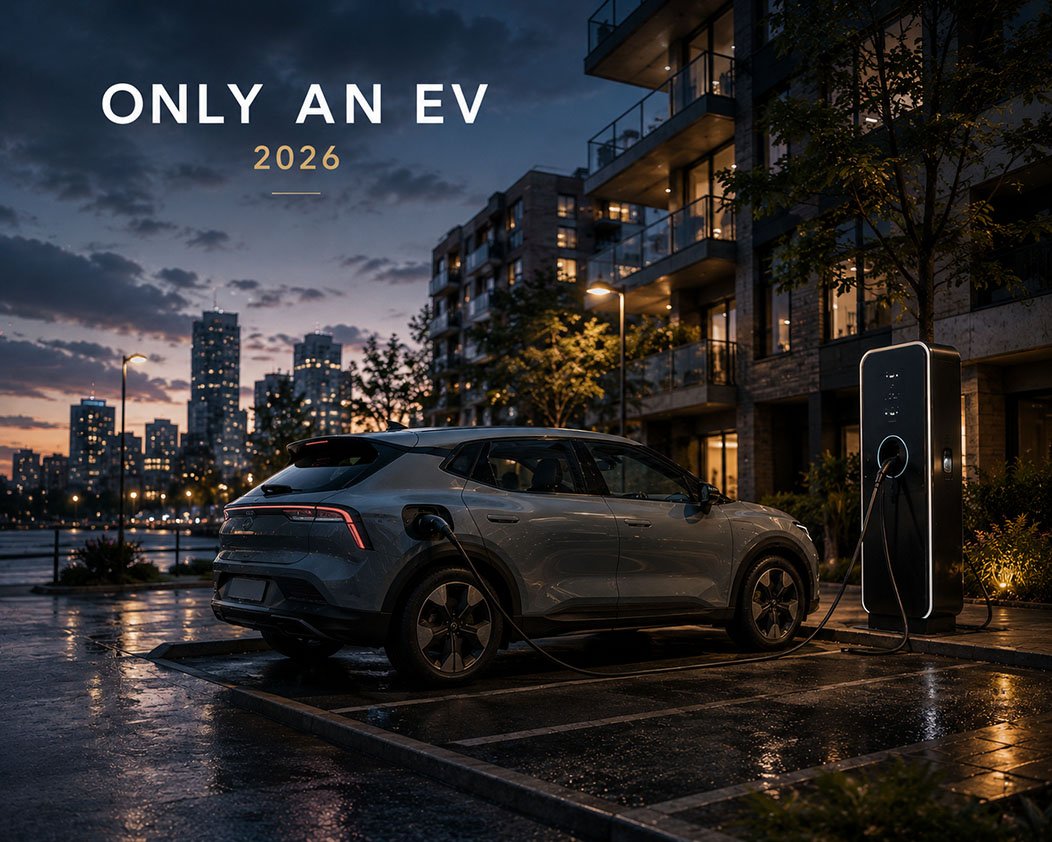
Living with only an EV in 2026 is far more realistic than many drivers expected a few years ago, but the experience still depends heavily on charging convenience, driving habits, climate, and infrastructure quality. For some households, daily EV ownership now feels almost uneventful in the best possible way. For others, charger access still creates friction that a gasoline car would not. The reality is usually more balanced than either EV hype or anti-EV fear suggests.
That is the key shift. EV ownership does not necessarily feel better or worse than gasoline ownership in every situation. It feels different. When charging fits naturally into the week, an EV can stop feeling like a technology choice and start feeling like the simplest car in the household to live with. When it does not, even a very good EV can start to feel inconvenient in ways no brochure fully admits. Public charging, workplace charging, home charging, winter behavior, and route planning all shape that difference.
Why EV Ownership Feels Different From Gasoline Ownership
The biggest shift is that energy stops being a separate errand and becomes part of the ownership routine itself.
With a gasoline car, refueling is a separate errand. With an EV, charging often becomes part of the background rhythm of life, especially when home or workplace charging is available. AFDC’s guidance reflects that logic clearly: home charging remains central to convenience, while public and workplace charging expand flexibility rather than fully replacing routine charging habits.
That changes ownership psychology. Drivers start thinking less about “when do I stop for fuel?” and more about “when does the car naturally top up?” Software matters more than many buyers expect. Route planning matters more. Charger reliability matters more. Over time, the overall EV charging experience often becomes one of the biggest factors shaping daily ownership satisfaction.
This is also why one driver can describe EV-only life as effortless while another calls it annoying. The hardware may be fine in both cases. The difference is usually routine. EV ownership rewards predictability, charging access, and a bit of planning in ways gasoline ownership never really had to.
Who Can Easily Live With Only an EV?
For many drivers, the answer is now less about EV technology itself and more about whether daily routine and charging access already fit the ownership pattern.
Suburban Drivers With Home Charging
This is still the cleanest EV ownership pattern. Home charging turns the car into something that quietly refuels while the owner sleeps. AFDC’s home-charging guidance makes clear how much that changes convenience. When that setup exists, EV-only ownership often stops feeling like a technology experiment and starts feeling like a lifestyle upgrade.
Daily Commuters
Commuters are often better suited to EV-only ownership than they first assume. Predictable mileage, predictable parking windows, and repeatable weekday patterns make charging easier to absorb into normal life. If the commute sits comfortably within real-world range, the car often becomes more convenient over time, not less. AFDC’s EV benefits guidance also reinforces that EVs work especially well where daily driving is regular and manageable.
Urban Drivers With Reliable Public Charging
This used to sound like an obvious weak point. It still can be. But it is no longer unusual. In cities with usable charger density, dependable nearby DC charging, and maybe a workplace option in the mix, EV-only ownership can work well enough. It just feels different from driveway charging. Drivers without private parking often benefit from researching both the best EVs for apartment living and realistic apartment EV charging setup strategies before switching completely to EV ownership. AFDC’s multifamily and public charging guidance both support that reality.
Families Using Mostly Local Driving
Families with school runs, shopping loops, short local trips, and predictable weekly movement often fit naturally into EV ownership. The more repeatable the pattern, the easier charging becomes to hide in the background. Long spontaneous trips still matter, of course, but households built around local driving often discover that EV-only life is less disruptive than they feared.
A balanced real-world EV ownership video exploring the routines, compromises, and conveniences of living with only an EV.
When EV-Only Ownership Still Feels Difficult
This is where trust gets built. Some frustrations are real.
Weak public charging infrastructure is still the biggest one. If chargers are unreliable, badly placed, frequently occupied, or simply too sparse, EV-only ownership can start to feel more fragile than it should. AFDC’s public-charging and station resources make the positive case for public charging, which also means the weak version of that experience still matters a lot in real ownership.
Apartment charging stress is another real issue. Not every city is ready. Not every building is cooperative. Not every local network is dependable. Charging queues, awkward parking layouts, app fragmentation, and simple uncertainty can all turn something technically possible into something emotionally tiring. Some modern ownership frustrations are real, while others remain outdated EV myths that no longer match modern EV technology.
There are also edge cases that still push hard against EV-only ownership: frequent towing, repeated long-distance driving through weak infrastructure, irregular rural travel, and winter driving with little charging flexibility. None of these automatically makes EVs the wrong answer. But they can make ownership less natural and more effortful than it needs to be.
Does Charging Become Annoying Over Time?
Whether charging becomes annoying has less to do with the battery itself than with how naturally charging fits into the rhythm of everyday life.
If charging fits naturally into the week, it often becomes less annoying than fuel stops. Home charging especially can feel like a quiet quality-of-life improvement because the car is simply ready in the morning. AFDC’s home charging material supports exactly that logic.
If charging does not fit naturally into the week, annoyance grows quickly. Public charging can feel fine when it is convenient and dependable. It can also feel irritating when it turns into waiting, detours, app juggling, or a weekly obligation shaped by station availability rather than by the driver’s own schedule. Public charging is improving, but AFDC’s resources on public charging and infrastructure planning make clear that location, siting, and development still matter enormously.
The deeper difference is psychological. Gasoline refueling is brief but disruptive. EV charging can be slower, but less disruptive when it happens in the background. Drivers who learn to value background charging usually settle in well. Drivers who expect EV ownership to feel identical to a fast fuel stop may stay irritated longer.
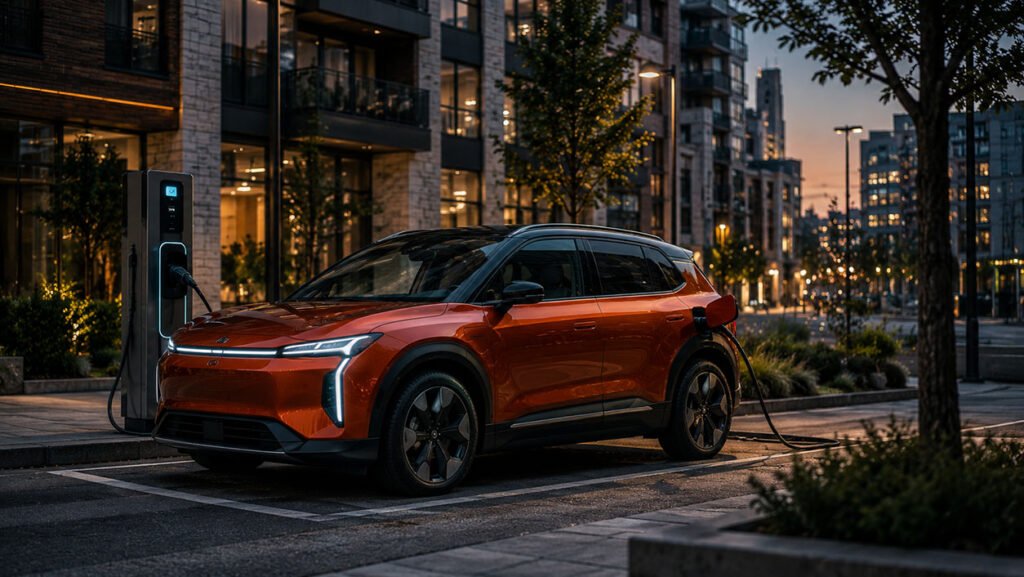
Concept image discussing how charging routines shape EV ownership experience.
Can You Really Road-Trip With Only an EV?
Yes, but road-tripping remains the part of EV ownership where charger quality, route planning, and infrastructure consistency still matter most visibly.
Long-distance EV travel is much more realistic than it once was. Public fast-charging growth, better route planning, and more capable batteries all help. AFDC’s station locator and public-charging guidance make clear that public charging is no longer fringe infrastructure. But road trips still ask for more forethought than gasoline travel.
That does not automatically make EV road trips bad. It makes them more infrastructure-dependent. A strong charging corridor and good software can make EV-only long-distance travel feel routine. A weak corridor, unreliable chargers, or poor route planning can make the same trip feel much more tiring than it should. Road-trip charging behavior can also affect both how long EV batteries really last and some of the lesser-known hidden costs of EV ownership.
The practical truth is simple. Many drivers can already road-trip with only an EV and barely think twice about it. Others still have to plan harder than they would like. The gap is often regional, not theoretical.
Does Apartment Living Make EV Ownership Too Difficult?
Not automatically. But it changes the ownership equation more than many buyers expect.
Apartment EV ownership works best when charging access fits naturally into everyday routines. That can mean workplace charging. It can mean dependable nearby public charging. It can mean a building with usable shared chargers. AFDC’s workplace and multifamily resources both point to how much those options can lower daily ownership friction when they are actually available.
The challenge is that apartment ownership depends less on the car alone and more on the ecosystem around it. A compact, efficient EV may suit urban life better. But even the right EV cannot fully compensate for poor charger reliability, awkward station placement, or a city where charging still feels like a hunt. In a strong charging environment, apartment EV ownership can feel entirely normal; in a weak one, it can start to feel like a weekly logistics problem rather than a seamless routine.
Winter Weather and EV Ownership Reality
Cold weather changes EV ownership. It does not automatically break it.
DOE’s winter EV guidance is clear: low temperatures can reduce range, slow charging, and make preconditioning more important. Cabin heating also uses energy, and winter charging can feel slower and less flexible than it does in mild weather.
But modern EVs are more usable in winter than old assumptions suggest. Preconditioning helps. Better thermal systems help. Smarter route planning helps. Drivers who understand winter losses and leave themselves enough margin usually adapt much better than drivers who expect the car to behave exactly as it does in ideal conditions.
The key question is not whether winter affects EVs. It does. The real question is whether the driver has enough range margin, charging access, and planning flexibility for winter ownership to remain comfortable.
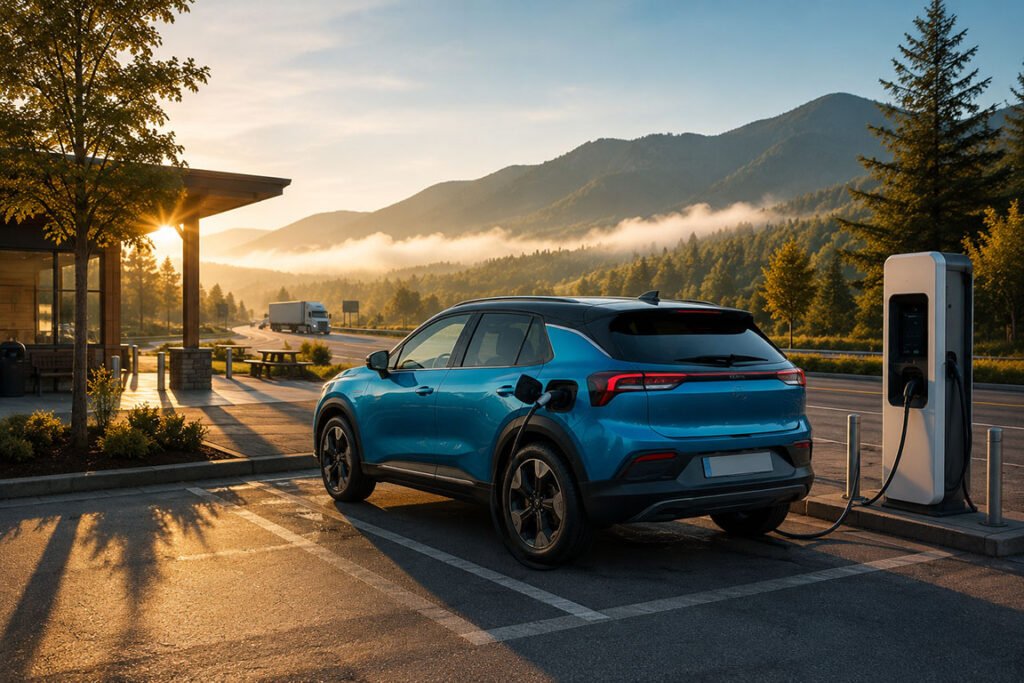
Editorial illustration discussing long-distance EV travel, charging stops, and route-planning reality.
Which Drivers May Still Prefer Hybrid or Gasoline Vehicles?
This is not an anti-EV answer. It is just an honest one.
Drivers who tow frequently, drive very long distances through weak infrastructure, depend on unpredictable rural routes, or have no stable charging access may still find hybrids or gasoline vehicles easier to live with. The same applies to ownership patterns that are so irregular that they resist routine. In those cases, flexibility still matters more than technological preference.
That does not mean EVs have failed. It means the ownership environment has to match the ownership pattern. When it does, EV-only life can feel simple. When it does not, older powertrains still keep an advantage.
Why EV Ownership Is Becoming Easier Every Year
This is the part that explains why EV-only ownership now feels less theoretical and more ordinary than it did only a few years ago.
Charging networks continue to expand. Software integration keeps improving. Battery durability has improved enough that DOE and AFDC frame modern EVs around long useful life rather than short-term fragility. Public, home, workplace, and multifamily charging are all better understood than they were a few years ago.
Just as important, buyers are learning the ownership logic. A lot of early frustration came from mismatched expectations. Drivers expected EVs to behave exactly like gasoline cars, in the same timing, with the same mental model. That gap is shrinking. Better infrastructure helps, but better understanding helps too.
Who Can Most Easily Live With Only an EV?
| Driver Type | EV-Only Ownership Difficulty | Main Advantage | Potential Challenge |
|---|---|---|---|
| Suburban homeowners | Low | Easy overnight charging routine | Long trips still depend on charging network quality |
| Apartment residents | Medium to High | Can work well in strong urban charging environments | Routine depends heavily on public or workplace charging |
| Daily commuters | Low to Medium | Predictable mileage suits EV ownership well | Charging stress rises if the weekly pattern is disrupted often |
| Rural drivers | Medium to High | Can still work with home charging and stable routes | Sparse infrastructure can make flexibility harder |
| Frequent road-trippers | Medium | Increasingly practical in strong charging corridors | Still requires more route planning than gasoline |
| Families with predictable routines | Low to Medium | Routine helps charging become almost invisible | Edge-case trips may still ask for more planning |
| Cold-climate drivers | Medium | Still practical with realistic winter habits | Range and charging speed both take a winter hit |
| Urban public-charging users | Medium | Can fit well into daily city routines | Ownership quality depends heavily on charger reliability |
Final Verdict: Can an EV Really Replace a Gasoline Car?
For many drivers in 2026, the honest answer is yes.
That answer is no longer theoretical. Daily EV ownership already works extremely well for people whose charging access, routine, and climate line up naturally with the car. For those drivers, living with only an EV can feel completely normal. In some cases, it can feel easier than gasoline ownership because the car simply fits into the background of daily life.
But the experience still depends heavily on charging access, infrastructure quality, winter conditions, and how predictable the driver’s routine really is. EV ownership rewards planning differently. It also punishes weak charging access more quickly. Some drivers will adapt immediately. Others may still prefer the flexibility of a hybrid or gasoline vehicle.
For the right driver in the right environment, living with only an EV already feels completely normal. The catch is that the experience still depends heavily on how naturally charging fits into everyday life.
FAQ
1. Can an EV replace a gasoline car completely?
For many drivers, yes. It depends most on charging access, routine, and local infrastructure quality.
2. Is daily EV ownership difficult?
Not necessarily. It can feel very easy when charging fits naturally into the week, and frustrating when it does not.
3. Can you road-trip with only an EV?
Yes, but long-distance convenience still depends heavily on charger quality, route planning, and corridor coverage.
4. Does apartment living make EV ownership hard?
It can make ownership more infrastructure-dependent, but it does not rule it out. Workplace and nearby public charging can make a big difference.
5. Does charging become annoying?
It can, if the routine relies on weak public infrastructure. It often becomes easier over time when charging fits naturally into daily life.
6. Are EVs practical in winter?
Yes, for many drivers, but winter reduces range and can slow charging, so expectations and planning still matter.
7. Who should avoid EV-only ownership?
Drivers with frequent towing, unpredictable rural travel, or no stable charging access may still prefer hybrid or gasoline flexibility.
8. Is EV ownership easier than gasoline ownership?
Sometimes. It often feels easier when charging access and routine are strong, but harder when infrastructure is weak or daily life is less predictable.