

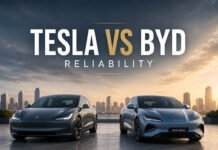



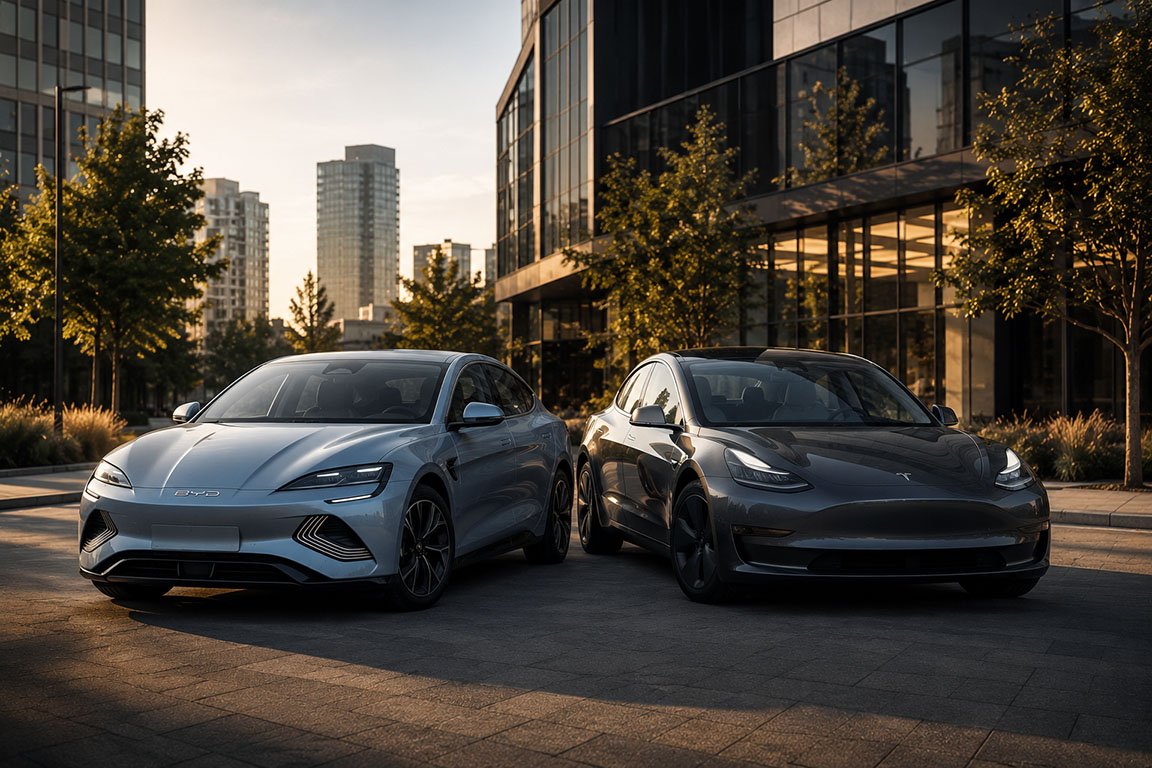
The BYD Seal and Tesla Model 3 are the two electric sedans most buyers end up comparing. They sit in similar price brackets, target similar buyers, and both arrive with impressive range figures and advanced technology. Most comparisons focus on numbers. Living with these cars every day tells a much more useful story.
This one does not.
What actually matters to someone who owns one of these cars for five years is rarely acceleration time. It is whether the charging experience feels effortless or frustrating. It is whether the software stays current or starts feeling stale. It is whether the service network is close enough to matter when something goes wrong. And it is whether the car holds enough value to make the ownership economics add up when it is time to move on.
Neither the BYD Seal nor the Tesla Model 3 is a bad answer here. But they give meaningfully different answers, and understanding those differences is worth your time before you sign anything.
Why Ownership Matters More Than Specifications
Specifications help you choose a car. Ownership determines whether you still enjoy it years later.
The figures that fill automotive press releases — range, peak power, 0–100 km/h times — describe what a car can do during a fifteen-minute test drive. They tell you almost nothing about what it will be like to live with for three to five years.
Both the BYD Seal and Tesla Model 3 are genuinely capable electric sedans with real-world range that handles most daily driving without drama. The differences that separate them as ownership propositions are subtler: how confidently you can plan a long journey, how smoothly the software handles routine tasks, how easy it is to get the car repaired when needed, and how well the residual value holds up when you eventually sell.
These are the questions this comparison is built around.
Charging Experience: Which Car Creates Less Friction?
Charging is where the gap between these two cars is most visible, and it consistently shapes how owners talk about their daily lives.
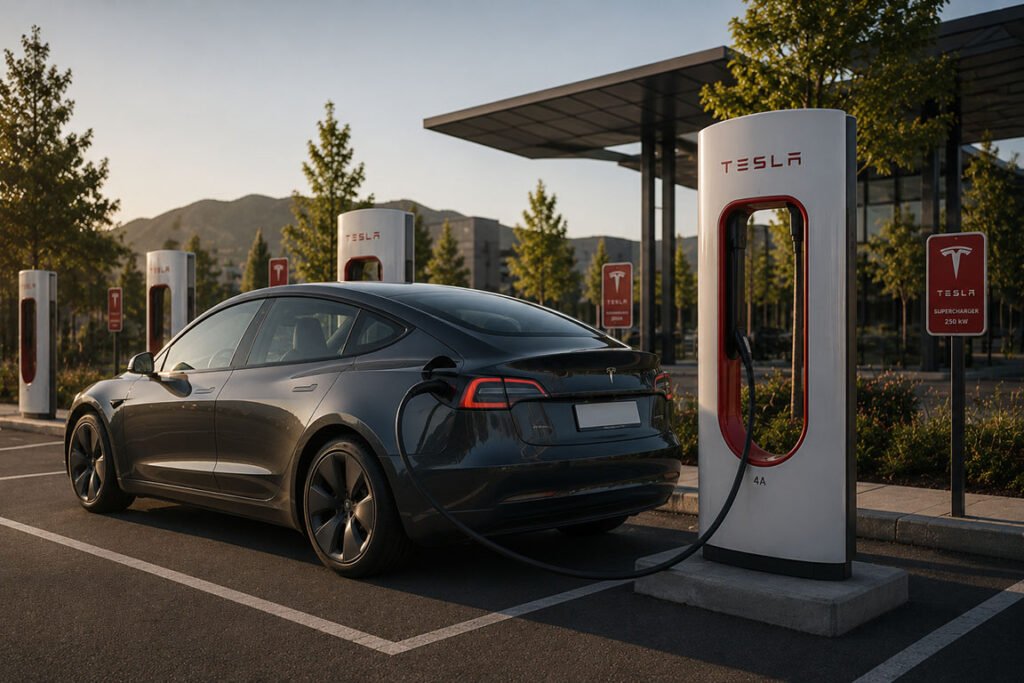
Tesla’s Supercharger network remains the most mature and most reliable public fast-charging infrastructure available. As of mid-2026, Tesla operates more than 8,100 DC fast-charging stations globally, with over 37,000 individual ports in the United States alone — representing roughly half of all DC fast chargers in the country. More meaningfully, reliability data from J.D. Power in August 2025 recorded only a 4% failure rate at Supercharger visits, well below the industry average of around 14%. When a Tesla driver arrives at a Supercharger, it works almost every time.
The experience on the car side matches that reliability. Tesla’s navigation routes you automatically through Supercharger stops on long journeys, estimating arrival state of charge and adjusting recommendations in real time. Plug & Charge is integrated throughout the Supercharger network. You arrive, plug in, and charging begins. There is no app authentication, no payment terminal, no QR code to scan. For drivers who do a lot of long-distance travel, this matters enormously.
That advantage is gradually shrinking as charging networks expand and more manufacturers improve route planning and Plug & Charge support, but Tesla still sets the benchmark today.
The BYD Seal uses CCS charging and relies on the third-party public network — Ionity, Electrify America, Osprey, Chargefox, and others depending on market. That network has improved substantially, but it remains more variable. Charger uptime, payment authentication, and power delivery can differ significantly between sites. Finding a charger is straightforward through the Seal’s navigation or apps like PlugShare, but the experience at the charger itself is less predictable than what a Tesla driver expects.
The Seal’s peak DC charging rate sits at 150 kW for the larger battery variant, with a 10–80% charge taking around 37 minutes in ideal conditions. Tesla’s Model 3 Long Range reaches up to 170 kW on compatible Superchargers and maintains a flatter, more consistent charging curve. In practice, the difference in charge session time is modest — but the Tesla’s charging experience has less friction attached to it from the moment you pull in.
There is one genuine advantage the BYD Seal holds for home charging: support for three-phase 11 kW AC charging, compared to the Model 3’s standard 11 kW AC. For owners with appropriate home electrical setups, the Seal can top up more quickly overnight. Day-to-day, most owners will not notice the difference — but for anyone who arrives home later in the evening and needs a fuller battery earlier in the morning, it is a meaningful detail.
The BYD Seal can also access Superchargers in markets where the network has been opened to non-Tesla vehicles, though payment requires setting up a Tesla account and some cable reach limitations can apply depending on parking configuration.
For city dwellers whose journeys stay close to home and who charge mainly overnight, the Seal works perfectly well. For regular long-distance drivers, or anyone who values predictable fast-charging above other factors, the Tesla Model 3 has a clear structural advantage in this area.
Charging convenience varies significantly between manufacturers. Our guide to EV Charging Experience: Which Brands Make Charging Less Annoying? compares today’s leading charging ecosystems in more detail.
Software and Daily Usability
Software has become one of the biggest factors separating modern EV ownership experiences, and the BYD Seal and Tesla Model 3 approach it very differently.
Tesla’s software remains the most sophisticated in any mainstream EV. The interface is fast, logical, and deeply integrated with the vehicle. Navigation, media, climate, driver assistance settings, and vehicle controls all operate from the same central 15.4-inch screen without meaningful lag. OTA updates arrive regularly — often every few weeks — and genuinely add capability rather than just patching bugs. The car you buy in year one continues to improve through year two and year three. The 2026 update cycle for the Model 3 Highland has, among other things, refined Autopilot behaviour and improved energy management, changes that owners receive without visiting a service centre.
Tesla’s mobile app remains one of the most polished in the mainstream EV market… remote climate control, charge scheduling, trip monitoring, and vehicle status all work consistently. Pre-conditioning the car before a journey, particularly important in winter for maintaining battery efficiency, is genuinely easy to manage.
The Model 3 does have a meaningful frustration in this area. Tesla removed the indicator and wiper stalks during the Highland redesign, replacing them with steering wheel buttons. The 2026 model year has reinstated physical stalks, addressing one of the most common complaints from Highland owners. Earlier Highland examples remain without them, and adapting to the button controls takes time many owners describe as unnecessary effort.
The BYD Seal’s 15.6-inch rotating touchscreen is a genuine talking point and is more immediately impressive than the Tesla’s interior. The display rotates between portrait and landscape orientations, and the overall fit and finish of the Seal’s cabin — soft-touch materials, Alcantara on higher trims, a panoramic roof — has drawn consistent praise from reviewers who describe it as feeling a level above its price point.
The Seal also supports wired Apple CarPlay and Android Auto, which gives owners an immediate escape from BYD’s own navigation and entertainment system if they prefer it. Tesla does not offer CarPlay or Android Auto. Whether this matters depends entirely on how embedded the buyer is in Apple or Google’s ecosystem. For many people, it resolves any concerns about the quality of the Seal’s native software.
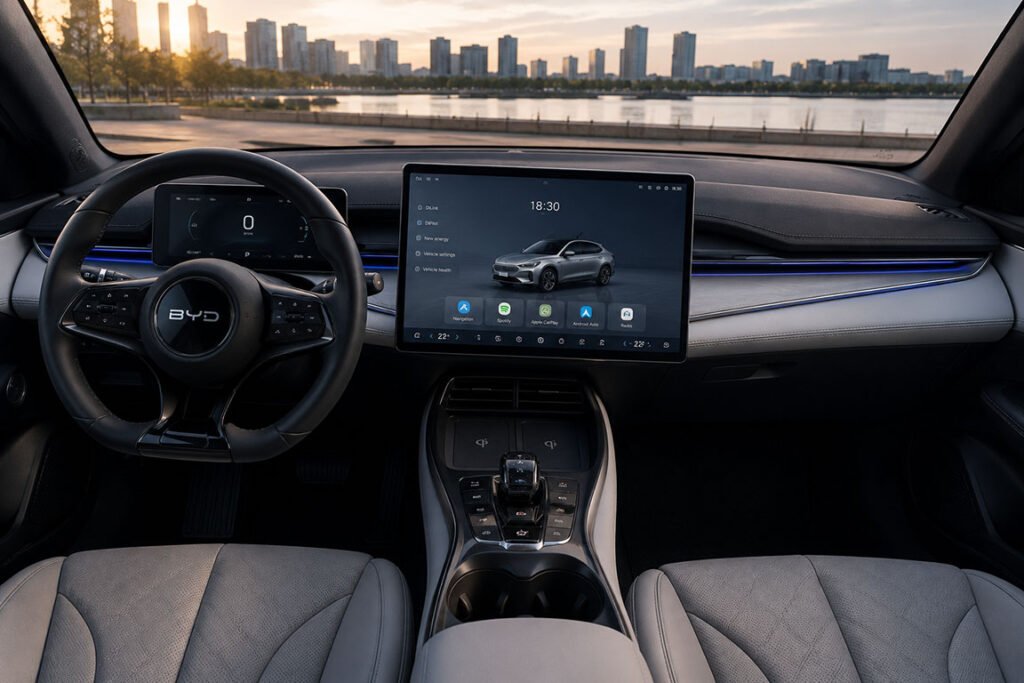
BYD’s OTA update cadence is improving but does not yet match Tesla’s pace or depth of change. Software-defined features, route planning, and energy management all work but feel earlier in their development cycle than the Tesla equivalent. This may narrow as BYD matures its software platform, but it is a genuine gap in mid-2026.
For buyers who want the most capable, continuously evolving software experience: the Tesla Model 3. For buyers who prefer CarPlay integration and a more conventional approach to digital controls: For buyers who value familiar smartphone integration over a fully self-contained ecosystem, the BYD Seal may feel like the more comfortable choice.
Battery Confidence and Long-Term Reliability
Battery anxiety — the concern that the pack will degrade faster than expected — remains a real factor in EV purchasing decisions, even if the data consistently suggests it is overstated.
Both cars use lithium iron phosphate chemistry in their standard and long-range battery configurations, which is relevant because LFP cells are inherently more stable through charge cycles than the older NMC chemistry. The BYD Seal’s Blade Battery is designed and manufactured entirely in-house by BYD, which also means BYD has full control over quality and supply. The structural Cell-to-Body design integrates the battery into the car’s floor, reducing weight while contributing to rigidity.
BYD’s battery warranty in Europe now covers 8 years or 250,000 km — a coverage level that substantially exceeds most competitors, including Tesla’s 8-year, 192,000 km coverage on the Model 3 Long Range. This is not a marginal difference, and BYD has applied the extended warranty retroactively to existing owners, which is a meaningful statement of confidence in the Blade Battery’s durability.
The BYD Seal’s LFP chemistry does mean that charging in very cold weather can be slower than expected, as LFP cells are more temperature-sensitive. Owners in cold climates who do not pre-condition the battery before DC charging may find charge speeds lower than advertised until the pack warms up. Pre-conditioning solves this, but it requires planning.
For long-term battery confidence, both cars have a reasonable case to make. BYD’s warranty is more generous on paper and the Blade Battery’s design philosophy prioritises longevity over peak energy density. Tesla’s established fleet data — accumulated across millions of vehicles over a longer period — provides a different kind of confidence: real-world evidence that degradation stays within acceptable ranges for most owners over the first five years.
For most buyers, neither car should raise serious concerns about long-term battery durability. But BYD’s warranty terms are the more protective of the two, which matters if the battery does develop an issue.
Want a deeper look at how EV batteries age over time? Read our guide on How Long Do EV Batteries Really Last?
Maintenance, Repairs and Service Experience
Service quality often becomes the biggest difference between owning a car for six months and owning it happily for six years.
Tesla’s service network is not perfect. Mobile service appointments are genuinely convenient for minor issues, and Tesla handles many repairs remotely through software. When physical service is required, appointment availability can be stretched in busy markets, and parts pricing can surprise owners accustomed to petrol car servicing costs. These are documented limitations, particularly during periods of rapid sales growth when service demand has temporarily outpaced capacity. But Tesla’s service infrastructure is established, staffed by trained technicians, and has been operating at scale for more than a decade.
BYD’s service infrastructure is still catching up with its own rapid sales growth. In Australia, which has been an early and high-volume BYD market, documented complaints of months-long parts delays, unanswered customer service contacts, and limited service location coverage have been common enough that BYD’s own Australian COO acknowledged publicly in early 2026 that the brand is “just bursting at the seams just running to catch up.” BYD has since moved to a factory-backed ownership structure in several markets and is actively expanding its dealership and service network — in Germany alone, it plans to grow from 27 to 120 locations. But this expansion is ongoing, not complete.
In European and UK markets, BYD dealer coverage is growing but remains thinner than Tesla’s mobile service model in most areas. Owners in major urban centres will generally be better served than those in rural or regional locations.
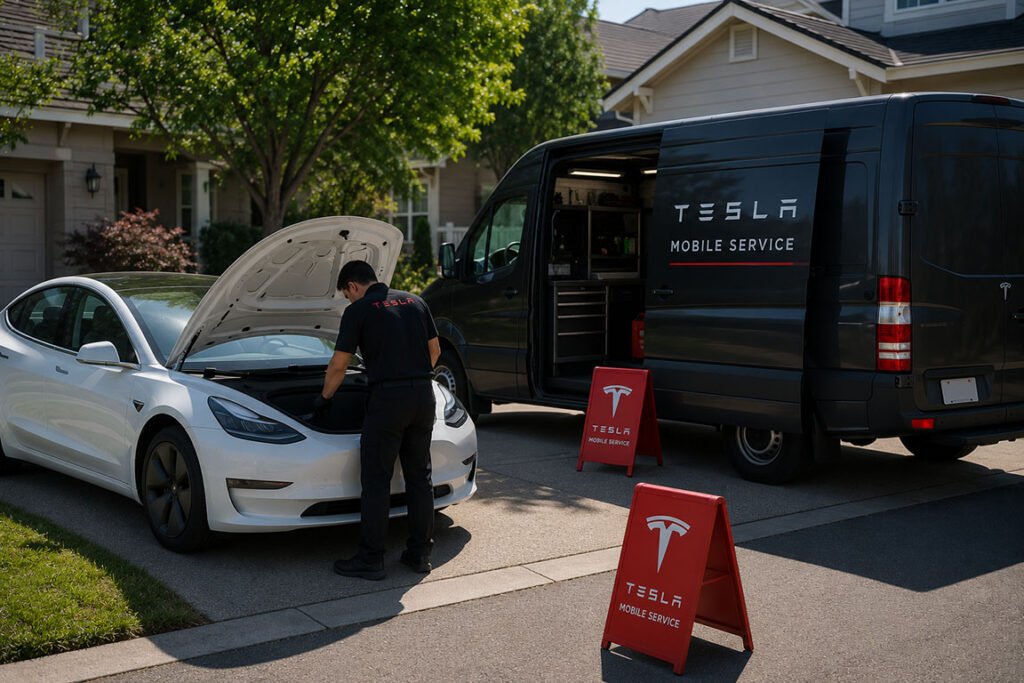
For routine maintenance, both cars keep demands low: EVs have no oil changes, fewer brake service requirements (regenerative braking extends pad life significantly), and no traditional transmission service. The BYD Seal comes with a longer standard vehicle warranty in the UK — 6 years versus Tesla’s 4 years from 2024 onwards — which provides additional coverage on non-battery components.
The honest summary here is that Tesla’s service experience has more precedent behind it. BYD’s network is improving rapidly but is at an earlier stage of maturity. For a buyer purchasing today, proximity to a BYD service centre and the quality of local dealer support is worth researching specifically for their area.
If you’re comparing ownership costs beyond servicing alone, our Tesla vs BYD Ownership Cost comparison breaks down charging, maintenance, insurance, and depreciation over the long term.
Resale Value and Ownership Risk
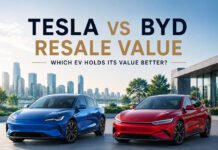
Resale value shapes the true cost of ownership more than almost any other single factor, and this is an area where both cars carry real uncertainty.
Tesla has consistently held stronger resale values than most EV competitors over the past five years, supported by brand recognition, the Supercharger advantage, and a mature used-car market. However, Tesla’s own pricing strategy — repeated new car price cuts have at various points damaged the value of earlier models — means that used Tesla resale outcomes have been less predictable than the headline brand strength suggests. The Model 3 Highland has largely stabilised this picture, but the risk of a new price movement affecting used values is a legitimate concern.
BYD’s resale position is more nuanced and more market-specific. In Australia, early Seal data from mid-2025 showed first-year depreciation of roughly 15–22%, which is steeper than most new car buyers would hope for. The primary driver is not product quality but brand maturity in the used market: buyers of second-hand cars are less familiar with BYD than they are with Tesla, and the EV market overall has seen significant new-car price pressure that flows through to used values.
BYD’s strategy of resisting the kind of aggressive new-car price cuts Tesla has historically applied is a deliberate effort to protect residual values. Whether that holds as the market grows more competitive remains to be seen.
In regions where BYD is an established brand with strong sales momentum — the UK, much of Europe, Australia — the used-market picture is improving as buyers become more familiar with the product and service infrastructure strengthens. In markets where BYD is newer or where brand recognition is still building, resale risk is higher.
If resale value stability over five years is a significant financial consideration, the Model 3 currently carries slightly more predictable depreciation in most Western markets. The BYD Seal has the potential to narrow this gap as the brand matures, but that potential has not yet fully translated into used-market evidence.
What Everyday Owners Usually Care About Most
The better choice depends less on specifications than on how you actually use your car every day.
Daily commuting: For commuters, comfort, convenience, and low daily effort usually matter more than outright performance. Home charging covers the vast majority of daily needs for both. The Seal’s more comfortable ride and quieter cabin are frequently noted advantages for urban and suburban commuters. The Tesla’s software and navigation refinement suits those who integrate the car tightly into their digital routine.
Apartment living and public charging dependency: The Tesla Model 3 holds a meaningful advantage for anyone who cannot charge at home and relies primarily on public infrastructure. The Supercharger network’s reliability and ease of use translates directly into daily convenience when public charging is your primary option. The Seal works perfectly well on the public network, but the variability of the third-party charging experience adds friction that home chargers eliminate.
Road trips: For long-distance travel, the Tesla Model 3’s Supercharger integration — automatic route planning, consistent charger availability, high reliability — makes it the more confident long-haul companion. The Seal is capable of road trips but requires more active planning and a greater willingness to plan around different charging networks.
Family ownership: The Seal wins on interior quality and rear passenger space. Its longer wheelbase and flatter floor — a benefit of the cell-to-body battery design — translate to noticeably better rear comfort on longer journeys. The Seal also comes heavily equipped as standard, with fewer options needed to reach a comfortable specification.
First-time EV buyers: The Tesla’s charging simplicity and well-established ownership ecosystem tend to reduce the learning curve. The Seal’s support for Apple CarPlay and Android Auto eases the transition from a conventional car’s infotainment world. Neither is difficult to live with, but Tesla’s integrated charging ecosystem generally asks less of a first-time EV owner.
BYD Seal vs Tesla Model 3 Ownership Summary
| Ownership Area | Tesla Model 3 | BYD Seal |
|---|---|---|
| Public charging experience | Excellent — Supercharger network, high reliability, plug and charge | Good — CCS network, more variable reliability, improving coverage |
| Route planning integration | Best in class — automatic Supercharger routing | Capable — relies on third-party apps for full confidence |
| Home charging | Strong — up to 11 kW AC standard | Strong — up to 11 kW AC three-phase |
| Software quality | Industry-leading — frequent OTA updates, refined interface | Good — improving, CarPlay/Android Auto support is a key advantage |
| OTA software support | Excellent — frequent feature updates with a mature software ecosystem | Good — regular updates, but fewer feature additions and a slower rollout |
| Interior quality and comfort | Good — clean, minimal, well-executed | Excellent — premium materials, more rear space, quieter cabin |
| Battery warranty | 8 years / 192,000 km (LR) | 8 years / 250,000 km (Europe) |
| Vehicle warranty | 4 years / 80,000 km (UK/EU) | 6 years / 150,000 km (UK/EU) |
| Service network maturity | Established — mobile service strong, fixed centres growing | Developing — expanding rapidly but still catching up in some markets |
| Resale value confidence | Higher — more established used-car market | Lower currently — improving as brand matures |
| Long-distance travel | Strong advantage — Supercharger infrastructure | Capable — requires more planning |
| Daily commuting | Excellent | Excellent |
| First-time EV suitability | Very strong — charging ecosystem reduces the learning curve | Strong — Apple CarPlay and Android Auto ease the transition |
Which EV Fits Your Life Better?
These two EVs solve the same problem in different ways, which is why choosing a clear overall winner would oversimplify the decision.
The Tesla Model 3 makes most sense if:
You drive long distances regularly and value the confidence of arriving at a charging stop that almost always works. The Supercharger network is not a marginal advantage over alternatives at this point — it is a structural one. If you routinely cover journeys of 300 km or more, do not have guaranteed home charging, or simply want to spend the least amount of cognitive energy managing public charging, the Model 3 is the cleaner answer.
The Model 3 also suits buyers who want a car that improves meaningfully over time through software updates, who are comfortable with a minimalist interior aesthetic, and who place a premium on proven resale value in markets where Tesla has an established used-car presence.
The BYD Seal makes most sense if:
You primarily charge at home, have a manageable daily driving pattern, and want a more premium cabin for the money. The Seal’s interior quality is genuinely impressive at its price point, and for passengers — particularly rear-seat occupants on family journeys — the additional space and quietness make a real difference.
The Seal also suits buyers who want Apple CarPlay or Android Auto without compromise, who value a longer standard warranty on both the vehicle and the battery, and who are buying in a market where BYD’s dealer and service network is already established. Its cabin also feels more traditionally premium, which many buyers continue to value over Tesla’s minimalist approach.
For buyers in markets where BYD is still building its service infrastructure, the honest advice is to research local support specifically before committing. The car itself is well-engineered, but the ownership experience is partly shaped by what happens if and when something needs attention — and that still varies significantly by location.
There isn’t a universally better car here. There is only the one that better matches your driving habits, charging routine, and ownership priorities over the next several years.
If your decision comes down to long-term confidence rather than features alone, our Tesla vs BYD Reliability comparison explores how the two brands compare beyond individual models.
Warranty terms and charging network coverage vary by market and are subject to change. Verify current figures with your local Tesla and BYD representatives before purchase.