























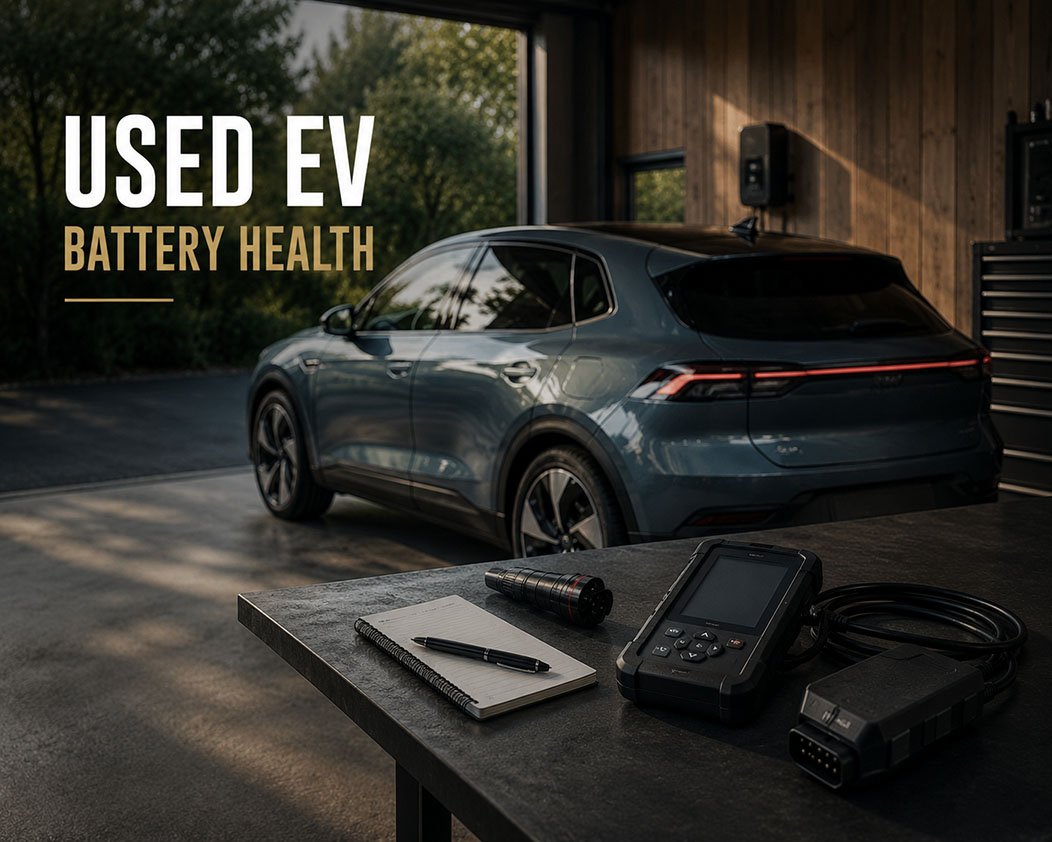
Buying a used EV is not really a mileage question first. Battery condition, charging history, thermal management, software support, and warranty coverage usually tell you more about long-term ownership than the odometer ever will. The reassuring part is that modern EV batteries usually age more gracefully than many buyers still assume, and some capacity loss over time is normal rather than automatically alarming. DOE guidance says today’s EV batteries may last roughly 12 to 15 years in moderate climates and 8 to 12 years in more extreme climates, which already tells you that environment and management matter, not mileage alone.
That also means a low-mileage used EV is not always the healthier one. A car that spent years in heat, sat fully charged for long periods, or came from a platform with weaker thermal management can be a worse buy than a higher-mileage EV that was charged sensibly and managed well. The used-market mistake is assuming battery age works like engine wear. It does not.
Why Battery Health Matters More Than Mileage
EV batteries do not age like combustion engines, which is why used-car instincts often fail here.
Mileage still matters, but on a used EV it is only one signal, not the diagnosis. Temperature exposure matters. Charging behavior matters. Software and battery management systems matter. So does battery chemistry. DOE guidance notes that advanced EV batteries are designed for extended life, while AFDC says an EV battery can still retain at least 70% of its original capacity at end of life if it has not failed or been damaged. That is a long way from the internet myth that an older EV battery is automatically on borrowed time.
This is why buyers considering buying a used EV should also understand how long EV batteries really last before judging a car by mileage alone.
A well-managed high-mileage EV can age better than a lightly used one with poor charging habits. Recurrent’s battery-health research points to heat, high voltage, and extreme state of charge as major degradation drivers, which is a useful reminder that how a battery lived matters as much as how far it traveled.
Gradual degradation is normal. Catastrophic battery failure is a different subject. Those are not the same story, and used buyers should not confuse them.
External link placement in this section:
Use this sentence with a link to Recurrent:
A well-managed, high-mileage EV in a mild climate with careful charging habits may be a better long-term bet than a low-mileage car that spent years in extreme heat or came from a weaker battery-management platform, which is why Recurrent’s battery-health guidance is more useful than judging a used EV by mileage alone.
What Is Battery SOH (State of Health)?
Battery SOH, or State of Health, is a way of estimating how much usable battery capacity remains compared with when the battery was new.
In simple terms, 100% SOH would mean the battery still offers its original usable capacity. A lower number means some of that capacity has faded over time. That matters because usable capacity affects real-world range, charging behavior, and used-market confidence.
SOH is more useful than the dashboard range estimate by itself. Estimated range changes with weather, speed, recent driving, elevation, and climate-control use. A battery can be healthy while the displayed range looks unimpressive after a cold week or a fast motorway trip. SOH is not perfect, but it is usually a better starting point than eyeballing the dash and guessing.
Buyers do not need to become engineers, but they do need to understand the difference between battery condition and dashboard guesswork. SOH is not perfect, yet it is usually a more useful starting point than estimated range alone.
How to Check Used EV Battery Health Before Buying
This is where the buying process becomes useful instead of theoretical.
The best battery check combines software diagnostics, charging behavior, ownership history, and a little skepticism. One number on one screen is not enough.
Start with the battery-health report if one is available. Some dealers, brands, and third-party inspection tools can provide battery diagnostics or battery-health summaries. If the car supports a trustworthy diagnostic app or service readout, use it. Some platforms are easier to inspect than others, but any credible battery-health data is better than a seller saying, “It seems fine.”
Then look at how the car behaves. Does the usable range make sense for the age, chemistry, and condition claimed? Does charging feel stable? If possible, see how the car behaves on both AC and DC charging rather than trusting the seller’s description of “normal.”
Service history matters too. You want signs of completed recalls, proper maintenance, software updates where relevant, and no unresolved battery or charging warnings. Missing records are not always fatal, but complete records add real confidence.
A disciplined buyer does not ask only, “What percentage is the battery at?” A disciplined buyer asks how the car has been used, how it behaves under charge, whether software support is still healthy, and whether the ownership story makes sense.
A practical real-world video on used EV battery inspection, with useful context on SOH, charging behavior, and warning signs before purchase.
Does Fast Charging Damage Used EV Batteries?
Fast charging deserves a calm answer, not a scary one.
Frequent DC fast charging can add battery stress in some situations, especially over long periods, in hot climates, or on platforms with weaker thermal management. Recurrent’s research is useful here because it points again to heat, high voltage, and extreme state of charge as key degradation drivers.
But fast charging is not automatically harmful. Modern EVs are designed to use it, and many drivers rely on it regularly without turning the battery into a cautionary tale. Battery aging depends on the broader usage pattern: how often the car sat full, how much heat it saw, how the software managed the pack, and how the vehicle was charged over time.
Fast charging also becomes more important in urban ownership situations involving apartment EV charging setup strategies, where public charging may play a much bigger role than it does for homeowners with a private charger.
The practical takeaway is simple: fast charging matters, but on a used EV it is only one clue inside a much bigger battery-health story.
Why Battery Chemistry Matters
Battery chemistry matters because it can change how a used EV ages, charges, and feels to live with over time.
LFP batteries are generally associated with durability and lower cost. Nickel-rich chemistries such as NMC are often used where higher energy density matters more. Neither is automatically “better” for every buyer. The ownership trade-offs are different.
LFP can inspire confidence in a used EV because it is often linked with durability and less sensitivity to everyday full charging habits. Nickel-rich packs may offer other strengths, but battery behavior around temperature, charging, and capacity fade can feel different depending on the platform and software.
Used buyers do not need to memorize chemistry charts. They just need to know that chemistry can affect long-term range confidence, charging routine, and how the car ages in real life.
Why Warranty Coverage Is Still Extremely Important
Battery warranty coverage is one of the strongest risk reducers in the used EV market.
A used EV with meaningful battery warranty remaining is usually easier to trust, easier to compare, and easier to justify at the asking price. Tesla’s official vehicle warranty says its battery warranty varies by model, but includes 8 years with mileage limits and a minimum 70% battery-capacity retention threshold during the warranty period.
That is why buyers should check:
- how much battery warranty remains
- whether it transfers to the next owner
- whether a capacity-retention threshold is defined
- what mileage limit applies
- whether service history affects eligibility
An eight-year battery warranty is not an eight-year expiration date for the car, but it is still one of the strongest protections when shopping used.
An eight-year battery warranty is not an eight-year expiration date, but it is still one of the strongest risk reducers when shopping for a used EV, which is why checking Tesla’s official vehicle warranty or the equivalent local manufacturer page matters before buying.
Software Support and Charging Performance Matter Too
A technically healthy EV can still feel dated if software support is weak.
OTA updates, route planning, charging integration, charging behavior in cold weather, and charger preconditioning all shape long-term ownership quality. A used EV with decent battery health but poor software support can still be frustrating. If route planning is clumsy, charging integration is weak, or app support is fading, the car may feel older than the battery data suggests.
Software quality affects both the long-term EV charging experience and future resale confidence, especially in discussions around Tesla vs BYD resale value.
This is one of the most overlooked parts of used EV buying. A battery can be technically acceptable while the ownership experience still feels stale.

Warning Signs Buyers Should Not Ignore
One warning sign alone may not be serious. Several unresolved signs together deserve attention.
Watch for:
- rapid unexpected range loss
- unstable or inconsistent charging behavior
- battery or charging warning lights
- overheating history
- repeated DC charging problems
- missing service history
- app or account transfer issues
- visible accident damage around battery-adjacent structure
A car does not need to be perfect to be a good buy. But a used EV with multiple unresolved battery or charging concerns is asking you to take on uncertainty that the price may not justify.
Used EV Battery Health Checklist
Before you trust the deal, check the car.
Used EV Battery Health Checklist
| What to Check | Why It Matters | Potential Risk if Ignored |
|---|---|---|
| Battery SOH | Gives a better picture of usable battery condition than dash guesswork | You misread the battery’s true condition |
| Warranty coverage | Can reduce used-EV risk dramatically | You buy the car just as protection disappears |
| Charging history | Helps explain how the battery has been used over time | You miss patterns that accelerate aging |
| Fast charging performance | Shows whether the car charges consistently and normally | Charging problems appear after purchase |
| Software support | Affects charging, route planning, and long-term usability | The car feels outdated sooner than expected |
| Service records | Show how carefully the car was maintained | Hidden history undermines confidence |
| Battery recalls | Confirms whether known issues were addressed | Major problems remain unresolved |
| Real-world range | Helps test whether behavior matches the car’s claimed condition | Dashboard estimates mislead you |
| Charging accessories | They affect daily usability and replacement cost | Extra cost appears after purchase |
| Thermal management reputation | Some platforms manage battery aging better than others | You buy into a weaker long-term ownership story |
Which Used EV Buyers Should Be Most Careful?
Not every used EV buyer carries the same risk. The more your ownership pattern depends on battery confidence, charging flexibility, and long-term support, the more carefully you need to inspect the car.
First-Time EV Buyers
They should care most about battery knowledge, warranty clarity, and charging confidence. The risk is not that used EVs are inherently bad. The risk is misreading what matters.
Apartment Residents
Public charging dependence changes the ownership experience. Battery condition and charging performance matter more when the routine already leans on public infrastructure.
Long-Distance Drivers
Charging curve, battery condition, and route-planning quality matter more here than they do for short-trip owners. A mediocre battery story is easier to live with in city use than on repeated long-distance trips.
Budget-Focused Buyers
Used EVs can offer excellent value, but only when battery condition is verified rather than assumed from price or mileage.
Buyers Planning Long-Term Ownership
They should care most about thermal management, chemistry, software support, and warranty context. The longer you plan to keep the car, the more platform quality matters.
Final Verdict: How Important Is Used EV Battery Health?
Used EV battery health is extremely important, but usually not in the catastrophic way many buyers still assume.
Battery degradation is normal. Mileage matters, but battery condition matters more than mileage alone. Software, charging behavior, thermal management, chemistry, and warranty support all shape the real ownership story. DOE guidance on battery life and end-of-life capacity helps frame the issue properly: batteries wear, but that is not the same thing as failure.
Many used EVs still offer excellent value. The best used EV is usually not the one with the lowest mileage. It is the one with healthy battery management, strong support, and a realistic ownership history.
FAQ
1. How do I check used EV battery health?
Use a mix of battery-health reports, diagnostic tools where available, charging behavior, service records, and real-world range checks.
2. What is EV battery SOH?
State of Health is an estimate of how much usable battery capacity remains compared with when the battery was new.
3. Does fast charging damage EV batteries?
Not automatically. It can add stress in some situations, but overall usage pattern, heat, and battery management matter more.
4. Is mileage important on a used EV?
Yes, but it is not the whole story. Climate, charging habits, software, and thermal management matter as much or more.
5. What is normal EV battery degradation?
Some capacity loss over time is normal. It becomes a buying concern when the condition is clearly worse than expected for the car’s age, chemistry, and use pattern.
6. Are used Tesla batteries reliable?
Often, yes, but the same rules still apply: check battery condition, warranty coverage, charging behavior, and software context. Tesla’s official warranty also includes a battery-capacity retention threshold during the warranty period.
7. Is battery replacement common?
Not generally, based on real-world battery-health research, but it is still something buyers should understand rather than ignore.
8. What is the biggest warning sign when buying a used EV?
Usually it is not one sign in isolation, but a pattern: weak battery evidence, unstable charging behavior, missing history, and unresolved warnings on the same car.