






















For many drivers, buying a used EV can be both safe and financially smart. Modern EV batteries often last longer than many buyers expect, and the biggest risks are not always mileage alone. Battery health, charging history, software support, thermal management, warranty coverage, and service access usually matter more than a simple odometer reading. In practical terms, buying a used EV is less about avoiding all risk and more about understanding the right risk.
That is why the best used EVs can be such good value. A heavily depreciated electric car may still offer quiet daily usability, lower routine maintenance than many gasoline cars, and years of useful range. But not all used EVs age equally well. The smart used-EV buyer is not the one who avoids risk entirely, but the one who knows how to check battery condition, warranty coverage, software support, charging setup, and service history before trusting the price.
Why Used EVs Scare Many Buyers
Used EVs still make some buyers nervous for familiar reasons: battery replacement fear, range-loss anxiety, and the suspicion that one expensive repair or one weak software ecosystem could turn a smart buy into a frustrating one.
Those concerns are understandable, especially for buyers who know exactly how to judge a used gasoline engine but do not yet trust what they are seeing in an older EV. But many of those fears come from uncertainty rather than from broad real-world ownership data. DOE guidance notes that EVs generally have fewer moving parts and lower maintenance needs, while Recurrent’s used-EV guidance is built around battery condition and range confidence rather than battery panic.
That does not mean every used EV is a safe bet. It means the used market is usually more logical than the myths around it.
Battery Health Matters More Than Mileage
This is the part that matters most.
Mileage still matters on a used EV, but not in the simple way many buyers expect. A well-managed, high-mileage EV in a mild climate with careful charging habits may be a better long-term bet than a low-mileage car that spent years in extreme heat, sat fully charged for long periods, or comes from an older platform with weaker thermal management. Recurrent’s battery-health guidance is explicit that you cannot judge EV battery health from the odometer alone, because temperature, age, charging habits, driving style, and battery chemistry all shape battery condition.
Gradual degradation is normal. That is not the same thing as failure. Many EV batteries lose usable range slowly over time rather than suddenly becoming useless. Recurrent also notes that battery health is best understood as current usable capacity relative to original capacity, which is why real range and state of health matter more than the simple fear that “old EV battery” automatically means “bad EV battery.”
Battery chemistry matters too. LFP packs are generally associated with strong cycle durability, while nickel-rich chemistries can offer different energy-density trade-offs. Neither chemistry excuses a bad ownership history. Thermal management, software control, and charging behavior still matter. Understanding how long EV batteries really last and how EV battery degradation works can help buyers avoid unnecessary fear.
A practical battery-health guide is most useful here when it explains what to check before buying, rather than treating every older EV like a battery gamble.
Fast Charging, Heat and Charging History
Fast charging deserves a calm answer rather than a dramatic one.
Frequent DC fast charging can add stress in some situations, especially on older EV platforms or in very hot conditions. But it is also true that battery condition depends on the overall ownership pattern, not one single habit. Recurrent’s battery-health guidance points directly to temperature, age, charging habits, and chemistry as the variables that shape battery performance over time.
Heat is often the more serious long-term concern. Extreme temperatures can affect long-term battery aging, and older EVs with simpler cooling systems deserve closer scrutiny than newer vehicles with stronger thermal management. That is why charging history matters more on some older used EVs than on newer ones. Home charging is generally gentler for long-term battery health, but it is still only one part of the story.
The smarter question is not “Was it fast charged?” in isolation. It is “What kind of platform is this, how was it used, and how well is this model known to age?”
Why Warranty Coverage Is So Important
Battery warranty is one of the biggest structural advantages a used EV can have.
Tesla’s official support pages show that the company’s Battery and Drive Unit Limited Warranty varies by model, but commonly runs up to 8 years with mileage limits and a 70% battery-capacity retention threshold during the warranty period. Tesla also says pre-owned vehicles keep the remainder of the original Basic Vehicle Limited Warranty, followed by a 1 year / 10,000 mile Pre-Owned Vehicle Limited Warranty after that coverage expires.
That matters because a used EV with meaningful battery warranty remaining is a very different ownership proposition from one that is out of coverage. Buyers should check how many years and miles remain, whether a capacity-retention guarantee applies, and whether the warranty transfers fully to the next owner. Those details vary heavily by country, model, and brand. An eight-year battery warranty is not an eight-year expiration date, but it is still a major risk reducer when shopping used.
Software Support and OTA Updates Matter More Than Many Buyers Realize
A technically healthy EV can still feel dated if the software story is weak.
That is easy to underestimate because buyers tend to focus on range and battery health first. But navigation quality, route planning, charging integration, app support, infotainment speed, and over-the-air updates all affect what the car feels like to own in year four or year six. A used EV that still receives useful software support can feel much newer than its registration date suggests. A used EV with weak software support can feel old long before the battery is the problem.
This matters because software quality now shapes ownership convenience in ways that feel practical, not cosmetic. A car that still plans charging properly, talks to its app cleanly, and handles everyday route planning without drama is easier to live with and easier to recommend. Software quality also shapes the broader EV charging experience, especially during long-term ownership.
Depreciation Can Make Used EVs Excellent Value
This is where the used EV market often starts to make real financial sense.
Depreciation is often one of the largest hidden costs of EV ownership, but it is also the thing that creates opportunity for used buyers. Recurrent’s used EV market research makes the basic point clear: battery confidence and used-market trends matter, but there are real opportunities in a market where price moves have already been absorbed by earlier owners.
A heavily depreciated EV may still offer excellent commuting value, quiet running, lower routine maintenance, and enough daily range for years of practical use. The buyer who takes the biggest depreciation hit is usually the first owner. The second owner gets the chance to buy the same core usability for much less money.
That does not mean every used EV is a bargain. Resale trends still vary by brand, battery confidence, service support, and market familiarity. Buyers should think about future resale too, not just the discount today. A cheap used EV with weak support or shaky confidence may keep getting cheaper for the wrong reasons. Depreciation is what makes used EVs interesting, but support and battery condition are what make them safe to keep. If you want the brand-confidence angle in more detail, our guide to Tesla vs BYD resale value covers how used-market trust changes the equation.
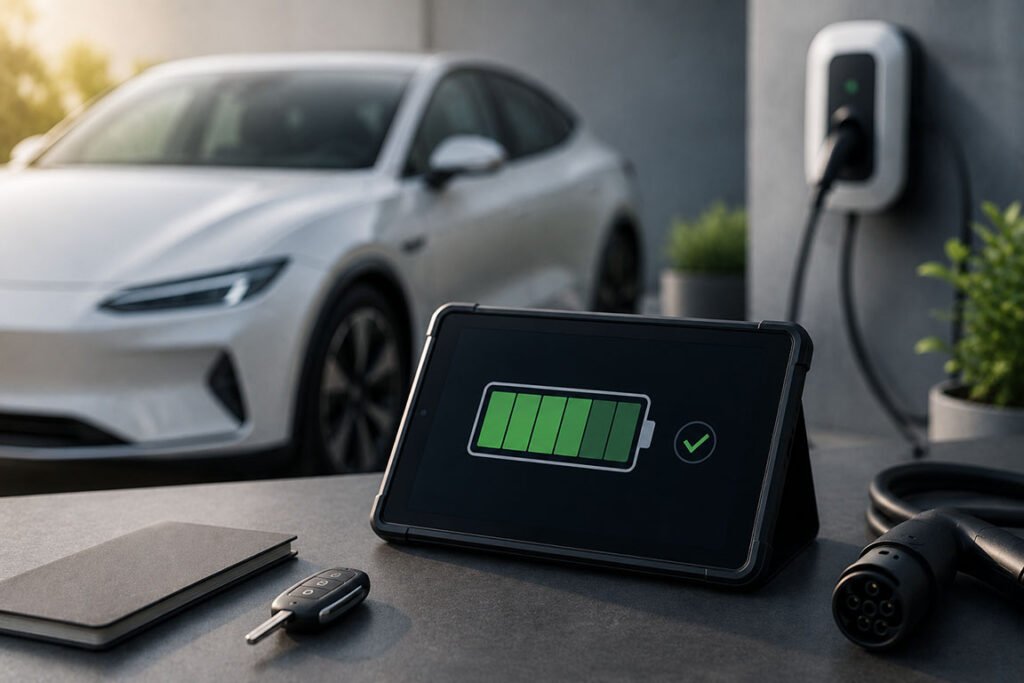
Concept image used to illustrate why battery condition shapes long-term used EV value.
Are Used Chinese EVs Riskier?
They can be riskier, but not for the lazy reasons people sometimes give.
The real questions are support, software, parts access, warranty clarity, and local dealer maturity. Battery confidence has improved significantly as brands such as BYD have expanded and made their battery technology more familiar to buyers, but a strong battery story does not automatically solve every used-car problem. If the service network is thin, the app ecosystem is weak, or parts support is inconsistent, a used Chinese EV can still be a more uncertain ownership proposition than a better-supported rival.
That is why used Chinese EV risk is usually a question of local support and market maturity, not a useful nationality-based shortcut. In one market, a used Chinese EV may be a very smart buy. In another, it may still carry more used-market uncertainty than the list price suggests. Our guide to whether cheap Chinese EVs are reliable long term explores how ownership confidence is evolving as these brands expand globally.
What Buyers Should Check Before Buying a Used EV
This is the practical part.
A disciplined used EV buyer checks battery health first, but never treats battery health as the whole inspection. The full inspection needs to include remaining warranty, software support, charging history if available, service records, accident history, tire condition, included cables and accessories, app transfer process, and local service support. Recurrent’s used-EV buying guide specifically calls out battery history and range understanding as core parts of the purchase decision.
Used EV Buying Checklist
| What to Check | Why It Matters | Risk Level if Ignored |
|---|---|---|
| Battery health | It affects usable range, resale confidence, and long-term ownership value | High |
| Warranty coverage | Remaining battery and vehicle warranty can reduce risk dramatically | High |
| Charging history | Frequent fast charging and harsh use may matter on some older platforms | Medium |
| Software support | Weak app and OTA support can make a healthy car feel dated quickly | Medium |
| Service records | They show how well the car was maintained and whether issues were handled properly | Medium |
| Tire condition | Uneven wear can hint at suspension, alignment, or hard-use issues | Medium |
| Fast charging performance | Slow or inconsistent charging behavior may reveal pack or thermal issues | Medium |
| Accident history | Structural or battery-adjacent damage can change ownership risk dramatically | High |
| Charging accessories | Missing cables and adaptors can add hidden cost and annoyance | Low |
| App/account setup | Some ownership features depend on successful account transfer and app access | Medium |

Editorial illustration showing the key ownership checks that matter before buying a used EV.
Which Used EV Buyers Should Be Most Careful?
The safest used EV is not the same car for every buyer, because charging access, ownership length, and support needs change the risk profile quickly.
First-Time EV Buyers
First-time buyers should prioritize warranty, software simplicity, and charging access over clever spec-sheet deals. They need a car that is easy to understand and easy to support.
Apartment Owners
Apartment owners need to think harder about public charging dependence. A used EV can still be a great buy, but the ownership experience changes quickly if the local charging setup is inconvenient or unreliable.
Long-Distance Drivers
For long-distance drivers, charging-network quality matters heavily. A cheap used EV that struggles on the local public network may stop looking cheap once travel frustration enters the picture.
Budget-Focused Buyers
Budget-focused buyers can find some of the strongest value in the used EV market, but only when battery health and warranty coverage are verified before the low price starts to look more attractive than the car really is.
Buyers Keeping the Car Long Term
Long-term owners should care more about battery chemistry, thermal management, software support, and local service access than about short-term resale trends. The longer you plan to keep the car, the more platform quality matters.
Final Verdict: Is Buying a Used EV Safe in 2026?
Yes, buying a used EV can be safe in 2026, and in many cases it can be a very smart financial move.
Modern EV batteries often last longer than many buyers still assume, which is one reason the used EV market can make more sense than its reputation suggests. Not all used EVs age equally well, but the same is true of any used-car market. The best protection is not fear. It is inspection, warranty awareness, battery understanding, and realistic ownership planning.
The safest used EV purchase is usually not the newest or most expensive model. It is the one with healthy battery management, good support, and realistic ownership expectations.
FAQ
1. Is buying a used EV safe?
Yes, it can be, especially when battery health, warranty coverage, software support, and service history are checked carefully.
2. How can I check used EV battery health?
Use a battery-health report when available, review warranty status, inspect charging behavior, and look at the broader ownership history rather than relying on mileage alone.
3. Do EV batteries fail often?
Not usually. For many modern EVs, the more common story is gradual range loss over time rather than sudden battery failure.
4. Does fast charging damage EV batteries?
Not automatically. It can add stress in some conditions, but battery age depends on the overall ownership pattern, thermal management, and climate.
5. Are used Teslas reliable?
They can be, especially when battery health and remaining warranty are strong, but buyers still need to verify service history and support details.
6. Are used Chinese EVs risky?
Sometimes, but the risk is usually about service support, parts access, and software maturity in your region rather than the badge alone.
7. What is the biggest risk when buying a used EV?
Usually it is buying on price alone without understanding battery condition, warranty remaining, software support, and local service access.
8. Is mileage important on a used EV?
Yes, but it is not the whole story. Battery management, climate, charging history, and platform quality often matter as much or more.