





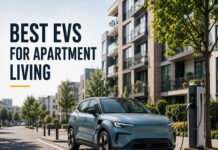





Living in an apartment does not rule out EV ownership, but it does change the kind of EV that actually feels easy to live with. The best EVs for apartment living are usually not the fastest or the most luxurious. They are the ones that reduce charging stress, work well with public infrastructure, and fit urban life without turning every week into a charging errand. In that sense, the best EVs for apartment living are defined less by headline performance than by convenience, efficiency, software, and charging usability.
That matters because EV ownership without home charging is entirely possible, but some EVs are much easier to live with than others when public charging becomes part of the routine. Apartment drivers depend more heavily on charging speed, route planning, network access, winter efficiency, and simple city practicality than suburban owners with a private charger. For apartment owners, charging convenience often matters more than acceleration.
What Makes an EV Good for Apartment Living?
Apartment EV ownership puts the spotlight on a different set of priorities.
Charging speed matters because public charging time becomes real time out of your week. Efficiency matters because a car that uses less energy needs fewer charging stops in the first place. Software matters because route planning and charger integration can turn an irritating ownership routine into a manageable one. Compact size matters because apartment living usually goes with tighter streets, tighter parking, and more frequent short trips. Winter efficiency matters because public charging feels very different when cold weather starts eating into range.
A giant battery does not automatically solve apartment-life frustration. If the car is inefficient, awkward to park, or annoying to charge in public, the ownership experience can still be worse than in a smaller, faster-charging, better-planned EV. For drivers without private parking, learning how to charge an EV without a garage becomes a major part of the overall EV charging experience.
A practical real-world video on owning an EV without home charging, with useful context for apartment drivers weighing public charging as part of daily life.
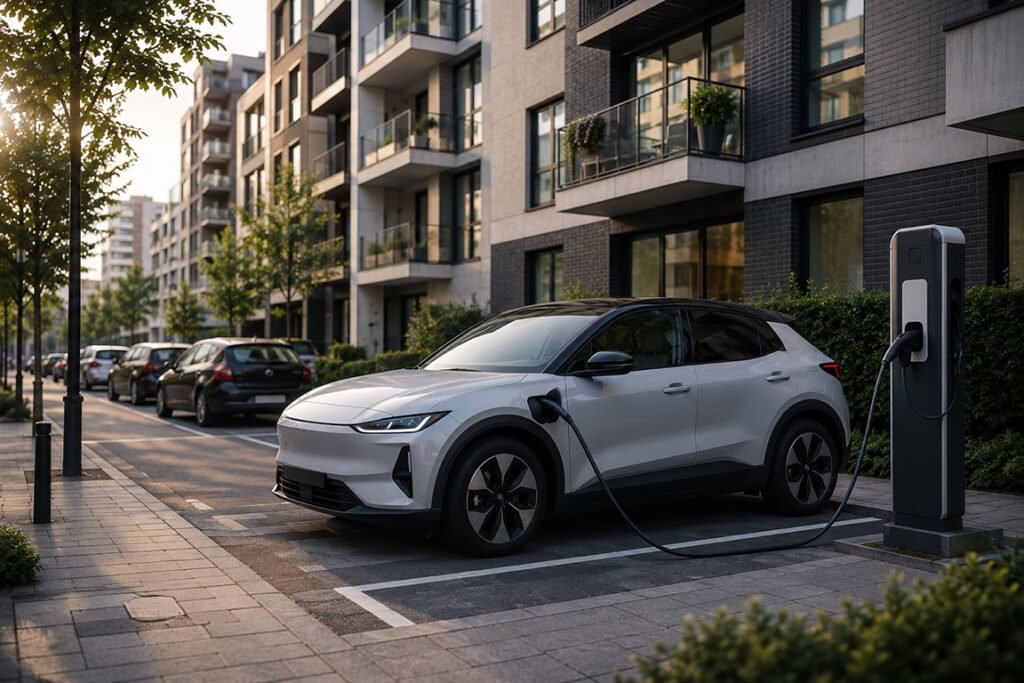
Editorial illustration discussing practical EV ownership for apartment residents
Why Charging Speed Matters More Than Huge Battery Packs
This is the part many buyers get wrong.
If you live in a house with overnight charging, a bigger battery can feel reassuring. If you live in an apartment and rely on public infrastructure, charging friction often matters more than theoretical range. Fast charging can reduce weekly stress. Strong efficiency can reduce how often you need to charge at all. A huge battery pack can still be useful, but it is not always the smartest answer for city drivers whose daily life revolves around time, parking, and convenience more than road-trip fantasy.
Public charging time matters psychologically as well as financially. Thirty minutes spent charging twice a week can feel far less annoying than one long session that drags on because the car is less efficient, slower to charge, or less good at planning the stop in the first place. Charging speed also affects real-world convenience and EV charging costs, especially for drivers relying heavily on public infrastructure.
Tesla Model 3
Tesla remains one of the easiest public-charging EVs to recommend for apartment living, and the reason is ecosystem convenience more than outright performance.
Tesla says its Supercharger network now exceeds 80,000 global chargers, and its support page also says Trip Planner automatically routes drivers through Superchargers while taking account of traffic, elevation, temperature, stall availability, and more. Tesla further says Superchargers can add up to 200 miles in 15 minutes under the right conditions and that battery preconditioning improves charging speed. For apartment drivers, that integrated ecosystem matters because it reduces ownership friction in a way that feels bigger than a spec-sheet advantage.
Tesla says its Supercharger network and Trip Planner system are designed to reduce charging friction, which is exactly why the Model 3 remains so easy to recommend for apartment drivers in markets where that ecosystem is mature.
The Model 3 also remains a strong highway-efficiency choice, which helps drivers who mix dense city use with regular longer trips. The caveat is not really the performance. It is cost. In some markets it will still be pricier than smaller rivals, and insurance or service considerations do not disappear just because the charging story is strong. The real apartment-living advantage is not the badge or the performance figure. It is the fact that the charging ecosystem removes uncertainty from a routine that otherwise becomes stressful very quickly.
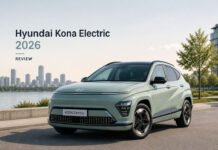
Hyundai Kona Electric
The Kona Electric is one of the strongest apartment-living choices because it understands the value of efficiency.
This is not the kind of EV that wins by being dramatic. It wins by being practical. Hyundai’s European pages highlight the Kona Electric’s range, connectivity, and OTA capability, while Hyundai Türkiye’s equipment page shows details such as a heat pump, navigation, and connectivity-focused cabin tech. That matters because an apartment-friendly EV does not need to be oversized to be useful. It needs to be efficient, easy to place in a city, and easy to live with in everyday use.
That matters more than many apartment buyers realize. If you cannot plug in at home, every extra charging stop matters. Efficiency can reduce charging stress more effectively than simply buying the largest battery you can afford.
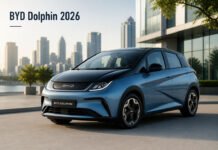
BYD Dolphin
The BYD Dolphin makes a strong case for apartment living because it does not try to be more car than the job requires.
BYD’s official European Dolphin brochure presents it as a compact hatchback-style EV with a practical footprint and mainstream positioning, which suits dense daily use better than many oversized premium EVs. That helps the Dolphin make sense for drivers who want electric ownership without stepping into premium-car territory or carrying around more size than city life really needs.
The caveat is not mainly the car. It is the ecosystem around it. Charging support, software polish, and aftersales confidence still vary more by region than they do with a Tesla-style ownership loop. That does not disqualify the Dolphin. It simply means apartment buyers should be more serious about local support and public-charging quality before buying. Long-term support and ownership confidence also matter, especially as buyers ask whether cheap Chinese EVs are reliable long term.
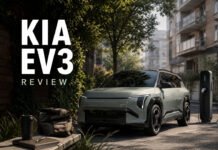
Kia EV3
The EV3 works because it gives apartment buyers crossover practicality without dragging them into the size, weight, and charging burden of a larger EV.
Kia’s official EV3 specification page highlights battery options, charging performance, and compact dimensions, which makes it easier to see why the EV3 fits apartment living so well. Kia’s official specification page lists battery options of 58.3 kWh and 81.4 kWh, DC 10 to 80 percent charging in 29 to 31 minutes at higher-power DC charging, and a turning circle of 5.19 meters. That combination matters for apartment drivers because it suggests a car that balances packaging, maneuverability, and charging usability rather than chasing sheer size.
For family buyers or drivers who want a modern compact crossover feel without moving into a much larger EV, the EV3 makes a lot of sense. It is not the smallest car here, but it still feels designed around usable space and daily practicality rather than empty scale.
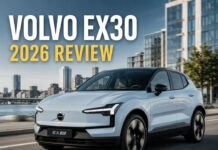
Volvo EX30
The EX30 takes the compact premium route.
Volvo’s EX30 specification pages emphasize compact dimensions, battery choices, and charging capability up to 153 kW DC, with 10 to 80 percent charging in as little as 26 minutes depending on version. That is exactly the kind of detail apartment buyers should care about, because premium urban EV ownership only works if the car still behaves sensibly when public charging is part of the weekly routine.
The weakness is familiar. Price can climb quickly, and the charging ecosystem still depends heavily on region. If the local public-charging environment is weak, no badge can rescue the ownership routine by itself.
MG4
The MG4 is one of the better value-oriented answers for apartment drivers who want a proper EV rather than a compromised budget car.
MG’s official UK material positions the MG4 as a compact electric hatchback with battery options and DC rapid charging from 10 to 80 percent in around 30 minutes on the smaller-battery Urban version. That matters because a city EV does not need to be expensive to be useful. It needs to be chargeable without drama, compact enough for urban life, and priced in a way that still makes public-charging dependence feel tolerable.
As with BYD, though, support and software quality vary more by region than they do in more vertically integrated ecosystems. The car is usually not the whole story. The ownership network is part of the product.
The Biggest Challenges of Apartment EV Ownership
Apartment EV ownership is realistic, but it only feels easy when buyers understand where the weekly friction actually comes from.
Public chargers can be busy. Some sites are better maintained than others. Apartment parking may not support overnight charging. Winter can make public charging feel slower and more irritating. Public charging often costs more than home electricity. And charging app fragmentation can turn a simple top-up into a mild administrative ritual nobody asked for.
That does not mean apartment EV ownership is a bad idea. It means you should treat public charging dependence as part of the product decision. Public charging dependence can become one of the lesser-known hidden costs of EV ownership, especially for people considering buying a used EV without home charging access.
Best EVs for Different Apartment Lifestyles
The right apartment EV depends less on badge prestige than on how, where, and how often the owner expects to charge.
Best for Frequent Public Charging
Tesla Model 3
The Model 3 still makes the strongest case for apartment drivers who expect to public charge often, mainly because Tesla’s charging ecosystem and route planning are still better integrated than most rivals in many markets.
Best Budget Apartment EV
BYD Dolphin or MG4
If the goal is affordable electric city living, these are the most convincing value choices here. The right winner depends on which market offers the more believable ownership story once dealer support, software quality, and public charging are taken seriously.
Best for Urban Efficiency
Hyundai Kona Electric
The Kona Electric remains one of the clearest examples of why efficiency can matter more than giant battery packs for apartment owners. It is compact, practical, and easier to live with in a city than many larger EVs.
Best Compact Premium EV
Volvo EX30
The EX30 makes the strongest premium-city case. It is compact, modern, and clearly aimed at drivers who want a small EV to feel substantial rather than basic.
Best Family-Friendly Apartment EV
Kia EV3
The EV3 is a strong answer for apartment-based family buyers who still want compact-crossover practicality, modern charging, and useful interior packaging without stepping into something oversized.
Best EVs for Apartment Living Comparison
| EV Model | Best Strength | Apartment-Living Advantage | Potential Drawback |
|---|---|---|---|
| Tesla Model 3 | Charging ecosystem and route planning | Reduces public-charging stress better than most rivals | Can cost more, and local insurance/service still matter |
| Hyundai Kona Electric | Efficiency | Needs less charging in weekly city use | Not the strongest ecosystem story |
| BYD Dolphin | Affordable urban value | Compact, sensible, and easier to justify on price | Support and software vary more by market |
| Kia EV3 | Balanced compact crossover practicality | Useful for apartment-based families who still need space | Bigger than the pure city-focused options |
| Volvo EX30 | Compact premium feel | Small footprint with a more upscale ownership vibe | Premium pricing and region-dependent charging support |
| MG4 | Value-oriented city EV | Affordable route into compact EV ownership | Service/support confidence varies by market |
Final Verdict: Which EV Is Best for Apartment Living?
The best apartment EV is usually the one that makes public charging feel manageable, urban driving feel easy, and weekly ownership feel less like a scheduling problem.
Tesla stands out for charging ecosystem convenience and route planning. Hyundai Kona Electric remains one of the smartest answers for efficiency and city practicality. BYD Dolphin and MG4 are strong affordable-city-EV options where local support is solid. Kia EV3 and Volvo EX30 bring more modern compact-crossover alternatives for buyers who want a little more space or polish. What separates these cars is not whether they can work in apartment life, but how much effort they ask from the owner once home charging is off the table.
Apartment EV ownership works best when buyers prioritize convenience, charging usability, and realistic daily routines rather than simply choosing the biggest battery or the fastest acceleration.
FAQ
1. Can you own an EV without home charging?
Yes. It is possible, but the ownership experience depends heavily on local charging reliability, charging speed, and how well the car handles public infrastructure.
2. What is the best EV for apartment living?
There is no single answer, but the best apartment EV is usually the one with the least charging friction in your area. In many markets that points to Tesla Model 3, Hyundai Kona Electric, BYD Dolphin, Kia EV3, Volvo EX30, or MG4 for different reasons.
3. Is Tesla better for apartment owners?
Often, yes, where the Supercharger ecosystem is strong. Tesla’s advantage is mainly charging convenience and route planning, not simply the badge.
4. Does public charging become expensive?
It can. Public charging often costs more than home charging, which is why apartment drivers need to think about both convenience and cost together.
5. Are compact EVs better for cities?
Usually, yes. They are easier to park, easier to maneuver, and often more efficient, which can reduce charging stress.
6. Is fast charging important for apartment EV owners?
Yes, often more than huge battery size. Public-charging dependence makes charging speed part of daily practicality.
7. Which EVs are easiest to charge publicly?
In many markets, Teslas remain the easiest because of route planning and Supercharger integration. Other good answers depend much more on local infrastructure quality.
8. Can apartment living damage EV ownership experience?
It can, especially when charging access is unreliable, expensive, or inconvenient. But apartment living does not ruin EV ownership by itself; bad charging routine and the wrong car usually do.