








Introduction
The hidden costs of EV ownership are easy to miss because most EV conversations begin with the obvious savings. Electricity is usually cheaper than gasoline. Routine servicing is often lighter. City driving tends to suit an electric car well. All of that is true, and none of it tells the whole story.
What gets lost is everything that does not fit neatly into the showroom pitch: the charger you may need to install at home, the insurance quote that lands higher than expected, the tire bill that arrives sooner than planned, and the public fast-charging session that costs far more than a quiet overnight charge at home. Then there is the time cost, which is easier to ignore on paper than it is in real life.
This is not an anti-EV argument. It is a reality check. EVs can still make excellent financial sense, especially for drivers with home charging, predictable daily mileage, and lower maintenance needs. But the real cost of owning an EV is broader than energy cost alone, and buyers who ignore that usually end up surprised by the wrong things.
So this guide is about the hidden costs of EV ownership that many buyers do not fully see until the car is already in their life.
If you want the maintenance side broken out first, read our How much does EV maintenance really cost? guide.
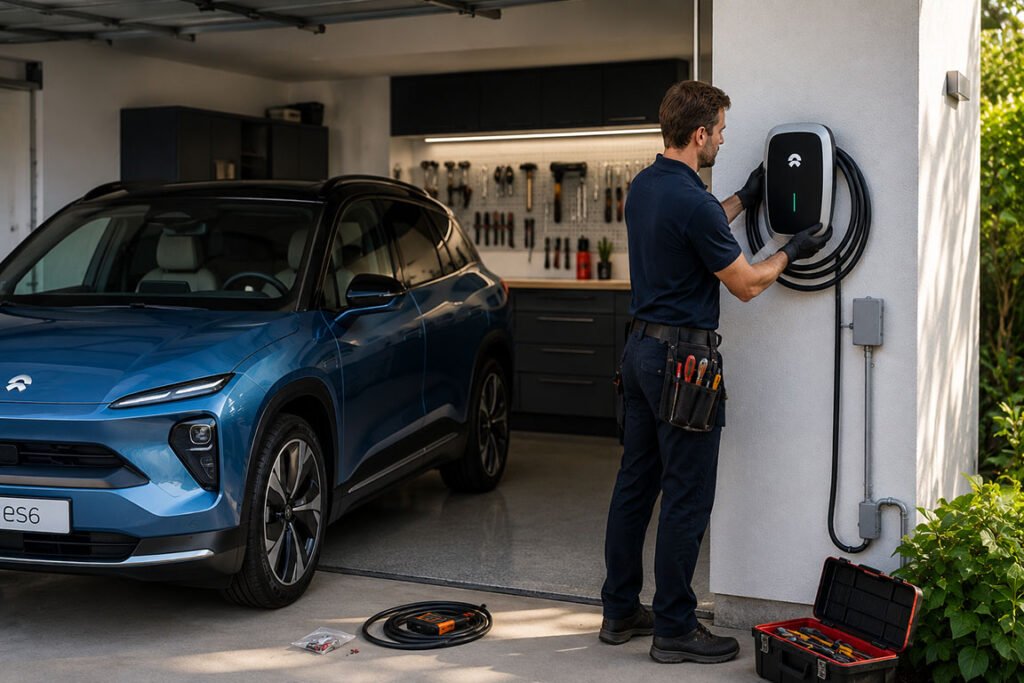
Installing a Level 2 home charger can add significant upfront ownership costs.
Home Charger Installation Can Be Surprisingly Expensive
For many owners, the first hidden cost arrives before the car does.
Home charging is what makes EV ownership feel easy, and in many cases it is what makes the ownership math work at all. But getting that convenience is not always cheap. A Level 2 charger is one cost. The electrician is another. Older homes may need panel upgrades, new wiring runs, or additional protection hardware. Apartment dwellers can run into a different kind of problem entirely: even when charging is technically possible, building approval, shared parking, and installation logistics can turn a simple upgrade into a minor political event.
AAA’s 2025 EV survey found that charger availability and practical charging concerns remain major barriers for many U.S. buyers, which is another way of saying that the “just charge at home” line still assumes a lifestyle and housing setup not everyone has.
Government and utility rules can also matter more than many buyers expect. Permits, inspection fees, trenching for detached garages, or adding a dedicated circuit can move the cost well beyond the charger hardware itself. That is why EV charging installation cost belongs near the top of any honest EV budget.
| Setup Type | Typical Cost Range |
|---|---|
| Basic Level 2 home charger install | Often a few hundred to low four figures, depending on wiring and distance |
| Panel upgrade required | Can add a substantial extra cost beyond the charger itself |
| Apartment / shared parking installation | Highly variable and often constrained by building approvals |
| Detached garage / long cable run / trenching | Can push total cost well beyond a simple home setup |
EV Insurance Costs Are Often Higher Than Expected
This is one of the least glamorous parts of EV ownership, which is exactly why it catches people off guard.
Insurance on an EV is not always dramatically higher, but it often is. There are a few reasons. Repair costs can be harder to predict. Some EVs carry higher list prices. Battery-related caution still affects insurer behavior. And collision work can involve more calibration, more specialist labor, and more expensive parts than buyers expect from a car that supposedly has “less to maintain.”
AAA’s 2025 driving-cost data shows insurance remains a major ownership expense for all new vehicles, and EVs still sit in a cost structure where lower operating costs do not automatically erase higher ownership-side expenses such as depreciation and insurance.
The real problem is expectation. Many first-time buyers assume an EV will be cheaper in every category simply because it is cheaper to run. That is not how ownership works, and insurance is often where that misunderstanding gets corrected first.
EV Tires Wear Faster Than Many Buyers Expect
This is one of the most overlooked hidden EV expenses, and one of the most believable once you have paid for it.
EVs are often heavy. They also deliver torque instantly. That is a fun combination for acceleration and a less fun combination for tires. Even a relatively sensible electric car can wear through its rubber faster than a comparable gasoline model if it is heavy, powerful, or used mostly in stop-start traffic.
The sting is not just replacement frequency. It is also replacement cost. Many EVs run on larger wheels, higher-load tires, or more expensive low-rolling-resistance compounds. So even when the maintenance schedule looks lighter on paper, the tire budget can quietly eat into the savings.
Editor’s take: this is the point where EV ownership starts feeling a lot less theoretical. Tires do not care about marketing. They care about weight, torque, and how the car is actually used.
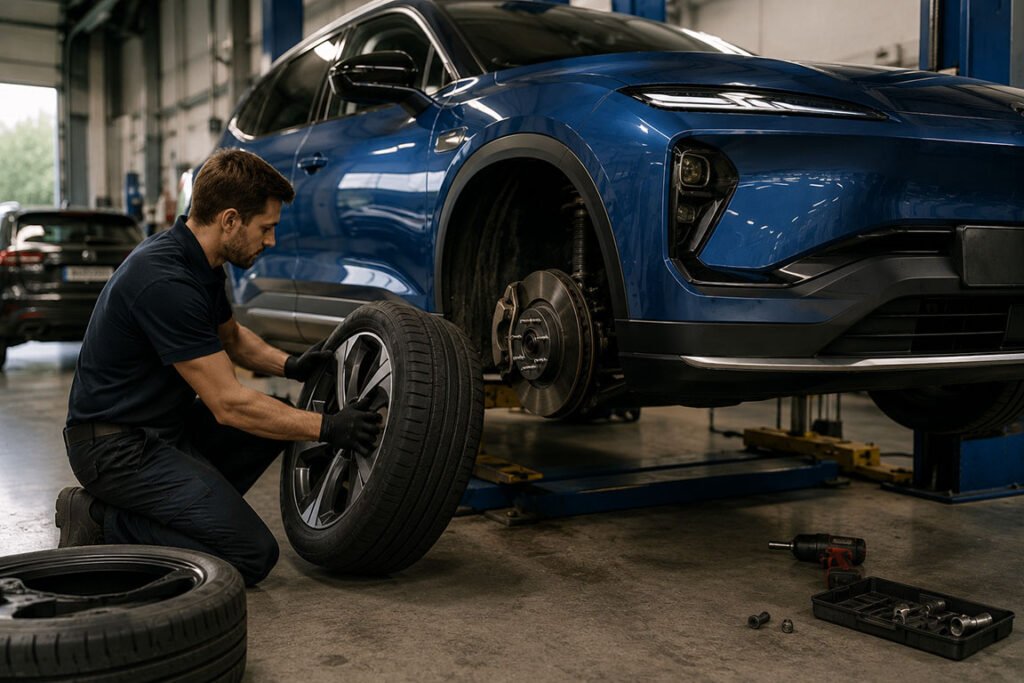
Heavier EVs and instant torque can accelerate tire wear.
Public Fast Charging Isn’t Always Cheap
The charging-cost story only looks simple from a distance.
Home charging is usually where EV economics shine. Public DC fast charging is where the ownership math starts to look very different. Tesla’s official Supercharging support page notes that pricing can vary by site, time, and even occupancy, with some locations using live pricing models. That flexibility may help networks manage demand, but it also means drivers who rely heavily on fast charging can end up paying far more than the tidy home-charging math suggests.
That matters most on road trips, for apartment dwellers, and for anyone without dependable home charging. Subscription plans can reduce costs on some networks, but they also add another layer of ownership admin that many buyers never think about while pricing the car itself.
The truth is simple: if your EV life is built mostly around overnight home charging, the cost story usually looks strong. If it is built around repeated DC fast charging, part of the savings story starts to collapse.
| Charging Type | Typical Cost |
|---|---|
| Home charging | Usually the cheapest way to run an EV |
| Public AC charging | Usually higher than home charging, but often moderate |
| DC fast charging | Often significantly more expensive than home charging |
| Road-trip fast charging with pricing tiers / subscriptions | Can vary sharply by network, time, and membership plan |
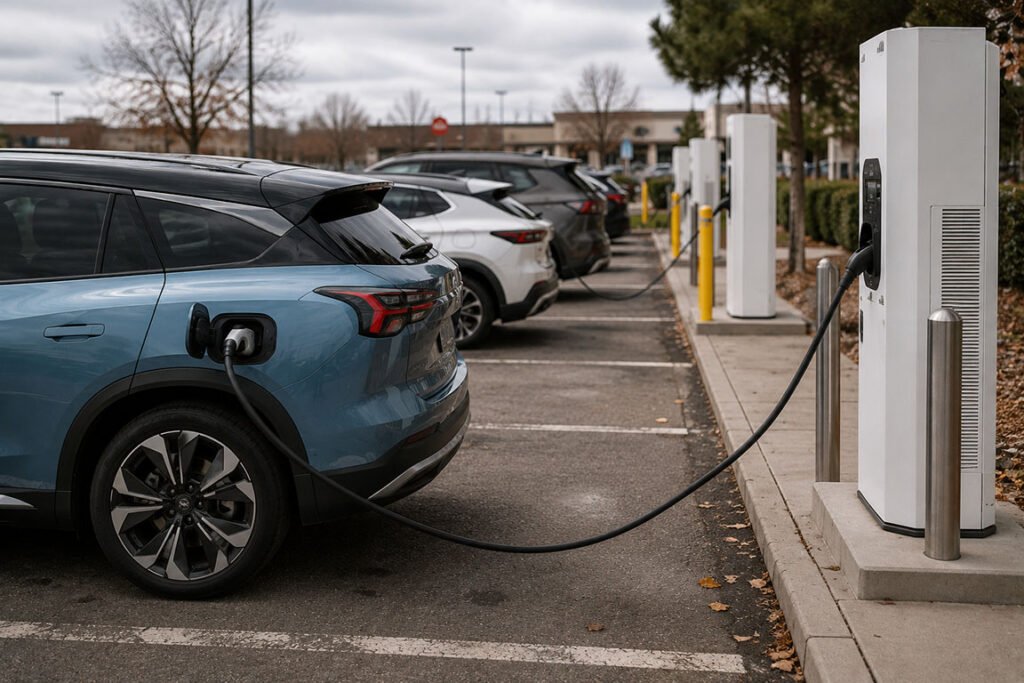
Fast charging can become expensive for drivers who rely heavily on public networks.
If you want the practical side of charging access rather than just price, read our Can you charge an EV without a garage? guide.
EV Repairs After Accidents Can Be Expensive
Routine maintenance and accident repair are not the same thing, and EV buyers should stop treating them as if they are.
An EV may need fewer oil-and-engine-related services, but that does not mean post-accident repair is simple or cheap. Modern EVs can require sensor recalibration, battery-area inspection, specialist structural work, and sometimes longer wait times for parts or trained repair centers. That is one reason some owners discover the real expense of EV ownership only after a relatively ordinary crash.
This is also where insurance costs and repair costs start talking to each other. Insurers know some EVs can be expensive to put right. Owners discover that fact later, usually when patience is already in short supply.
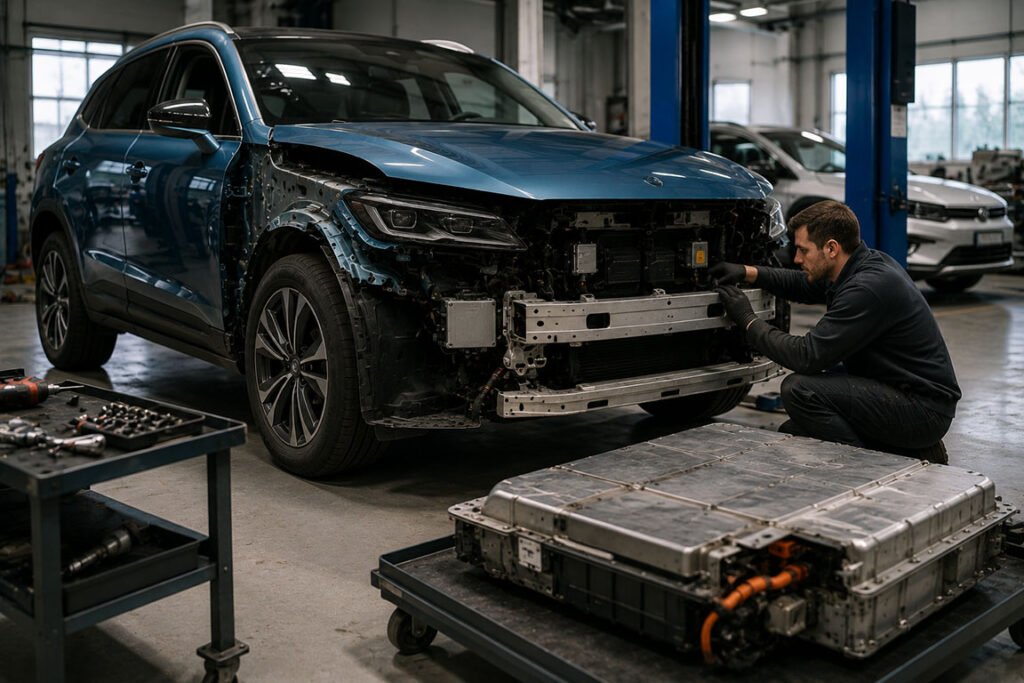
Accident repairs for EVs can involve expensive sensors and battery inspections.
Depreciation and Resale Value Risks
This is the cost many EV buyers underestimate because they are too focused on fuel savings and not focused enough on resale risk.
Consumer Reports wrote in March 2026 that EVs can depreciate faster than gas or hybrid vehicles, and that the hit in resale value can erase part of the ownership savings if you buy new and sell relatively early. That is not true for every model, and the market is becoming more rational than it was during the earlier EV boom-and-correction cycle, but the underlying point is sound: depreciation still matters, and sometimes a lot.
Cox Automotive’s European EV residual-value analysis also argues that EV depreciation is becoming more predictable as the market matures, but it still ties values closely to tangible factors like battery health, charging performance, and technology confidence. In other words, resale is stabilizing, not disappearing as a risk.
Tesla has a different resale story from many mainstream EVs because brand recognition, charging access, and software reputation still influence demand. But even Tesla is not immune to pricing resets, product changes, or broader used-EV market pressure. The more technology moves, the more yesterday’s cutting-edge EV can feel like old news.
Software and Subscription Costs Are Becoming More Common
This is not yet the biggest hidden EV cost, but it is becoming a more normal part of ownership.
Connected services, premium connectivity packages, app-dependent features, and paid software layers are increasingly part of the modern EV ecosystem. Some of these are genuinely useful. Some are the digital equivalent of asking for rent on equipment you already bought.
Tesla’s own ecosystem shows both sides of this clearly. The software layer is one of its biggest strengths, but software-centered ownership also makes buyers more aware of what is included, what is paid, and what may become subscription-shaped over time.
This is not a reason to avoid EVs. It is a reminder that modern EV ownership increasingly looks like a product-plus-services relationship rather than a one-time purchase. That changes what cost of ownership really means.
The Hidden Time Cost of EV Ownership
This is the cost buyers talk about least honestly.
Money is easy to model. Time is harder, because people tend to normalize inconvenience once they have adapted to it. But the hidden costs of EV ownership are not only financial. They are also measured in waiting, planning, rerouting, and the quiet friction of depending on infrastructure that works often enough, but not always well enough to disappear.
Public charging availability matters. So does charger reliability. So does whether a site is busy, awkwardly located, or split across three different apps and a payment flow that feels like it was designed by competing committees. For some owners, none of this is a serious burden. For others, especially those without home charging, it becomes part of the weekly routine.
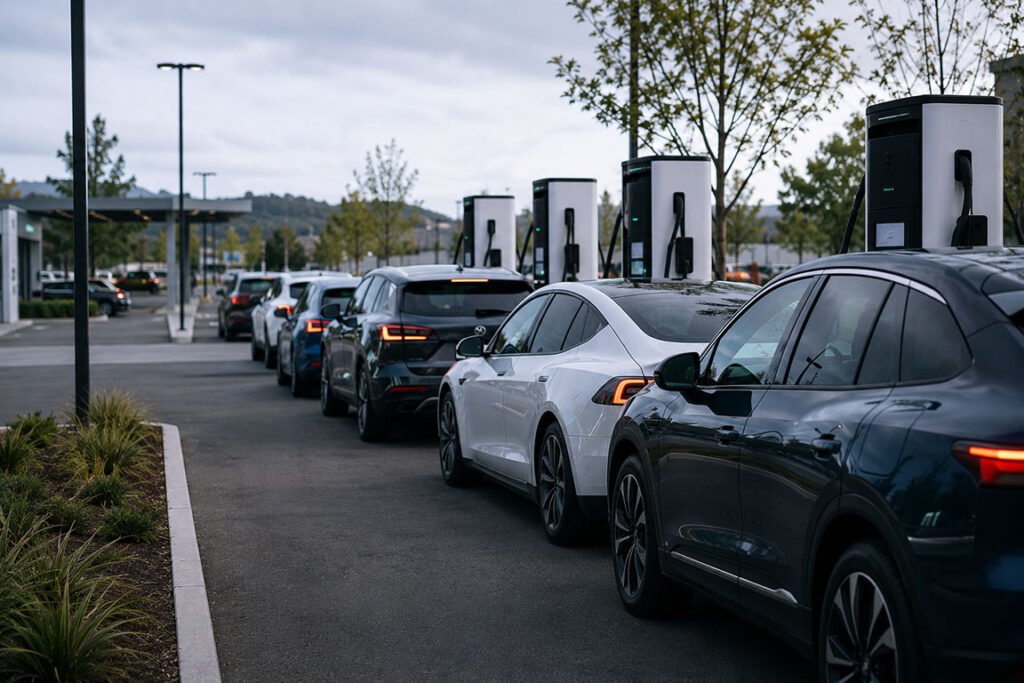
Time and charging convenience are often overlooked ownership factors.
This does not make EV ownership broken. It does mean the convenience gap between “I can charge at home whenever I want” and “I depend on public infrastructure” is enormous. Many buyers do not understand how large that gap is until the car is already theirs.
For a more grounded look at real-world EV ownership costs and long-term ownership frustrations, this video is worth watching before the section below.
If you want the reliability side of long-term EV ownership rather than just the cost side, our Tesla vs BYD reliability comparison belongs here.
Are EVs Still Cheaper Overall?
Usually, yes. But only if you ask the question properly.
Consumer Reports and AAA broadly point to the same conclusion from different angles: EVs can save owners money in fuel and maintenance, but those savings do not automatically make them cheap in every part of ownership. Depreciation, insurance, and financing can still carry a meaningful share of the bill.
That means the answer depends heavily on how you live. If you drive mostly in town, charge at home, keep the car for a meaningful number of years, and avoid buying more EV than you actually need, an electric car can still make very good financial sense. If you rely heavily on public charging, cycle through cars quickly, or underestimate resale and insurance risk, the economics look less tidy.
| Ownership Area | EV | Gas Car |
|---|---|---|
| Fuel / energy | Usually lower, especially with home charging | Usually higher |
| Routine maintenance | Usually lower | Usually higher |
| Insurance | Can be higher | Often lower |
| Depreciation risk | Can be volatile depending on model and market timing | Usually more familiar and easier to predict |
| Ownership convenience | Excellent with home charging, more complicated without it | Usually simpler refueling routine |
Final Verdict: Are Hidden EV Costs a Dealbreaker?
Usually not.
But they are real, and buyers deserve to understand them before they sign anything.
That is the honest conclusion. The hidden costs of EV ownership do not usually make an EV a bad choice. They just make it a more complicated one than the simplest sales pitch suggests. Home charging setup, insurance, tires, fast charging, accident repairs, depreciation, software costs, and time all matter. Some of them matter a lot.
The good news is that EVs can still be cheaper overall for the right owner. The bad news is that too many buyers still shop with only the fuel-savings argument in mind and discover the rest of the ownership equation later.
If you want the fuller battery-aging picture, read our Do electric cars lose range over time? guide. If you want a market-level shortlist instead, our best affordable EVs roundup is the right next stop.