





Introduction
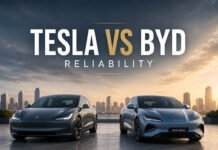
Tesla vs BYD reliability has become one of the most useful EV comparisons in 2026 because it asks a more meaningful question than most brand battles do. This is not really about which company feels cooler, louder, or simply more dominant online. It is about which one inspires more confidence after a few winters, a few software updates, a repair visit, and a couple of years of real ownership. Tesla remains one of the world’s biggest EV names, while BYD has grown into a serious global force with massive production scale and a battery-led identity.
That is why these two brands keep ending up in the same conversation. Tesla still represents the software-first vision of the electric car. BYD feels more like a manufacturing-led company that happens to be very good at batteries. Both approaches can work. The harder question is which one feels more trustworthy once the launch-event glow fades and you start thinking like an owner instead of a shopper.
This guide is here to answer that question properly: which brand feels more reliable in build quality, software, battery confidence, ownership problems, and day-to-day confidence. If you want the broader brand battle first, read our BYD vs Tesla comparison.
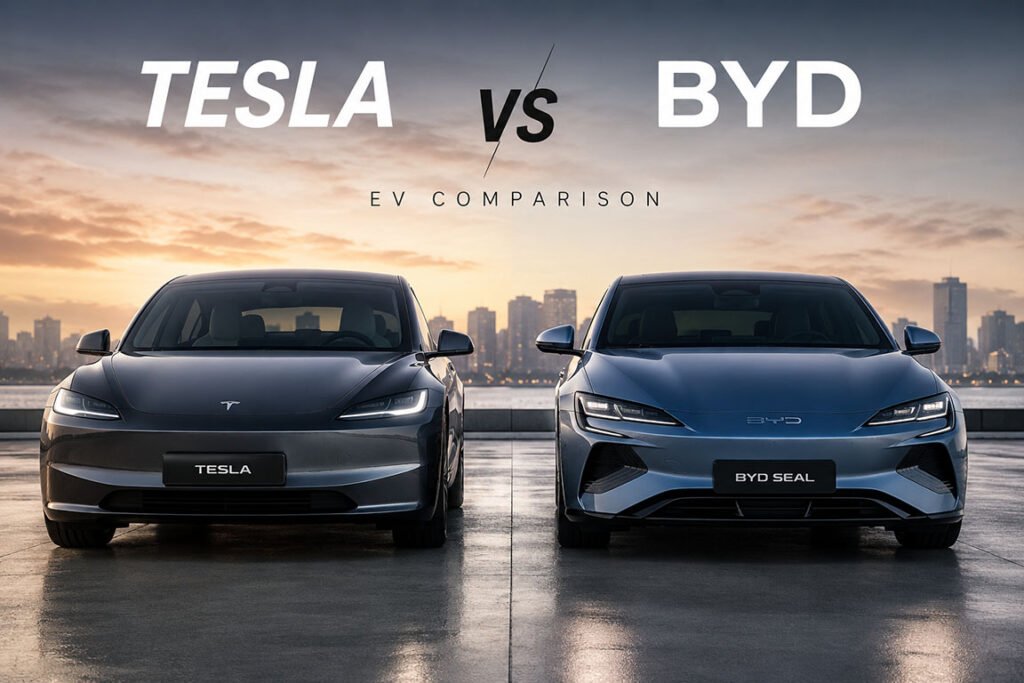
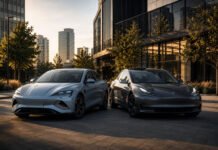
Tesla and BYD are now two of the most closely watched EV brands in the global market.
Tesla vs BYD Reliability Philosophy
Tesla still feels like a technology company that builds cars. That approach has obvious strengths. Its products are shaped around software, over-the-air updates, app integration, and a strong central ecosystem. When Tesla gets the formula right, the ownership experience can feel unusually coherent and unusually complete. The car, the charging logic, and the digital side of ownership all seem to belong to the same system. Tesla’s own warranty and support structure also reflect how tightly the company wants to control the whole experience.
BYD approaches reliability from a different angle. The brand has built much of its confidence story around battery technology, vertical integration, and manufacturing control. Its European messaging around the Blade Battery leaves very little room for ambiguity: this is a company that wants buyers to trust its hardware, especially the battery pack at the center of the EV ownership equation.
Editor’s take: Tesla asks you to trust intelligence. BYD asks you to trust engineering discipline. Tesla sells capability. BYD sells solidity. Neither is automatically superior, but they create very different kinds of reassurance.
Build Quality & Manufacturing Consistency
This is the first section where the comparison becomes uncomfortable for Tesla.
Tesla has improved, and pretending otherwise would be intellectually lazy. Consumer Reports said in late 2025 that Tesla was the most improved automaker on its reliability list, which matters because it suggests the company has matured beyond some of the earlier quality issues that helped define its reputation.
But Tesla has not completely escaped that reputation either. Consumer Reports’ 2025 Model 3 reliability page still says the car is less reliable than other cars from the same model year. That does not mean every Tesla suffers from panel-gap issues or sloppy assembly. It does mean the old concerns around consistency have not disappeared completely.
BYD’s problem is different. The brand increasingly makes a strong first impression on build quality, material consistency, and cabin finish, but in markets like the UK it still lacks the same depth of long-term independent reliability data as older, more established manufacturers. What Car? has been explicit about that limitation.
In practical terms, BYD often feels more manufacturing-led and less visually variable. Tesla often feels cleaner and more modern, but also more dependent on the idea that software sophistication can compensate for some inconsistencies in tactile quality.
| Area | Tesla | BYD |
|---|---|---|
| Panel gaps | Improved, but still part of the brand conversation | Less controversial in current reviews |
| Interior assembly | Minimalist, but sometimes feels variable | More traditional and often more uniform |
| Material consistency | Better than early Teslas, still mixed by model and trim | Usually stronger first impression for the money |
| Production quality feel | Software-led and visually clean | Manufacturing-led and more conventionally solid |
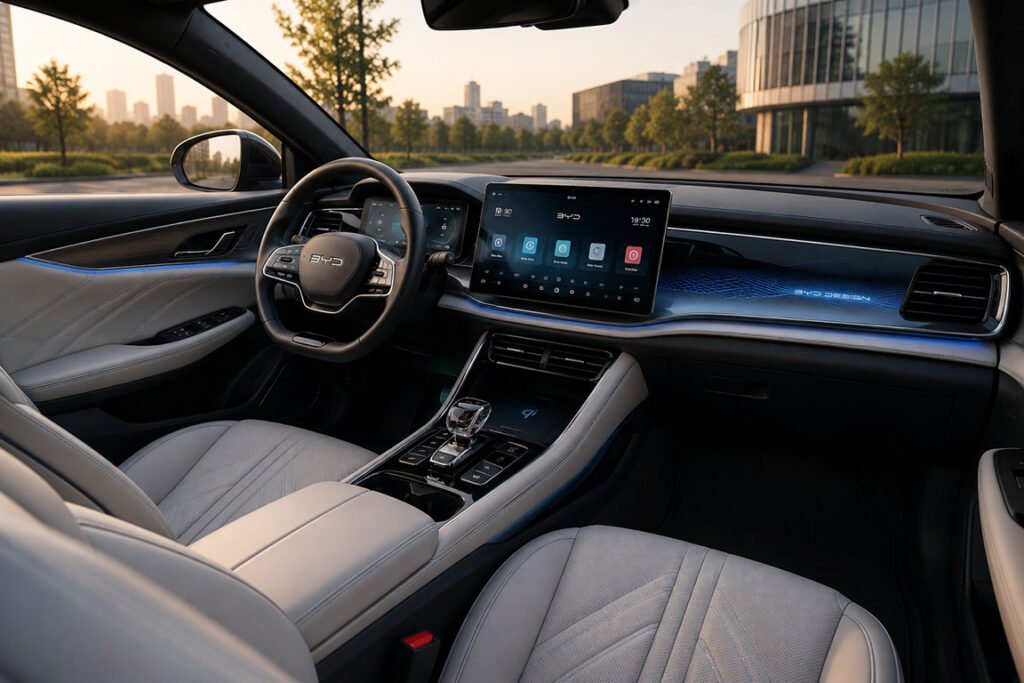
BYD has improved cabin quality significantly in recent years.
Software Reliability & User Experience
Tesla still comes out ahead here overall, not because its software is flawless, but because no other EV brand makes software feel as central to the ownership experience.
That is not because Tesla software never misbehaves. It is because Tesla remains better than most rivals at making software feel native to the ownership experience. OTA updates are routine, the app ecosystem is well developed, and the whole car often feels like it was designed around software from the beginning rather than upgraded into modernity later. Tesla’s ownership structure still reflects that system-level thinking.
That is also the weakness. Tesla has made software so central that when something digital goes wrong, it rarely feels like a minor issue. It feels like a crack in the promise. When something digital goes wrong, it does not feel like a small side issue. It feels like a crack in the entire promise. Reuters reported in August 2025 that U.S. regulators were probing delays in Tesla crash reports involving driver-assistance systems. Even when those issues do not affect most owners directly, they still shape the broader trust conversation around the brand.
BYD’s software story is quieter and less polished. That sounds like criticism, and partly it is. Tesla still feels ahead in ecosystem coherence and digital fluency. But BYD’s relative restraint can also feel reassuring to buyers who do not want their trust in the car to depend on constant software drama.
Editor’s take: Tesla feels more advanced. BYD often feels more contained. If you define reliability as digital fluency, Tesla is ahead. If you define it as fewer software-led surprises, BYD has a real argument.
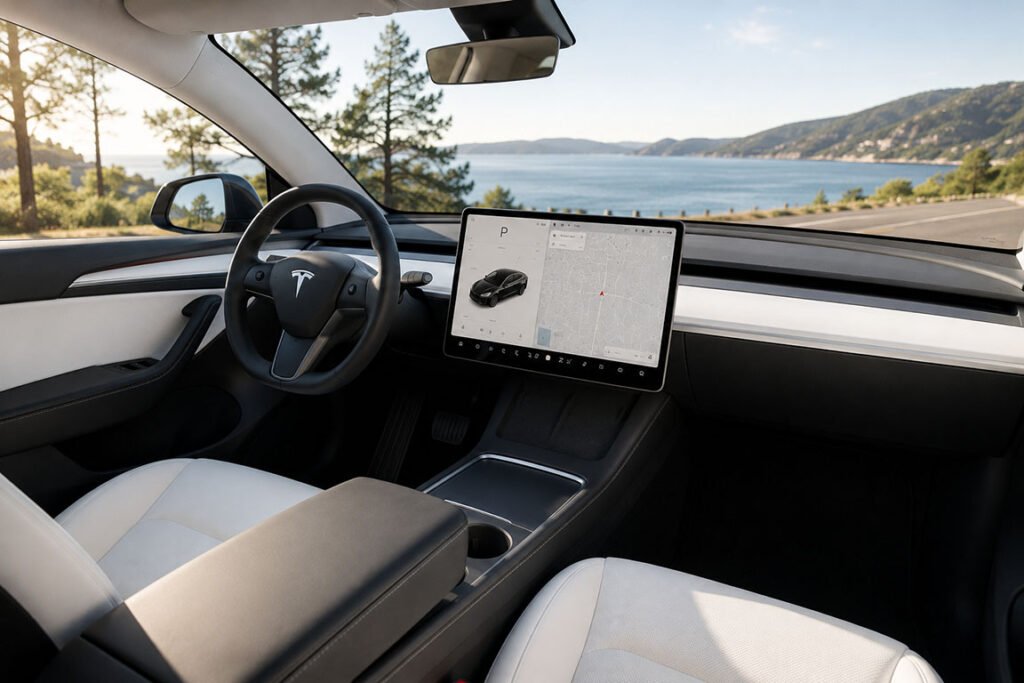
Tesla focuses heavily on minimalist software-driven interiors.
Battery Reliability & Long-Term Confidence
This is where BYD becomes very hard to dismiss.
BYD Europe says the Blade Battery comes with an 8-year or 250,000 km warranty and guaranteed residual capacity above 70% for the full warranty period. That is one of the clearest and most reassuring battery-confidence messages in the EV market right now.
Tesla’s battery warranty is also strong, but its mileage caps depend on model and trim. Tesla’s official warranty page says Model 3 battery and drive-unit coverage includes minimum 70% retention over the warranty period, with mileage limits varying by version. That is serious coverage, but BYD’s current European battery-warranty story is simpler and easier for cautious buyers to trust at a glance.
The chemistry reputation matters too. EV Database’s BYD Seal listing identifies the Blade Battery pack as LFP, and LFP’s wider reputation for durability and stability has become a major part of BYD’s long-term confidence pitch. That does not automatically make every BYD battery more durable than every Tesla battery in every condition. What it does do is make BYD’s battery story easier to trust, because it is easier to explain. For cautious buyers, that simplicity matters.
The honest conclusion here is simple: Tesla has more visible long-term fleet history, but BYD has the cleaner battery-confidence argument right now. If you want a broader look at degradation anxiety and battery aging, read our Do electric cars lose range over time?.
And if you want the ownership-cost side of long-term EV confidence, our EV maintenance cost guide fits naturally here.
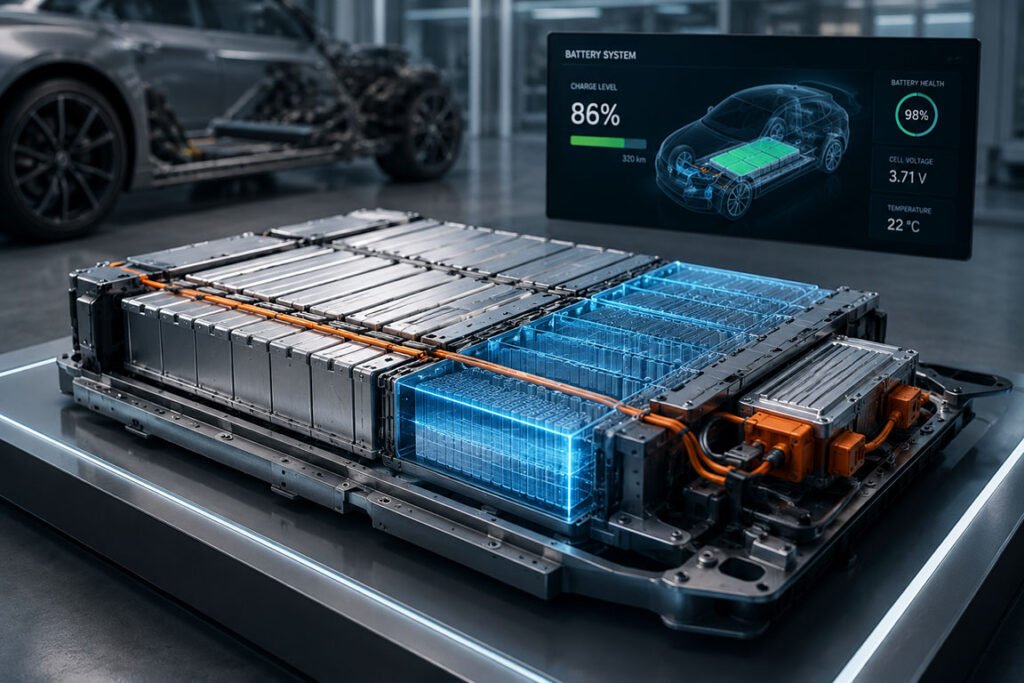
Battery reliability is a major factor in long-term EV ownership.
Real-World Tesla vs BYD Ownership Comparison
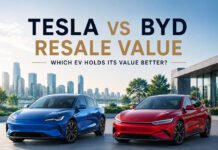
Specifications and warranty claims tell only part of the story. This ownership-focused comparison highlights how Tesla and BYD differ in daily usability, software experience, charging convenience, and long-term ownership confidence.
The comparison reinforces a key theme of this article: Tesla tends to earn trust through software, ecosystem integration, and ownership simplicity, while BYD earns trust through battery technology, manufacturing consistency, and a more hardware-focused ownership philosophy.
Real-World Ownership Problems
Reliability is not just about what breaks. It is also about how easy a vehicle is to own, repair, support, and trust after several years on the road.
Reliability is not just about what breaks. It is about what ownership feels like when something does go wrong.
Service delays, parts availability, customer support, repair logistics, and the general feeling of being looked after matter as much as hardware durability once the car is in your life.
Tesla’s weakness here is well known. Reuters reported in 2024 that Tesla had to face a proposed class action from owners alleging the company monopolized repairs and parts and forced customers into long waits. That is litigation, not a final verdict on every service experience, but it captures a concern that has followed Tesla long enough to become part of the ownership conversation itself.
BYD’s challenge is less about bad history and more about limited history. In export markets, the question is not necessarily “Has BYD already disappointed owners for years?” It is “Do we have enough long-term proof yet?” In places like the UK, reviewers have pointed directly to that lack of long-term data.
That means Tesla and BYD create different kinds of anxiety. Tesla can worry buyers because the service stories already exist. BYD can worry buyers because many of the long stories still have not been written yet.
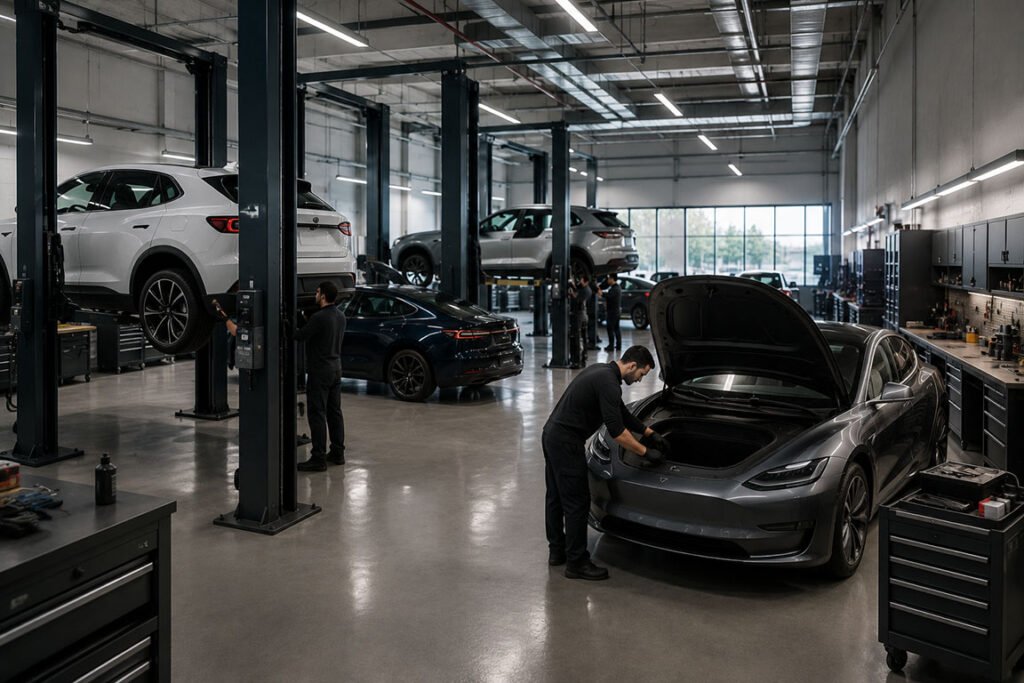
Service experience remains one of the biggest reliability concerns for EV owners.
Tesla vs BYD Repair and Maintenance Experience
Tesla still benefits from having a more visible and more established service footprint in many mature markets. The brand’s service-locator pages show a broad network presence in markets such as the United States, and that matters because it reduces the feeling of buying into something unsupported.
BYD is catching up, but outside China it still feels like a network in expansion rather than a fully settled ownership machine. BYD Europe’s official store and service locator is encouraging, and the company has been clearly investing in aftersales visibility, but visibility is not quite the same thing as maturity.
On maintenance frequency, both brands still benefit from EV fundamentals. Fewer scheduled service items, no oil changes, and simpler routine upkeep work in both their favor. The real divide is in accident-repair confidence and aftersales trust. Tesla still carries more baggage around expensive repairs and inconsistent service stories. BYD carries more uncertainty simply because its support network is newer and less proven.
Which Brand Feels More Reliable Day to Day?
Day to day, Tesla often feels more technologically dependable. If you already trust its ecosystem, it can feel easier to live with because so much of the ownership experience is tightly integrated and unusually coherent. Charging logic, navigation, app control, updates, and general system coherence still give Tesla an edge in everyday usability.
BYD often feels more physically dependable. The battery story is easier to explain. The cabin and hardware often feel more conventional and more grounded. There is less digital theater, but also less dependence on software charisma to create trust. For many cautious buyers, that makes BYD feel calmer, even if it feels less sophisticated.
On a long trip, the answer depends on what you mean by trust. If you mean route planning, charging logic, and system confidence, Tesla still feels stronger. If you mean battery reassurance, hardware conservatism, and a lower-drama physical product, BYD increasingly feels like the safer companion.
Editor’s take: Tesla is easier to trust when everything is working exactly as intended. BYD is easier to trust if your mind naturally goes to durability first.
Pros and Cons
Tesla Reliability Pros
- Strong software ecosystem and OTA capability
- More visible long-term fleet history
- Broad service footprint in key mature markets
- Excellent ownership-system coherence
- Competitive battery warranty with 70% retention floor
Tesla Reliability Cons
- Build-quality reputation still lingers
- Recent Model 3 reliability ratings are still mixed
- Service complaints remain part of the brand story
- Software-led issues are often highly visible
- Trust can drop quickly when digital systems misbehave
BYD Reliability Pros
- Blade Battery confidence story is extremely strong
- Simple, reassuring battery warranty message
- Build quality increasingly feels more consistent
- Manufacturing-led approach inspires hardware confidence
- Lower perceived long-term battery risk for cautious buyers
BYD Reliability Cons
- Less long-term export-market reliability data
- Service maturity still varies by region
- Software and app experience feel less polished than Tesla’s
- Support network outside China is still developing
- Ownership unknowns remain higher simply because the brand is newer in many markets
Tesla vs BYD Reliability Summary
After examining build quality, software, battery confidence, service support, and long-term ownership factors, the comparison becomes easier to summarize. The table below highlights where each brand currently holds its strongest reliability advantages.
| Reliability Area | Tesla | BYD |
|---|---|---|
| Software Reliability | ✓ Stronger | Improving rapidly |
| Battery Confidence | Strong | ✓ Stronger |
| Build Quality Consistency | Improved significantly | ✓ Strong |
| OTA Updates | ✓ Industry-leading | More limited |
| Service Network | ✓ Broader in many markets | Growing rapidly |
| Long-Term Reliability Data | ✓ Stronger | More limited outside China |
| Hardware Confidence | Strong | ✓ Stronger |
| Overall Reliability Outlook (2026) | Stronger ecosystem trust | Stronger hardware trust |
Which EV Brand Is Better for Different Buyers?
For technology-led buyers, Tesla is still the better answer. It feels more complete as a software-driven ownership experience, and that matters if digital competence is part of your definition of reliability.
For buyers who want long-term hardware reassurance, BYD is easier to recommend. Its battery story is cleaner, its manufacturing identity is stronger, and it speaks more directly to cautious owners who want fewer unknowns around the pack itself.
For buyers who want the lowest perceived risk, the answer depends on what kind of risk bothers them more. Tesla carries more public baggage. BYD carries more lack of history. One gives you more evidence, both good and bad. The other gives you a cleaner first impression but a shorter file.
For first-time EV buyers, Tesla still makes the ecosystem easier to understand quickly. For budget-led buyers, BYD often makes more sense because value and battery confidence work well together.
If you want the product-level matchup rather than the brand-level one, read our Tesla Model 3 vs BYD Seal comparison.
Final Verdict: Tesla or BYD for Long-Term Reliability?
If the question is which brand feels stronger in software, digital coherence, and everyday EV usability, the answer is still Tesla.
If the question is which brand currently makes the stronger case for battery confidence, manufacturing consistency, and hardware-led peace of mind, the answer is BYD.
So the real editorial answer to Tesla vs BYD reliability in 2026 is this: Tesla is easier to trust on systems, but BYD is easier to trust on hardware.
If the question is which brand feels like the safer long-term reliability bet for the average cautious buyer, BYD gets the edge. Its battery story is clearer, its build-quality trajectory is reassuring, and it carries less historical baggage around consistency concerns and aftersales frustration. Tesla remains the more complete ecosystem, but completeness is not always the same thing as peace of mind.
If you want the broader price-and-value side of the rivalry, go next to our Best affordable EVs roundup and our BYD vs Tesla comparison.