















Introduction
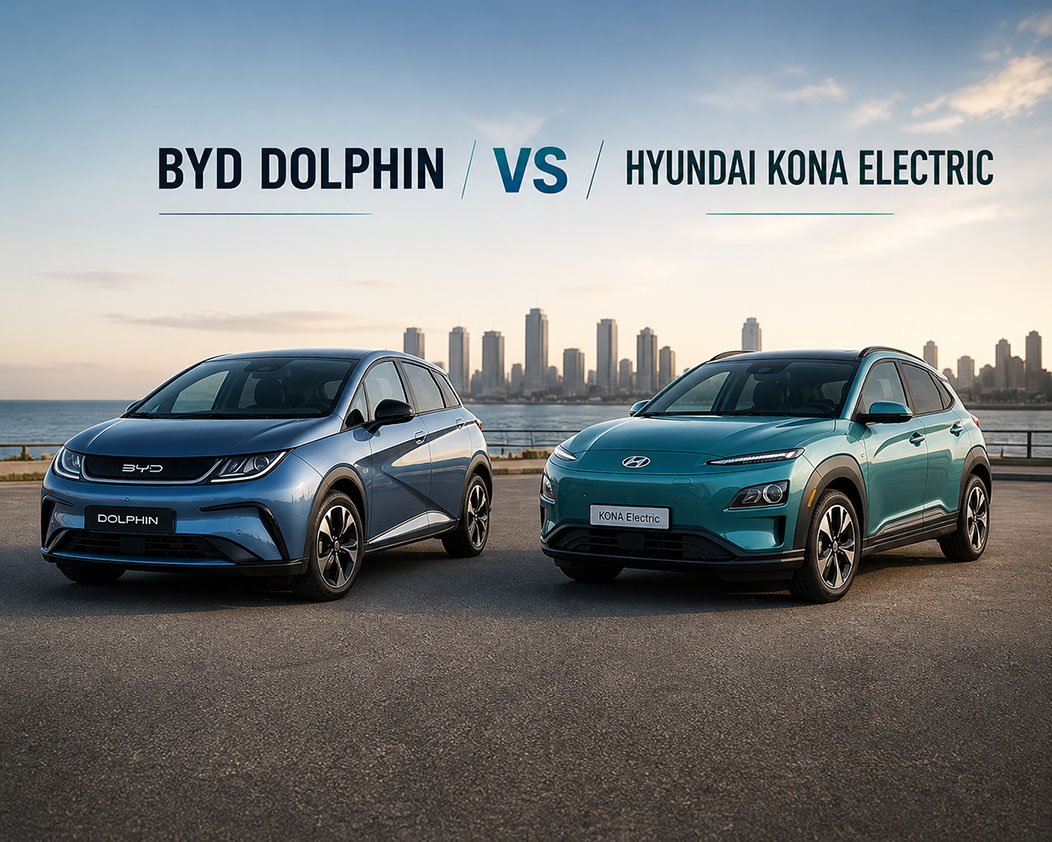
The BYD Dolphin vs Hyundai Kona Electric is one of the most relevant budget EV comparisons right now. Both cars sit in a similar price conversation, but they approach the job in very different ways.
This is not just a hatchback versus crossover debate. It is also a choice between two distinct ideas of what an affordable electric car should be: clever and youthful, or mature and reassuring.
The Dolphin feels fresher, more playful and more design-led. The Kona Electric feels more conventional, more polished and more family-friendly. Both make sense. They simply appeal to different buyers.
If you are still comparing the basics before choosing a model, our electric car buying guide is a useful place to start.
Exterior Design & Road Presence
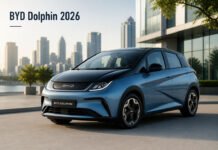
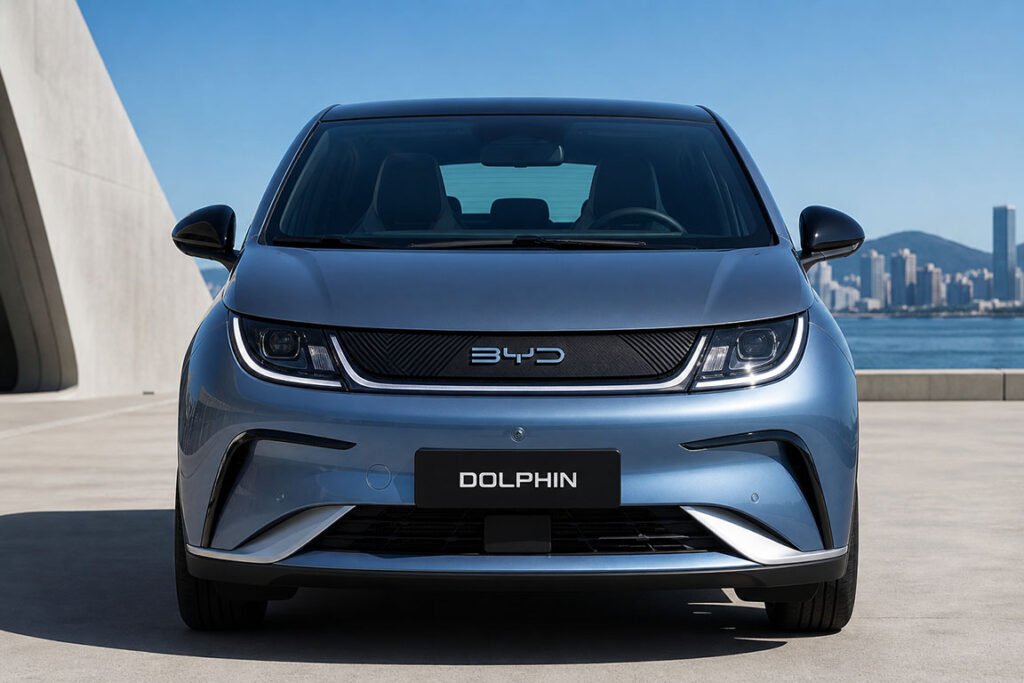
The BYD Dolphin is not trying to look like a miniature SUV, and that is part of its charm. It has a clean hatchback shape, short overhangs and a playful design language that makes it feel more youthful than most affordable EVs. The front end is smooth, the surfacing is soft, and the overall look is friendly rather than aggressive.
That may sound like faint praise, but in a market where many EVs either look like household appliances or angry gaming mice, the Dolphin’s simplicity works. It suits city streets, tight parking spaces and younger buyers who want something modern without looking like they borrowed their parents’ crossover.
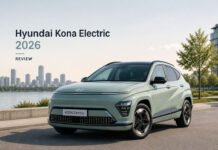
The Hyundai Kona Electric has a very different presence. It looks bigger, wider and more serious. The full-width light bar, chunkier body and crossover stance give it stronger road presence. It is not a large SUV, but it carries itself like a car from the class above.
For family buyers, the Kona’s design will probably feel more reassuring. It looks more substantial and more familiar. The Dolphin looks cooler in a small-car way, but the Kona looks like the car you would choose if you regularly carry passengers, bags and responsibilities, because apparently adulthood insists on luggage.
For a more detailed look at Hyundai’s compact EV on its own, read our Hyundai Kona Electric review.
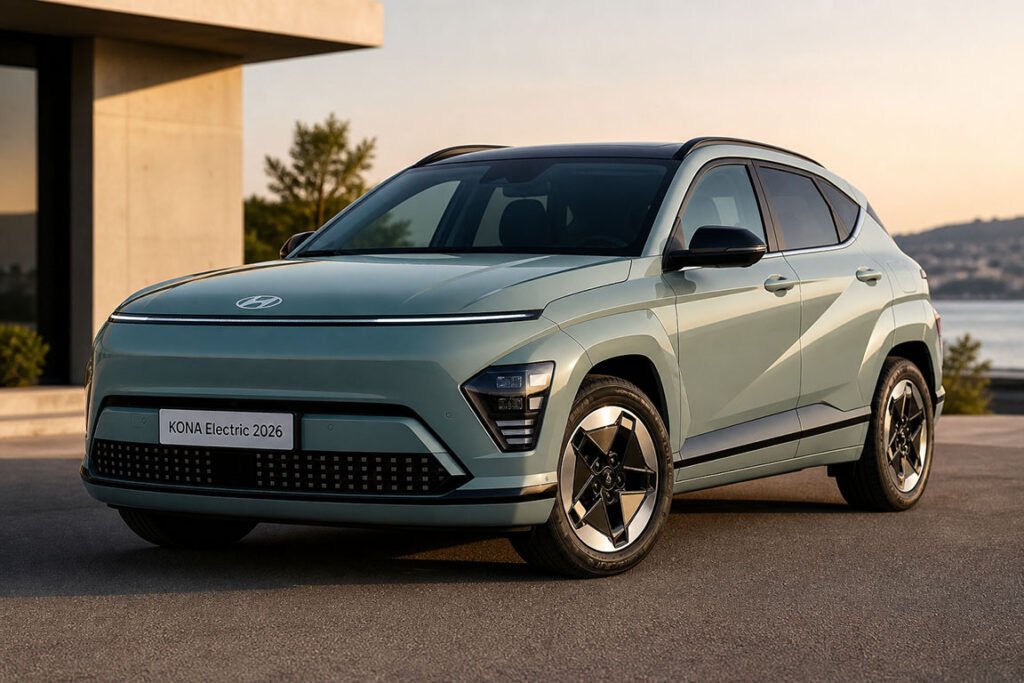
Editor’s take: The Dolphin has the fresher character, but the Kona carries more visual authority. If style matters most, the BYD stands out. If presence matters more, the Hyundai feels more substantial.
Interior Quality & Technology
Inside, the BYD Dolphin makes a strong first impression. The cabin design is more imaginative than you might expect at this price point, with curved shapes, a rotating central touchscreen and a generally bright, modern atmosphere. It does not feel expensive in the traditional premium sense, but it does feel intentionally designed.
The rotating infotainment screen remains a BYD talking point. It is clever, eye-catching and occasionally useful, though not everyone will care after the first week. The interface has improved over time, but Hyundai still has the edge for menu logic and everyday usability.
The Kona Electric’s interior is more conventional, and that is not a criticism. Hyundai understands ergonomics. The driving position is better, the controls are easier to learn, and the dashboard layout feels less experimental. You get a more mature cabin with a stronger sense of structure.
Material quality is close, but the Kona feels slightly more substantial in the places you touch often. The Dolphin has some clever design details, but there are areas where the budget roots show. Hyundai’s cabin does not feel luxurious either, but it feels better resolved.
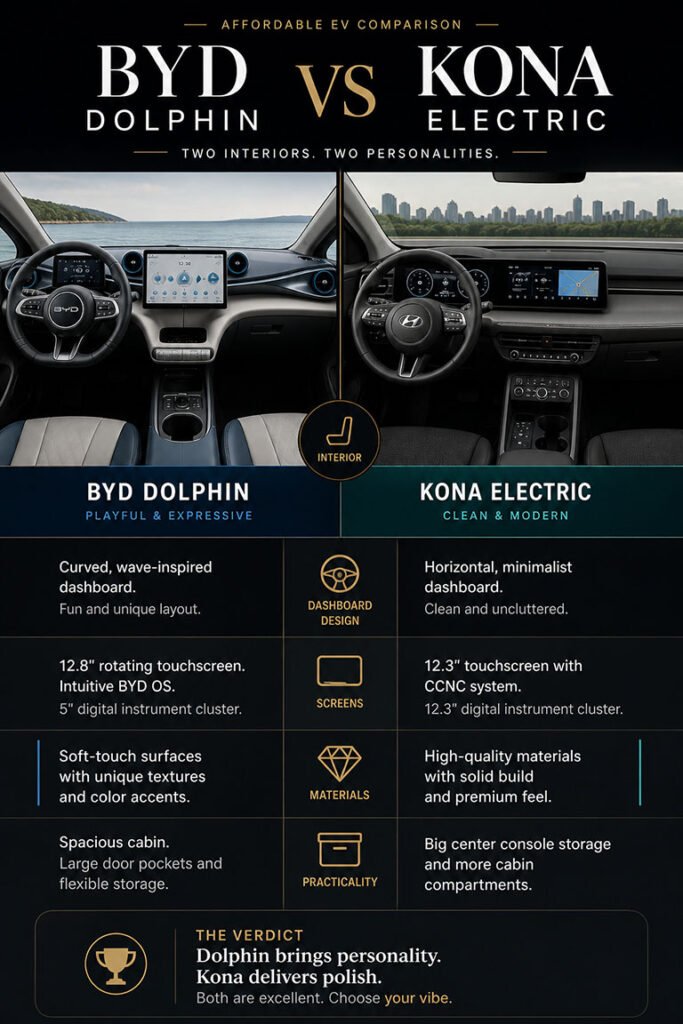
For tech-focused buyers, the Dolphin feels more playful. For drivers who want everything to work without digging through screens like they are solving a tax form written by robots, the Kona is easier to live with.
Driving Experience
This is where the BYD Dolphin vs Hyundai Kona Electric comparison becomes more interesting than the spec sheet suggests.
The BYD Dolphin is at its best in the city. It is light, easy to place, quiet at lower speeds and quick enough to make gaps in traffic feel effortless. The 60.4 kWh version sold in markets such as the UK produces up to 150 kW, or around 201 hp, and BYD quotes a 0–62 mph time of about 7.0 seconds for higher-output versions. That is more than enough for a compact budget EV.
The steering is light rather than communicative, but that suits the car’s character. No one buys the Dolphin for outright excitement, but that is not really what it is trying to be. What matters is that it feels smooth, easy and relaxing in daily use. Ride comfort is generally good, though rougher roads can expose the car’s lighter construction and simpler suspension tuning.
The Hyundai Kona Electric feels more composed. It is not sporty, but it has a more planted feel at higher speeds and a more mature ride-and-handling balance. On motorways, the Kona feels quieter and more stable. The steering has more weight, the body control is tidier, and the whole car gives you more confidence when the road opens up.
Acceleration depends on battery and motor version, but the long-range Kona Electric is usefully brisk without feeling dramatic. Hyundai’s European figures list the larger-battery Kona Electric with up to 514 km WLTP range, while the 48.4 kWh version is listed at up to 377 km WLTP.
If your driving is mostly urban, the Dolphin feels nimble and efficient. If you regularly drive longer distances, carry family, or spend time on highways, the Kona Electric feels like the more complete car.
For a more detailed look at each model on its own, see our Hyundai Kona Electric review and our BYD Dolphin review.
Want a visual take on the Kona’s on-road character? This review is worth a watch.
Range & Efficiency
Range is one of the clearest differences between these two EVs. The BYD Dolphin offers strong numbers for the money, while the Hyundai Kona Electric has the advantage if you choose the larger-battery version.
The Hyundai Kona Electric has the advantage of offering a larger-battery version in many markets. Hyundai Europe lists up to 514 km WLTP for the 65.4 kWh model and up to 377 km WLTP for the 48.4 kWh version. That makes the bigger-battery Kona the stronger choice for longer trips.
In real-world driving, expect the Dolphin to be efficient around town and respectable on mixed routes. It is light enough and compact enough to make good use of its battery. The Kona Electric, especially with the larger pack, gives you more breathing room on longer journeys. Highway driving will reduce range in both cars, because physics remains stubbornly unimpressed by marketing departments.
| Model | Range | Efficiency | Battery |
|---|---|---|---|
| BYD Dolphin 60.4 kWh | Up to 265 miles WLTP / about 215 miles real-world estimate | Around 281 Wh/mile real-world estimate | Approx. 60.5 kWh usable |
| Hyundai Kona Electric 48.4 kWh | Up to 377 km WLTP | Market-dependent | 48.4 kWh |
| Hyundai Kona Electric 65.4 kWh | Up to 514 km WLTP | Market-dependent | 65.4 kWh |
Charging & Battery Performance
The BYD Dolphin uses BYD’s Blade Battery technology, an LFP chemistry known for durability and thermal stability. BYD UK lists the Dolphin with a 60.4 kWh battery, up to 150 kW maximum power and an official range of 265 miles. Charging performance is perfectly usable, though not class-leading.
Depending on version and market, the Dolphin supports 11 kW AC charging, which is useful for home wallbox owners. A full overnight charge is realistic. On DC fast charging, expect enough performance for occasional road trips, but this is not an ultra-fast charging champion. Some UK review sources list later Dolphin figures with up to 150 kW DC capability, but specifications can vary by model year and market, so check the local brochure before ordering.
You can also read our full BYD Dolphin review for a closer look at its cabin, practicality, and day-to-day usability.
The Hyundai Kona Electric is also designed around normal daily EV life rather than headline-grabbing charging numbers. Hyundai Canada lists the 2026 Kona Electric with 420 km all-electric range and an estimated Level 2 charging time of around 6 hours and 5 minutes, while Hyundai Europe publishes WLTP figures for both 48.4 kWh and 65.4 kWh versions.
In daily use, both cars are easy to live with if you can charge at home overnight.
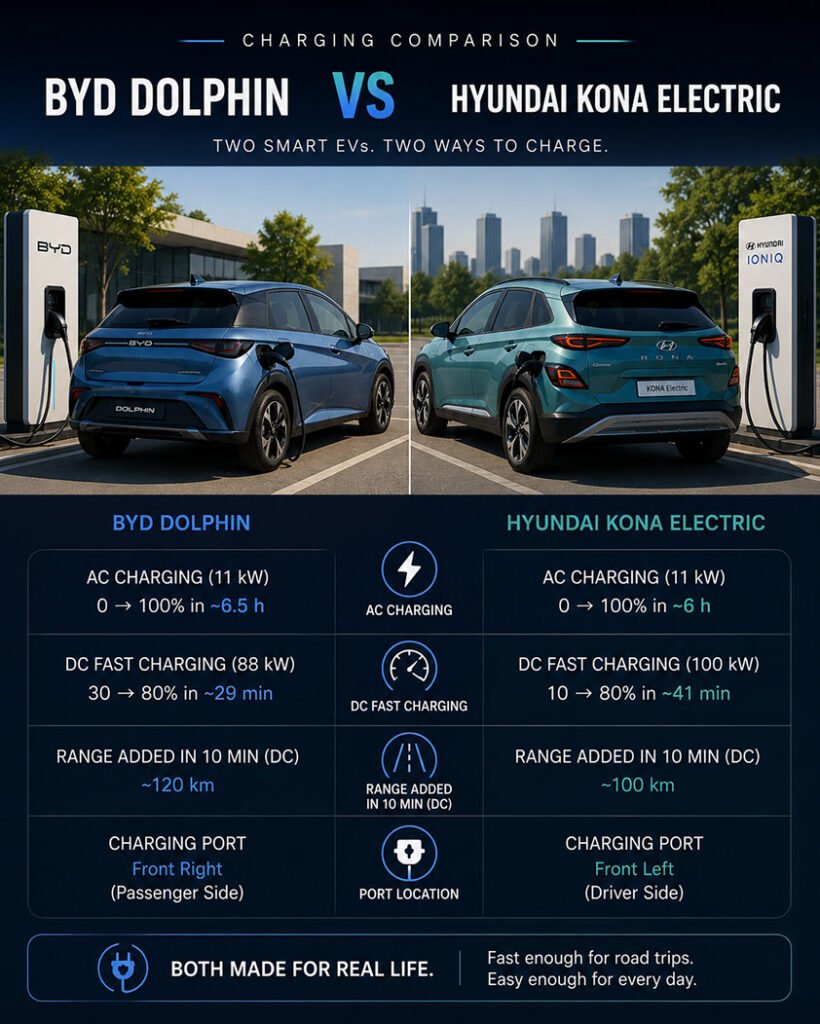
For public charging, the Kona’s larger-battery version is the more relaxed long-distance car. The Dolphin can handle trips, but it feels more naturally suited to urban and suburban ownership. For running-cost planning, our [EV charging cost guide] explains how home and public charging prices affect real-world ownership.
For a broader breakdown of real-world electricity costs, check our EV charging cost guide.
If you want a broader primer on charging types and terminology, this EV charging basics guide is a useful reference.
Real-World Ownership Costs
The BYD Dolphin’s biggest strength is value. It gives you a usable battery, good equipment, modern tech and low running costs at a price point that undercuts many rivals. Maintenance should also be relatively simple, as with most EVs: no oil changes, fewer moving parts and less mechanical drama. A rare mercy.
The Kona Electric will usually cost more to buy, especially in larger-battery form. But it may justify that extra cost with stronger resale confidence, a more established dealer network in many regions and a more practical crossover body. Hyundai also has a longer track record with EVs in Europe and other global markets, which matters to cautious buyers.
Charging costs depend mostly on where you live and whether you can charge at home. In most cases, both cars will be far cheaper to run than a petrol crossover or hatchback. The Dolphin’s efficiency and lower purchase price make it the cheaper ownership proposition. The Kona’s advantage is that it feels like a bigger, more complete car for the money.
Value verdict: the Dolphin is cheaper to own. The Kona is easier to justify if you need more range, more space, and a more mature overall feel.
Pros and Cons
BYD Dolphin Pros
- Strong value for money in the budget EV segment
- Compact size makes it excellent for city driving
- Good equipment levels for the price
- Efficient real-world performance, especially in urban use
- Playful interior design with distinctive tech features
BYD Dolphin Cons
- Cabin materials are not as mature as the Kona’s
- Highway refinement is only average
- Infotainment usability can feel less polished
- Less SUV-like practicality and road presence
Kona Electric Pros
- More composed and refined driving experience
- Larger-battery version offers stronger long-distance range
- More practical crossover body shape
- Easier cabin ergonomics and better everyday usability
- Stronger family-car feel
Kona Electric Cons
- Not as aggressively priced as the best Chinese EV rivals
Which One Is Better for Different Buyers?
For city users, the BYD Dolphin is the better choice. It is compact, easy to park, efficient around town, and feels made for daily commuting.
For families, the Hyundai Kona Electric makes more sense. It has the more practical shape, stronger road presence, and a more reassuring long-distance character.
For first-time EV buyers, the answer depends on confidence level. Choose the Dolphin if you want the lowest-cost route into a proper electric car. Choose the Kona if you want a more familiar and conventional ownership experience.
For technology-focused buyers, the Dolphin feels fresher and more distinctive inside. The Kona is more mature, but less interesting.
For motorway drivers, the Kona Electric is the better fit. It is quieter, more settled, and better suited to longer journeys.
Final Verdict: BYD Dolphin or Hyundai Kona Electric?
The BYD Dolphin vs Hyundai Kona Electric comparison has a clear winner depending on what you actually need, but if we are judging the best budget EV overall, the BYD Dolphin is the stronger value choice.
The Hyundai Kona Electric is the better choice if you want a more refined, more practical, and more mature EV experience. It feels more complete on longer trips and more convincing as a family car.
The Hyundai Kona Electric is the better car in a broader sense. It is more refined, more practical, better on highways and more convincing as a family vehicle. If you can afford the larger-battery Kona and regularly drive longer distances, buy the Kona. It is the more complete all-rounder.
For most budget EV buyers in 2026, though, the Dolphin makes the stronger case.
Final recommendation:
Our recommendation is simple.
Choose the BYD Dolphin if you want the best-value budget EV for city and suburban driving.
Choose the Hyundai Kona Electric if you want more space, more long-distance confidence, and a more mature overall driving experience.
For more buying help, read our best affordable EVs roundup and our EV charging cost guide before making the final call.